Ramps aka wild leeks are in season in New York right now and are actually a food that is quite often foraged. Ramps herald the beginning of spring, often appearing just as the snows recede. Ramps have a tender spicy/oniony/leek-y taste and oniony smell. Yum. We also ran across some delicious looking pre-made pierogis at a local gourmet market and couldn’t resist. This makes a very quick throw-together dinner for a weeknight. If you don’t have preserved lemon or citrus salt, regular lemon zest and kosher salt will do in a pinch.
Bacon and Ramp Pierogis
8 potato & cheddar pierogis (thawed if they are frozen)
1 bunch ramps, slice thin
3 oz. home made bacon, cut into 1/4 inch chunks
1/2 Tbsp. unsalted butter
2 Tbsp. extra virgin olive oil
1/2 tsp. preserved lemon, diced
1 tsp. fresh thyme, chopped
1 pinch citrus salt
In a large pan over medium heat, sautee bacon until browned and crispy. Place onto paper towels to drain. Set aside.
Pop your pan back over the heat, crank the heat up to medium-high and add 1 Tbsp. of the oil. Add pierogis (non frozen). Sautee until browned on both sides. Set aside.
Add the rest of the oil to the pan and toss in the ramps. Sautee until ramps are tender and wilty.
Add the pierogis, butter, preserved lemon and bacon back to the pan. Toss.
Turn off the heat. Top with thyme and citrus salt.
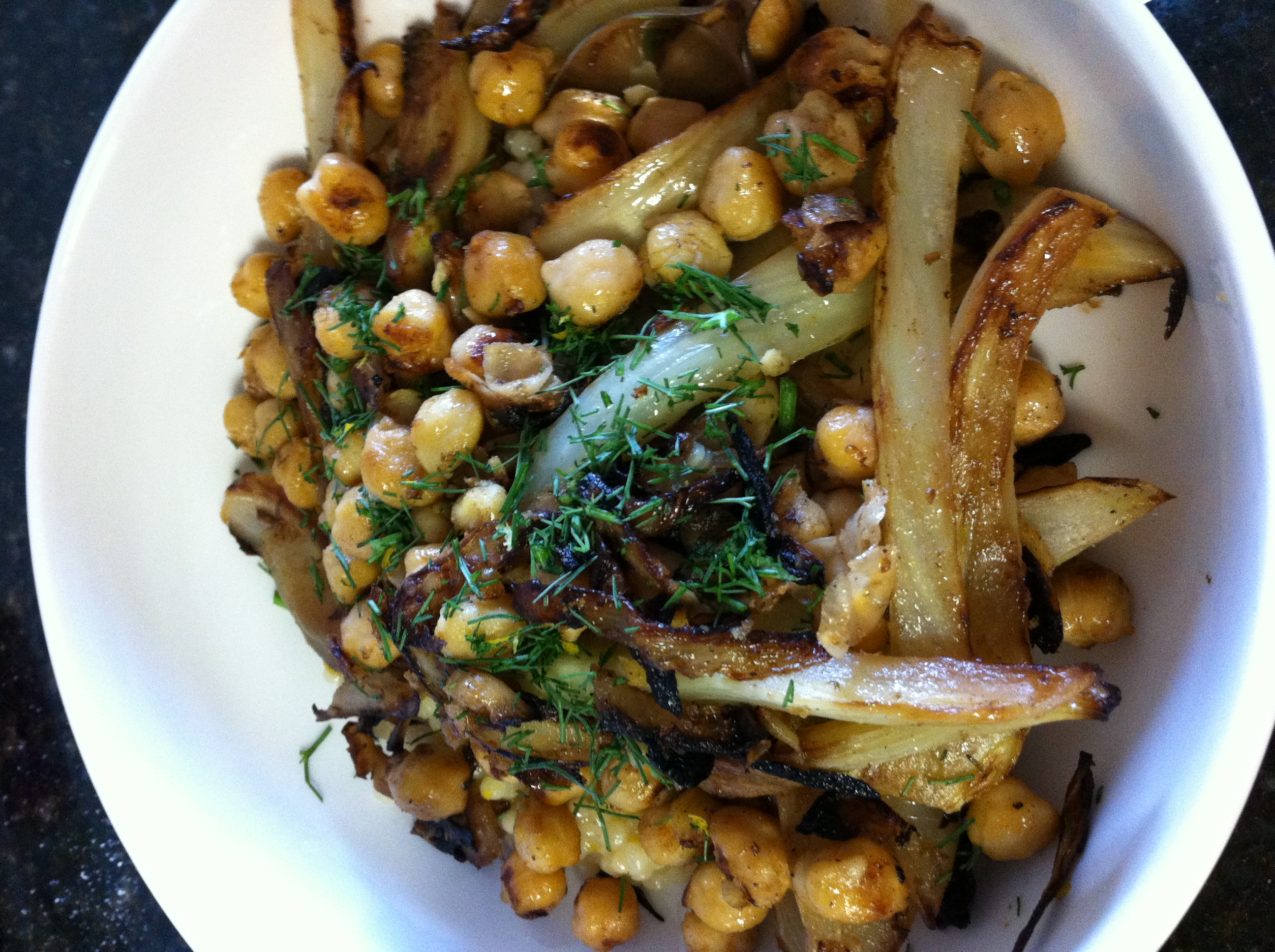
This makes a nice light weeknight vegetarian meal for two. If you have someone who is sensitive to texture in the house like I do, make sure to slice the fennel into manageable slices before caramelizing. The original recipe called for serving the fennel in wedges and this elicited the ick face from my DH. The original recipe also called for kalamata olives, which would be great, but that’s another DH no-no, so I omitted them. Capers would make a nice substitute for the similarly olive-challenged.
Zest the lemon and orange. Set aside. Juice the zested orange into a measuring cup and add water until you have 1 1/2 cups of liquid.
In a medium saucepan over medium-high heat, bring 1 Tbsp. olive oil up to temperature. Add the couscous and stir to coat. Let the couscous toast 2 minutes or until it starts to brown just a hair and get the slightest bit nutty. Add the zests, 1 big pinch kosher salt and liquid. Bring to a boil and drop the heat to a simmer. Cover and simmer until the couscous is softened, about 15-20 mins.
Meanwhile, prepare your additions. Trim the fennel and slice, reserving fronds for garnish. Heat 2 Tbsp. oil in a large pan over medium heat. Add the fennel and cook until deeply caramelized (but not burnt), stirring occasionally to avoid burning, 8 minutes or so. Add coriander, chickpeas and stir to combine. Sautee until chickpeas start to toast. If they get too dry, add a splash of water. In the last minute or so, add the lemon juice and stir.
To serve, combine all components and toss. Finish off with a big pinch or two of citrus salt and a sprinkle of chopped fennel fronds.
This Thai-inspired peanut stir-fry comes together in a jiffy for a healthy, satisfying weeknight meal.
Thai-Style Peanut Chicken Noodles
3 stalks celery, sliced 1/4 inch thick
1 carrot, halved and sliced 1/4 inch thick
1/2 onion, sliced thin
1/2 lb. chicken, cut into bite-sized pieces
2 Tbsp. canola or peanut oil
2 cloves garlic, thinly sliced
1/2 lb. whole wheat spaghetti, cooked until barely al dente
For the sauce
1/4 c. peanut butter
1 Tbsp. + 1 tsp. pomegranate molasses
2 tsp. rice vinegar
2 tsp. sesame oil
1 Tbsp. + 1 tsp. chili garlic paste
4 Tbsp. rice wine
4 Tbsp. soy sauce
1 Tbsp. +1 tsp. lime juice
Water to thin
Whisk all sauce ingredients together in a small bowl. Add water, a Tablespoon full at a time, until thin enough to pour as a sauce (I ended up using 4 Tbsp.).
Heat 1 Tbsp. canola or peanut oil in a large wok over high. Add chicken and stir-fry until golden brown and cooked through. Set aside.
Add the rest of the oil, onion, celery and carrot. Stir-fry until beginning to brown.
Add garlic, stir-fry until softened. Add spaghetti and sauce. Remove from heat and toss to combine.
1 cup shelled pistachios
1 Tbsp. kosher salt plus
½ pound whole wheat elbow macaroni
2 cups broccoli, chopped
2 garlic cloves
Juice and zest of 1 lemon
Juice of ½ an orange
1 tsp. red pepper flakes
1 cup flat-leaf parsley
½ cup mint
½ cup extra-virgin olive oil
2 Tbsp. sesame oil
½ cup finely grated Pecorino Romano (omit for vegan)
2 Tbsp. finely chopped chives
Preheat the oven to 350°. Bake the shelled pistachios until really fragrant and just starting to brown, about 5 – 6 minutes. Watch your nuts carefully; they can go from pleasantly golden-ish to a hot mess in seconds. Set aside to cool, then whiz in a food processor until they resemble a coarse meal.
While you’re babysitting the pistachios, bring a large pot of water to boil for the pasta. Chop your broccoli while you are waiting for the water to boil and set aside. Once the water is at a boil, add a handful of salt and the pasta and boil until the pasta is almost al dente, about 7 minutes. In the last 2 minutes of cooking, add the broccoli. You want tender but not overdone. Drain the whole shebang, reserving 1 cup of the cooking liquid for the sauce. If you aren’t ready to add the pasta back to the pot for saucing at this point, run it under cold water to stop the cooking process.
While you are cooking the pasta/broccoli, add the garlic, lemon zest, red pepper flakes and kosher salt to the food processor and grind into a fine crumb. Add the parsley and mint and pulse to process down. With the motor running, slowly drizzle in the olive and sesame oils. Transfer to a medium saucepan and add the reserved pasta water. Bring the watery pesto to a boil and simmer for 2 minutes.
Remove from the heat and add the pasta/broccoli. Stir in the lemon juice and cheese and let sit for 5 minutes to give the lemon a chance to work its magic. Top with the chives and serve.
I never promised it was pretty. This pic was taken right before plunging into after-dinner snack bowl full #2.
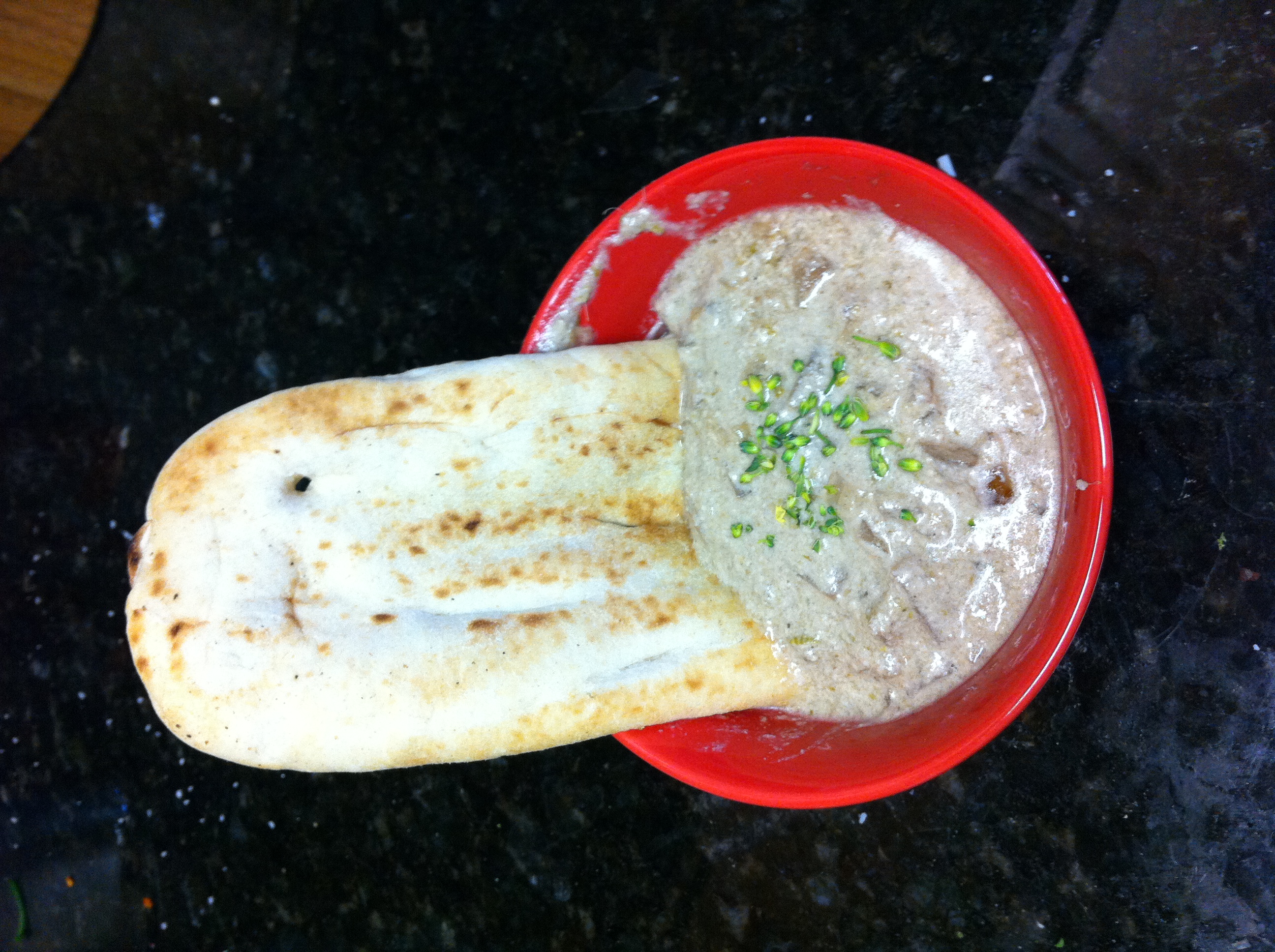
A nice light Thai-style coconut green curry that’s perfect over noodles or simply scooped up by naan bread. Mixed with a little Greek yogurt, I could see this becoming a go-to dip.
Coconut Curry with Naan Based on Purple Sprouting Broccoli with Rice Noodles from Plenty by Yotam Ottolenghi
Curry paste
1 inch piece of ginger, peeped and roughly chopped
2 green chiles, seeded and roughly chopped
2 lemongrass stalks, outer layer and tough ends removed and roughly chopped
1 clove garlic, roughly chopped
1 small shallot, roughly chopped
1 tsp. ground cumin
zest and juice of 2 limes
2 Tbsp canola oil
Sauce
1 red onion, finely chopped
1 Tbsp canola oil
1 tsp sugar
Big pinch salt
Zest and juice of 2 limes
1 can (15 oz) light coconut milk
To make the curry paste: Combine all the ingredients in a small spice grinder, food processor or mortar & pestle. Grind/blend to a paste. If your mixture is too dry and isn’t paste-ing, add a little more lime juice or oil and move things around in the bowl. Your paste won’t be smooth, but it will come together and the lemongrass fibers will break up. It’s not the prettiest thing in town, but it gets the job done.
To make the sauce: In a medium saucepan over medium heat, heat the oil until it begins to sputter. Add the onion and sautee, stirring to avoid burning, 3 minutes or until softened, translucent and beginning to brown around the edges. Add curry paste and continue to sautee, stirring frequently, 3 minutes more. At this point, everything should be looking rather toasty in the pan and the smell should be incredible. Add salt, sugar, lime zest and coconut milk. Stir, scraping up any browned bits on the bottom of the pan. Bring up to a boil, knock the heat back to a simmer and let go 7 minutes.
At this point you have a very lovely coconut green curry sauce. You can serve this over rice noodles and broccolini like the original recipe calls for (which is great), or you can spoon some leftover curry sauce into a small bowl and scoop it up with naan bread. This makes an addicting after-dinner (or any time) snack. So addicting I managed to eat 2 small bowls worth right after dinner and i wish I had more.
I would imagine this sauce would keep in the fridge for a few days, but since I decided playing garbage disposal by myself last night was a good idea, we have no leftovers. Which is a total shame, I would eat this again today and in mass quantities.
Note: This is a very, very mild curry. Not hot in the slightest. If you want more heat, I would suggest leaving the seeds in the chiles or adding a bit of heat at the end.
Serves 2 if I’m one of the 2, 4 if I’m not. Really, there is enough curry to happily sauce a family of four’s dinner.
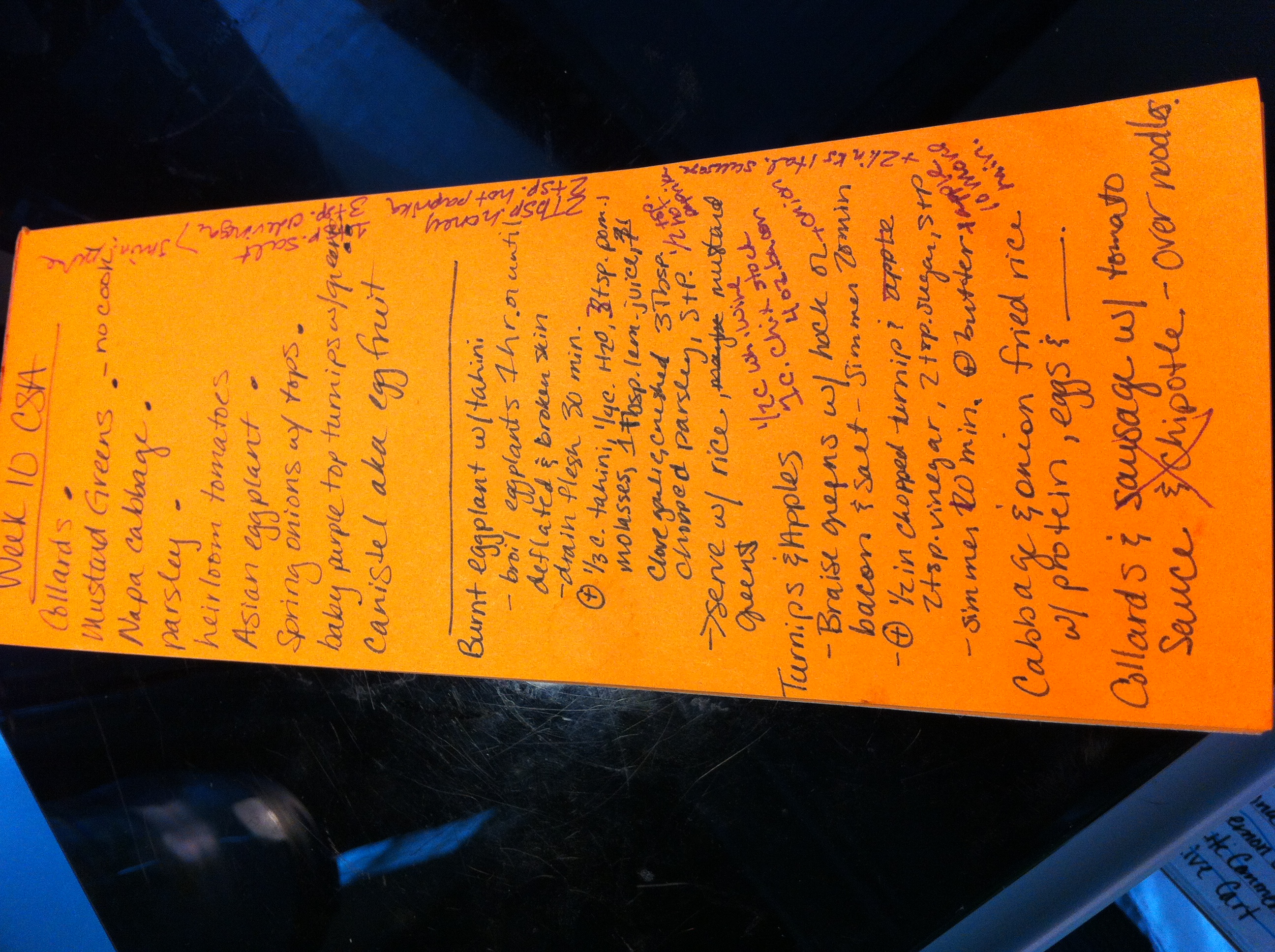
Ok, so this doesn’t sound like the most exciting dish in the world. It’s pretty good, though, and a great way to use up a ton of greens at once if you, like me, are drowning in CSA greens. It’s also a good excuse to whip out not one, but two, meats in a single dish.
Really, me? Why do I insist on writing every damn thing on 1 teeny tiny scrap of paper?
Braised Turnips & Apples
1 bunch baby turnips (or regular turnips)
1 bunch turnip greens
1 bunch Ethiopian kale (or any other green, really)
2 Fuji or other semi-sweet apples
1 onion
2 hot Italian sausages
4 oz. bacon (I used home made bacon flavored with garlic, black pepper and bay)
1 Tbsp. olive oil
1/2 c. white wine
1 c. chicken stock
2 Tbsp. honey
2 tsp. hot paprika
1 tsp. salt
3 tsp. apple cider vinegar
Put the largest pan you have a lid for over medium heat. Add 1 Tbsp. olive oil. While you are waiting for the oil to come up to temperature, slice the onion into thin half rounds and the bacon into 3/4 inch chunks.
Add the onions and bacon to the heated pan. Let the onions soften while you attend to the greens. Wash all greens, remove any tough stems, and slice into ribbons. Add to the pan.
Add the white wine, wait a minute or so, and add the chicken stock. Bring up to a vigorous simmer, cover, and cook on a low simmer 20 minutes.
While your greens are braising, prepare your next additions. Chop the turnips into roughly 3/4 inch pieces. Slice the sausage into bite-sized pieces.
Add the turnips and sausage. Re-cover and cook an additional 10 mins.
While that is working, de-seed the apples and chop into 3/4 inch chunks.
Add the apples and cook an additional 10 minutes. Gather your seasonings.
Add the honey, paprika, salt and cider vinegar. Stir well to combine. Put the lid on and let the mixture cook 5 minutes more.
Serve with mashed potatoes for a hearty stick-to-your-ribs German style meal or with buttered bread for a lighter take.
I got carrots with their tops in this week’s CSA and needed something to do with the greens other than halfheartedly toss a handful in a dish for garnish. Enter pesto. Pesto is one of those great little things to have in your bag of tricks to pull out on a rainy day, or a great way to use up an ingredient you have zero idea what to do with. This pesto doesn’t give you the flavor wallop a traditional basil pesto does, but it’s not half bad. And it’s frugal. Frugal, I tell you. Next time I might add some garlic to the mix to liven things up a bit. I tried a bit of cheese, but it really didn’t make any difference.
Carrot Pesto Risotto
For the pesto
1 bunch carrot greens, hacked into manageable chunks
2 tsp. lime juice + more to taste
1-2 dried chills, sliced or torn into pieces
1/2 c. extra virgin olive oil
Salt
Blanch the carrot greens in a big pot of salted water for about a minute, or until they are bright green and kind of wilty. Drain and add to the bowl of a large food processor.
With the motor on, add 2 tsp. lime juice, 2 huge pinches salt, chilis and olive oil. Taste. If it needs more brightness, add some more lime juice. If it’s a little dry, add a couple Tablespoons of water.
For the carrot risotto
1 bunch carrots (about 2 1/2 cups), roughly chopped into 3/4 inch segments
Olive oil
1 c. arborio rice
1/2 c. white wine
4 c. stock (I used 2 c. vegetable and 2 c. lobster stock made with my best friend Better Than Bouillon – use all vegetable if making vegetarian or vegan)
Toss the carrots with a glug of olive oil and a generous pinch salt and spread on a baking sheet. Roast in a 450 degree oven about 35 minutes or until browned at the edges and soft.
While you’re waiting for the carrots to brown, make the risotto.
In a medium pot over medium-high heat, sautee the rice 2 mins. in 1 Tbsp. olive oil. Add the white wine, reduce heat to medium and cook 1-2 mins. or until the liquid is mostly absorbed. Add stock by the half cup, stir, and simmer until the rice is al dente and won’t take more liquid.
This makes a nice, satisfying weeknight meal. The punch from cutting celery gives great flavor, but if you can’t find it, regular celery will be just fine. I usually add fish sauce to this mixture, but it skipped my mind this time, and it was fine without. If you happen to have some and happen to think about, a good squirt or three would be great here. Carrot greens are not mandatory. I happened to have a ton of them slowly dying in the fridge and decided to give it a go. They were nice, but not in the least necessary.
Pork and Celery Stir Fry
1 Tbsp. sesame oil
1 lb. ground pork
1/2 red onion
1 carrot
4 cloves garlic
1 Tbsp. grated ginger
4 Tbsp. soy sauce (swap coconut aminos if you’re going strict paleo)
1 Tbsp. ketjap manis (sweet soy sauce – swap for a bit of honey or maple syrup if going strict paleo)
3 tsp. lemon juice
1 bunch cutting celery
2 tsp. rice vinegar
Handful carrot greens
Bring sesame oil up to temperature in a wok or large frying pan over high heat. Add the pork and break apart. Keep working and breaking the pork up until it starts to brown.
While you’re working periodically on the pork, thinly slice the red onion. Add to the pan, stir.
While the onion is working, chop 1 carrot and mince 4 cloves garlic. Add to pan. Stir periodically to avoid burning, 3 mins.
While that is working, chop the cutting celery.
Add grated ginger, soy sauce, ketjap manis, lemon juice and rice vinegar. Add the cutting celery, stir fry a few minutes until starting to wilt.
Meanwhile, chop the carrot greens.
Taste and add a bit more lemon or vinegar if needed. Top with carrot greens and serve over brown rice.
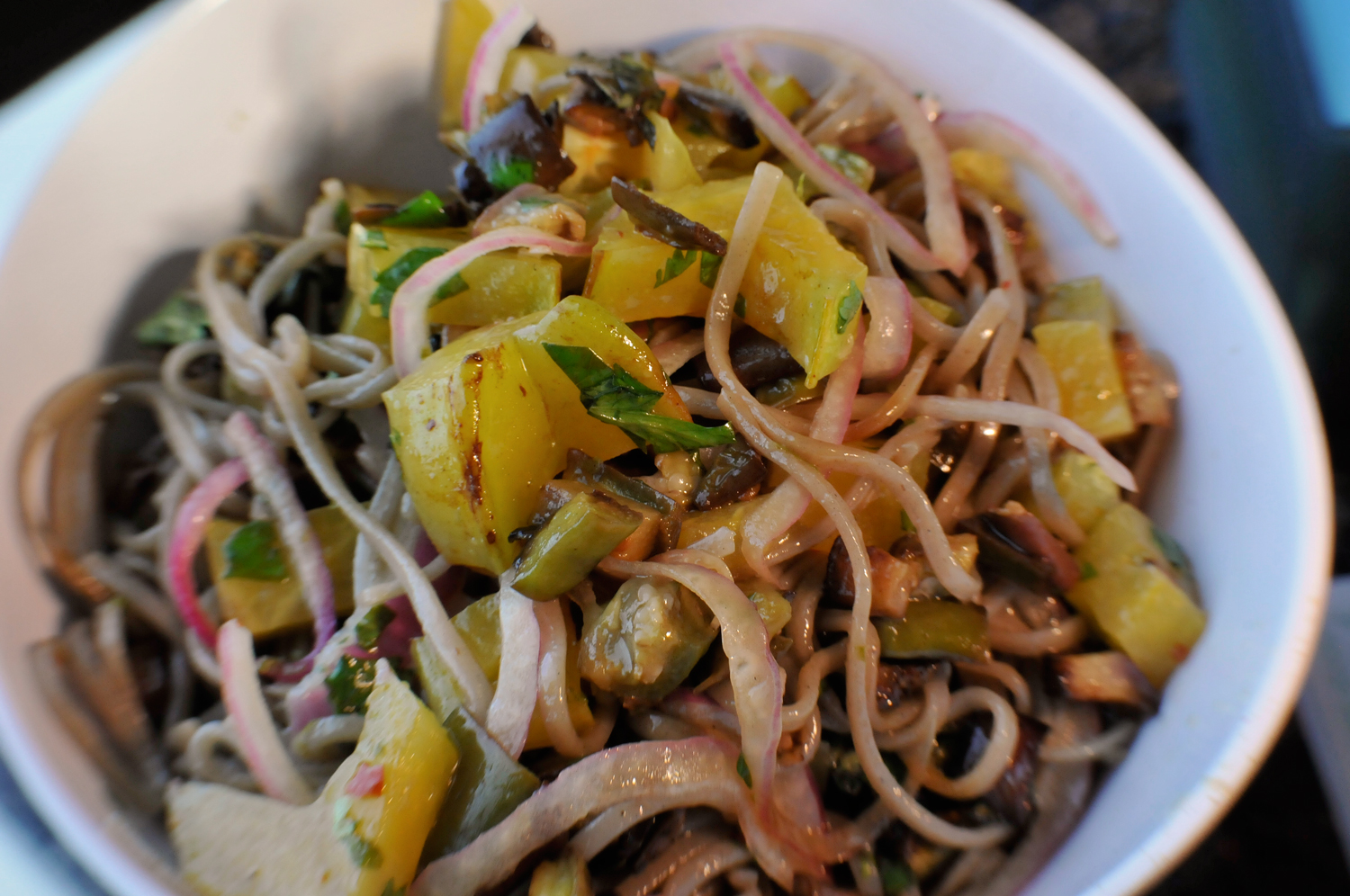
Prep your eggplant by trimming the ends and cutting into a small (about 1/4 inch) dice. Set aside.
Prep your starfruit by cutting into 1/4 inch slices and quartering.
Put a large sautee pan on medium high heat and a large pot of water on to boil. Add a good glug or two of canola to the large sautee pan (you want the bottom covered).
While your pan and pot are coming up to temperature, combine the vinegar, sugar and salt in a small saucepan over medium heat. Cook, stirring, until the sugar has dissolved fully (about 1 minute). Set aside. Add the pressed garlic, red pepper flakes and sesame oil.
Your oil should be just getting up to temperature (you’ll know it is hot enough when a drop of water sputters when added to the pan). Add half of the eggplant and fry until nice and browned. Scoop out with a slotted spoon and drain on a paper towel. Sprinkle with salt. Add the second half of the eggplant and repeat.
When the water comes up to a boil, add the soba noodles. Cook according to package directions until al dente (about 3 mins). Drain and immediately rinse under cold water to stop the cooking process. Knock as much water off as possible. Add a little olive oil to your hand and toss the cooled noodles around in the colander to coat. This will help the noodles from clumping all together into a gluey mess while they sit.
Prepare the rest of your ingredients.
Slice the onion into wafer thin slices (you only need a handful or so).
Sliver the basil.
Chop the cilantro.
Zest and juice the lime and add to the dressing.
In a medium sized bowl, combine all ingredients. Toss with the dressing and let sit an hour to give the flavors a chance to marry.
Toss again just before serving & enjoy.
Serves 2 for dinner with enough left over for a nice-sized lunch.
This is a riff on one of my favorite uses for canned pumpkin. I make this pasta a thousand different ways – with fresh pasta, with wontons, with greens or without, but always with pumpkin and nutmeg. The combo is great, and a perfect light weeknight meal.
Pumpkin Goodness
Taste of Fall Pumpkin, Arugula & Pecan Ravioli in Brown Butter Sage Sauce
1/2 can pumpkin puree
4 oz. goat cheese
1/4 tsp. nutmeg
1 bunch arugula, finely chopped
4 leaves fresh sage
1/2 c. pecans, chopped
olive oil
butter
Approximately 30 wonton wrappers
Combine the pumpkin, goat cheese, nutmeg and 2 big handfuls of arugula in a small bowl. Stir, mashing with the back of your spoon, until the mixture is integrated well.
Put a large pot of salted water on to boil.
Arrange your wontons in a single layer on the countertop. Fill each wonton assembly style with 1 tsp or so of the filling (place the filling in the middle of the wrapper. Dip your finger in a shallow bowl of water and lightly moisten 3 sides of the wonton wrappers. Fold the edges of the wrapper together so you have a rectangle ravioli. Make sure to press out any excess trapped air.
When the water comes up to a boil, add the raviolis in batches of 6 or less at a time. You don’t want to dump them all in at once, or they will stick together in a soggy messy lump of grossness. As each batch floats to the surface, skim off with a slotted spoon and run under cold water to stop the cooking process. I then moved each batch of six to a plate so there was no chance of stickage, which worked great.
While your last few batches are cooking, put a large pan over medium/medium-high heat. Add the butter. I used a little less than a Tablespoon for serving 12 wontons. When the butter is starting to brown and turn nutty, add your ravioli. Cook, swirling in the pan with the occasional flip until the bottoms just start to brown. Add the remaining arugula and sage and cook, continuing to stir occasionally until the arugula wilts, approximately 3 minutes. Add a shot or so of olive oil if the sauce looks lacking and serve.
30 wontons serves 2 for a light dinner or 3 for an appetizer. I served 12 as a stand-alone dinner and was hungry an hour later.






 Gastography