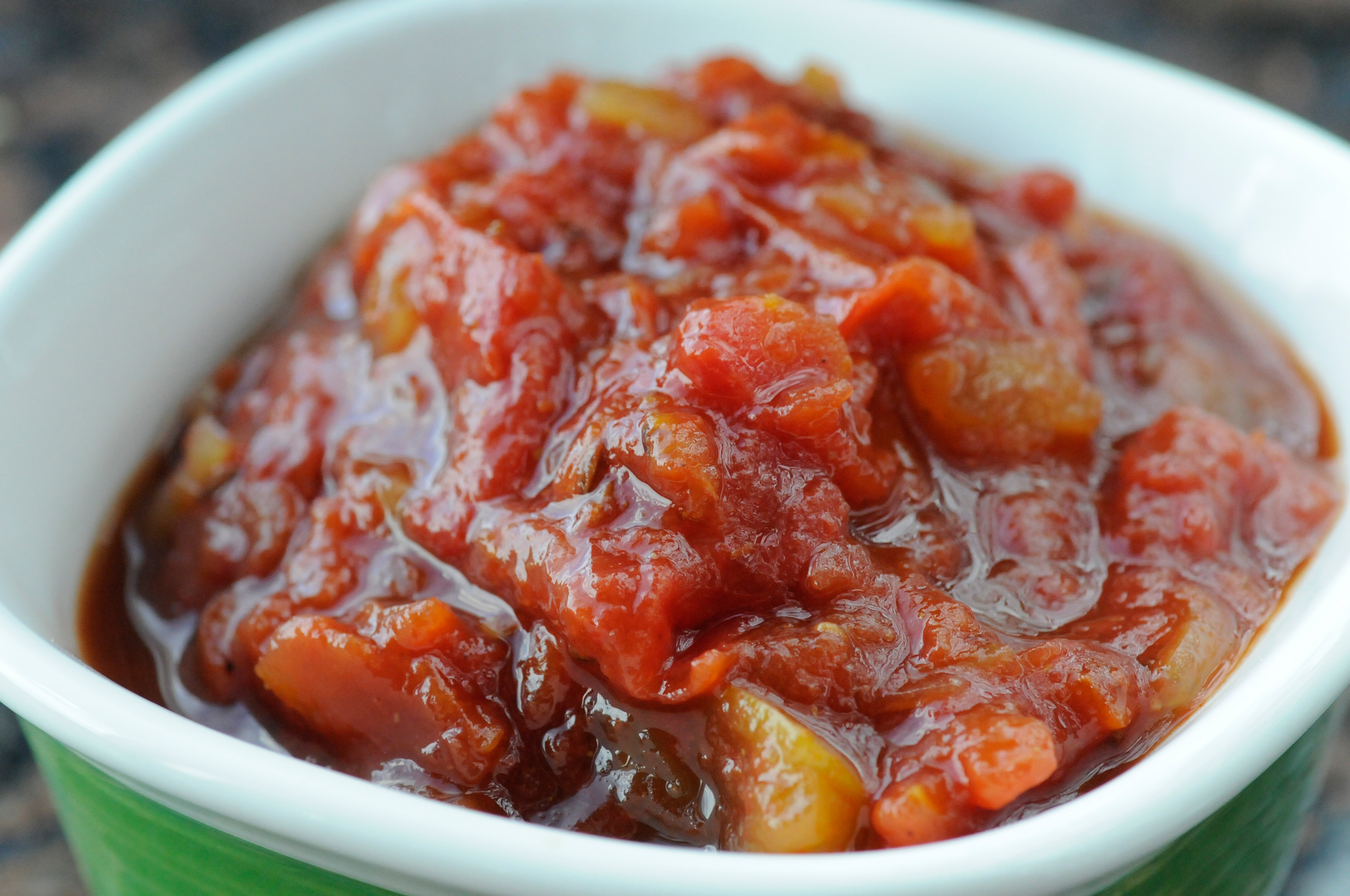
Mmmm….. Nope, no purple squeeze-bottle ketchup here
This sweet/tart/savory condiment is the LBD of condiments, pairing equally well dressed-down on top of a burger, dressed-up as the star in a quick weeknight sauce or dressed to the nines as the main performer on a toasted baguette. You’ll want to keep plenty on hand. This recipe makes enough to fill 3 pint jars: two for you, and one to give away to your nearest and dearest.
3 1/2 lb. Roma tomatoes (or whatever looks the best that day), chopped roughly
1 onion, diced, about 1/2 c.
1/2 c. dark brown sugar (a slack half cup)
1/2 c. white sugar (a slack half cup)
1 tsp. salt
1 1/2 tsp. coriander, ground
1 1/2 tsp. cumin, ground
1 1/2 tsp. caraway seeds, whole
1 1/2 tsp. hot paprika
1/4 c. apple cider vinegar
Juice of 1 lemon
1/2 c. Granny Smith apple, diced
1 c. water
Add all ingredients to a large pot over high heat. Bring up to a boil, reduce heat to a simmer and cook until thick and jam-like, about 3 hours. Transfer to sterilized jars and stash in the fridge for up to two weeks, or break out your favorite canning rig and can, making sure to boil for 15 minutes.
Serve slathered on a burger; with simple ricotta, burrata or goat cheese on a toasted baguette; as a topper for chicken; mixed into a nice big bowl of grains or pasta; with grits, greens & smoky bacon; or on crackers with cream cheese for a late night snack.
There’s something magical about the combination of lentils, leeks, butter and sweet nutty maillard that’s intoxicating in this dish
This dish makes a wholly satisfying weeknight meal with tons of flavor and texture. Don’t skimp on the yogurt sauce when making this meal. The buttery, nutty lentil salad is intoxicating on its own, but the yogurt adds a nice little spicy counterpoint to the rich butteryness and should not be missed.
Israeli Lentil, Leek and Onion Salad with Spice Spiked Yogurt Adapted from Mujaddara with Spiced Yogurt from Food 52
Salad
3/4 c. green lentils
Salt
1 c. long grain white rice
2 Tbsp. unsalted butter
3 Tbsp. olive oil
1 large onion, halved and thinly sliced
1 leek, washed, halved and thinly sliced
Yogurt Sauce
1/2 c. plain fat free Greek yogurt
1/2 tsp. cinnamon
1/2 tsp. ground cumin
1/2 tsp. ground coriander
1/2 tsp. spicy Hungarian paprika
3 Tbsp. chopped fresh mint
Juice and zest of half a lemon
Salt
Preheat your oven to 400 degrees F.
While the oven is going, start your lentils. Combine lentils, big pinch salt and 4 cups water in a medium pot. Bring to a boil. Once your pot is up to the boil, kick the heat back and simmer the lentils until they are cooked but not mushy, about 20 minutes. Drain and add to a large bowl.
While your lentils are going, combine the rice, another big pinch of salt and 1 1/2 cups water in an oven-safe pot on medium heat. Bring up to a boil. Once the water reaches a boil, cover and transfer the whole pot to the oven. Cook for 17 minutes until the rice is cooked. Remove from the oven, uncover and fluff with a fork. I didn’t think this cooking method would work either, but the geniuses at Food 52 were right and it went off without a hitch. Add the rice to the lentil bowl.
While all this is cooking, set your largest sautee pan over medium low heat. Add the butter and 2 Tbsp. olive oil. When that has melted down, add the leeks and onions and toss to coat. Cook gently for 5 minutes or until the mixture has softened slightly and begun to release its liquid. Kick the heat up to medium and cook, stirring occasionally and adding dashes of water if things start to stick, until the onions and leeks are well browned. This will take you 12-20 minutes, depending upon your pan and the day. You’re not looking for burnt here, just a nice deep brown nuttiness. Once the mixture is looking good, add the last Tbsp. olive oil and crank the heat to high. Cook 3-4 minutes until the bottom layer gets a little char. Still not burnt, but crispy.
Add to the lentil & rice bowl and let sit 15 minutes to allow the flavors a chance to get to know each other.
While the ingredients are mingling, combine all yogurt ingredients together and stir.
To serve, scoop servings of lentils into a bowl and top with a dollop of yogurt.
This recipe makes enough for 2 for dinner and lunch the next day (and its perhaps even better the next day, too).
We recently ate at Scott Conant’s ode to Italian fine dining, Scarpetta, and although neither of us are fully on board with true serving and a half sized vegetarian spaghetti for $23 a plate, it was damn tasty nonetheless. We went into the dinner wanting to find fault, too, since Conant can come off as bristly and derisive to say the least when he judges on Chopped (one of our favorite shows). See our full Scarpetta review on Foodie In Miami .
So, we ate there, and predictably fell in love with the pasta sauce (it seems everyone has the same reaction to this sauce, too). And, in a providential all-things-are-connected-on-the-Internet twist, it just so happens Deb & Alex from Smitten Kitchen had recently visited Conant’s NYC location and determined the very same thing at nearly the same time. We (mostly) followed their recipe for this first foray, and found it a worthy sauce, but not quite up to the Scarpetta standard. Something is missing, and I can’t quite put my finger on it just yet. I’m sure the restaurant uses more butter than we did, and maybe that’s all it takes to get the velvety creaminess they achieved. I can’t help but think there was a wallop of cream hidden in there somewhere, though. We shall see in future iterations.
Scarpett-ish Spaghetti with Tomato Sauce
A note on pasta: We used bucatini, a spaghetti-shaped pasta with a hole in the middle and cooked it to just barley al dente. Conant would approve. The bucatini holds up perfectly with its little hole, which holds small bits of saucy goodness for extra taste with every bite. If you cannot find bucatini, you can certainly use spaghetti, but I would lean more toward using something with some ridges or a hole so the sauce can cling to each and every bite.
28 oz. can San Marzano tomatoes, squished over a strainer to become seedless
Big pinch Kosher salt
1 large garlic clove sliced wafer thin
Big pinch red pepper flakes
A small handful of fresh basil leaves, cut into ribbons
1/4 c. olive oil
12 oz. dried bucatini
1 1/2 Tbsp. unsalted butter
Pour the tomatoes and salt into pot (large enough to accommodate the tomatoes with some room left over to toss the pasta) over medium-high heat. With a potato masher, break the tomatoes down until you reach the desired consistency. For us, that was somewhat chunky but mostly on the smooth side. Bring up to a boil, then knock the heat back until the pot is just barely simmering.
Gently simmer 35-45 minutes, adding a splash of water if things look too dry in the pan.
While your pot is simmering away, combine the garlic, red pepper flakes, olive oil and about half of the basil in a small pan over the lowest heat setting. Gently bring the oil up to a simmer (don’t raise the heat), and strain into a small dish. Set aside.
After the sauce has been simmering about 25 minutes, bring a large pot of water to a boil. Add a palm full of salt. Add the pasta and cook until al dente (when it’s still firm to the tooth, aka could use another minute or two on the heat) and drain, reserving half a cup of the pasta water.
Once the sauce reaches the consistency you like, stir in the olive oil and adjust seasonings to taste. Add the pasta along with half the pasta water to the sauce and toss together, cooking for another minute or so. If things look dry, add the rest of the pasta water. Add the butter and remaining basil; serve immediately.
Serves 2, a reasonable amount and perfectly fine for a nice dinner
Don’t worry about the amount of garlic in this dish. My DH saw that it called for a whopping 12 cloves of garlic and was immediately concerned that I would be up for days with heart burn. Not so. cooking the garlic until crisp gives it a deep nuttiness and takes the burn right out. Yum. This dish makes the perfect foil for pork. We served alongside this month’s Charcuteapalooza challenge, pork terrine.
The perfect fall foil for pork – garlicky, nutty and just bright enough to cut through fat from the mustard and apple
1 cup green lentils
6 Tbsp. extra virgin olive oil
12 cloves garlic, minced
3 Tbsp. fresh lemon juice
1 tsp. ground cumin
1/2 tsp. ground allspice
1 tsp. dijon mustard
1 Tbsp. minced parsley
1 Tbsp. minced mint
1/2 Granny Smith apple, minced
Salt & pepper
In a medium pan over high heat, bring the lentils and 3 cups water up to a boil. Reduce heat to medium- low and simmer until lentils are tender (about 35 minutes). Set aside, draining if lots of excess water.
Meanwhile, heat 2 Tbsp. oil in a skillet over medium heat. Add the garlic and cook until nicely browned and crisp but not burned, about 7 minutes. Remove the pan from the heat and whisk in the remaining oil, lemon juice, cumin, allspice and mustard. Pour this mixture over the lentils. Add the parsley, mint and apple and toss to combine. Season with salt and pepper to taste. Serve.
This dish makes enough for two hearty side dishes and lunch the next day.
This is one of those simple go-to staples that takes a little bit of planning, but is well worth the effort. Simmer a simple pound of beans on a lazy Sunday morning, and eat all week. Sure, you could just eat black beans out of the can as desired, but home made beans come alive with the spices (and smoke) you’ve added, lending a touch of homeyness to meals throughout the week (or even beyond — they keep really well).
There is a reason cultures throughout the Caribbean and South America subsist largely on beans… beans are not only inexpensive, they are nutritional powerhouses and can help stretch your food budget dollars a long, long way. Have I mentioned beans are darn tasty, too?
Uses for leftover beans:
Stand-alone as a satisfying soup
Added to tacos, nachos, quesadillas or burritos to stretch your meat portions
Mashed up and made into veggie burgers
Tossed with veggies and pretty much anything else you have on hand to make a bean or taco salad
Used to bulk up a pasta dish
Used as an added protein hit for any grain-based meal
Eaten simply with rolls for sopping up the extra juice
Black Beans Cubano
This dish made a light and satisfying summer week night meal, with enough beans left over for mango salsa and bean tacos for lunch the next day, a big bowl of black bean soup the day after that and a big bowl of beans with sopping bread the day after that. Yay, multi-purpose ingredients. I really could have stretched my beans even further, but I was out of almost everything else in the pantry when lunch rolled around.
Basic Beans These beans can be made a million different ways, with any bean you happen to have on hand. This is that simple and versatile a recipe.
1 lb. dried black beans (or any other bean)
1 onion, roughly chopped
3 cloves garlic, smashed
1 ham hock or other smoked meat (smoked turkey works great here)
1/2 bunch cilantro
The night before you want to cook the beans, put into a vessel of some sort (making sure to pick over for rocks or other undesirable package inclusions) and cover with water. Soak for 8 hours or overnight on the stove or counter top. Do not place the beans in the fridge, or they will get tough.
Drain the beans and add to a medium pot. Add the onion, garlic, ham hock, cilantro and enough water to cover. Bring to a boil, cover, and knock the heat back to a simmer. Simmer for 2 1/2 hours or until tender. After the beans are tender, remove the garlic and cilantro and season to taste.
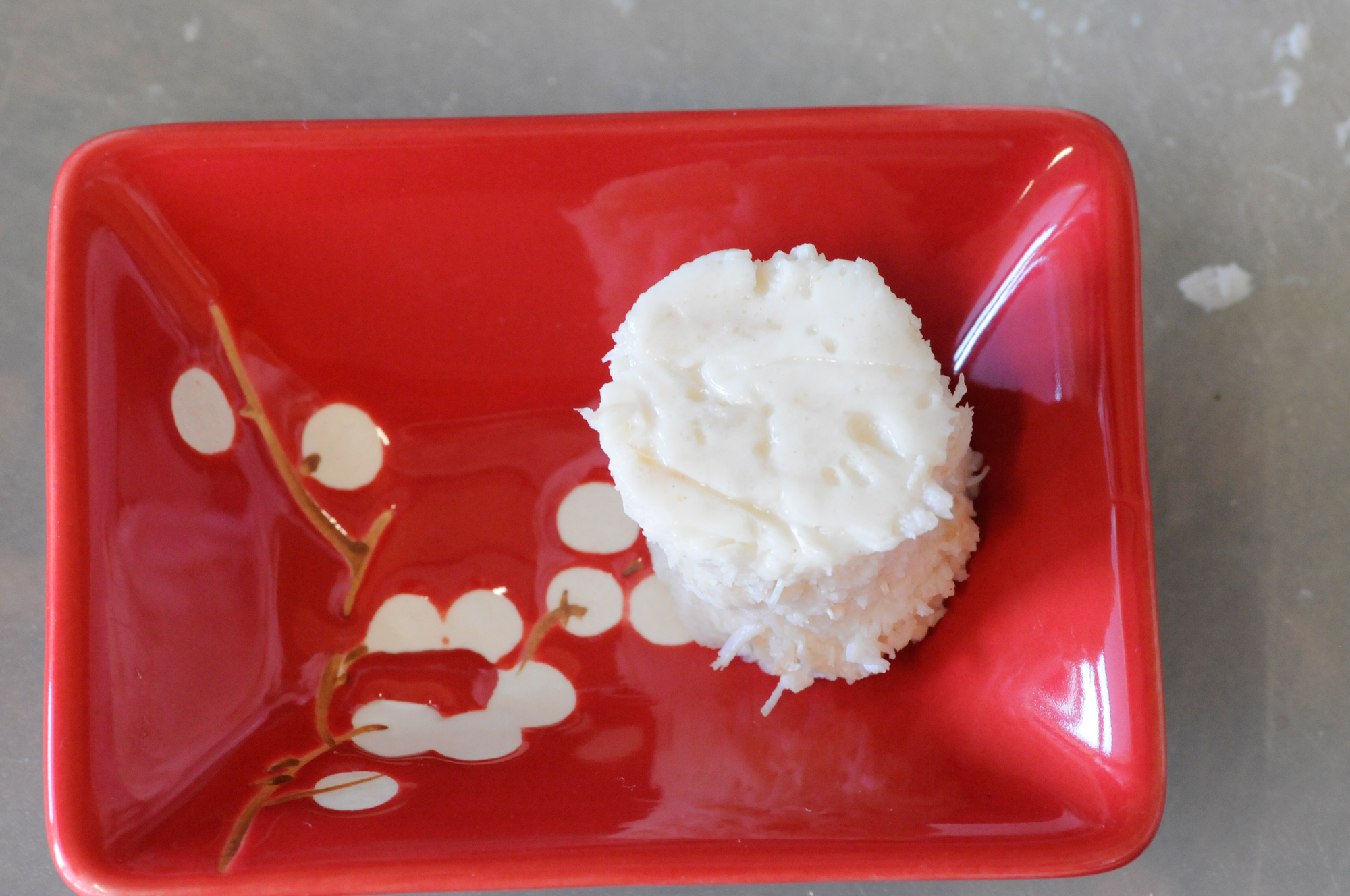
Coconut Rice Adapted from Saveur Magazine’s Coconut Brown Rice. This rice is simple, light and tastes of warm nights and island breezes.
1″ knob of fresh ginger, peeled and whacked with the back of a knife until it breaks up a bit and begins to let off some juices
1 cup rice (our favorite is long grain brown rice, though your favorite rice will do, just adjust the cooking time accordingly)
3/4 c. light coconut milk
3/4 c. water
pinch salt
Rinse the rice and add to a medium saucepan over high heat. Add the coconut milk, water, salt and ginger. Stir to combine, making sure the ginger is fully submerged. Bring up to a boil, stirring frequently, cover, and kick the heat back to a simmer. Simmer until the liquid is absorbed and the rice is tender, about 45 minutes.
Remove the pot from the heat and let sit 10 minutes. Remove any large pieces of ginger you run across. Taste for seasoning and add as necessary.
Mango Salsa This style of salsa is a Miami staple during high mango season, and makes a great addition to any dish you’d like to inject a sunshiny brightness to. Serve the leftovers in tacos, mixed into a cold rice salad, or spooned over your favorite meat. Tastes even better the next day.
1/2 c. chopped cilantro
1 mango, peeled & chopped
1 jalapeño, chopped (de-seeded if you want less spicy, seeded if you like a big spice kick)
1/4 c. diced red onion
1 lime, juiced
Combine all ingredients and season to taste. Use to bring a bright summery finish to any dish.
This dish was intended to be a showstopper. Picture it: Miami, 2011. A group of 40 seasoned foodies gathered on a sweltering late July Saturday in a Midtown penthouse with sweeping views for a potluck promising gastronomic delights. A XX-something year-old me with my Darling Dedicated Husband sous, bustling around to make sure our dish turns out right.
I’m happy to say that my two weeks of freaking out trying to make sure our dish not only fit the ‘avant garde’ theme of the potluck, but was damn tasty, paid off. The dish was a smash success and avant garde enough to wow. Go, me. I even managed to make 40 servings that were just the right size — a little cup full — so no one was completely stuffed after eating it. More on the potluck.
This recipe is not a quick cook by a long shot and the broth makes a big batch. Freeze the leftovers in quart freezer bags to pull out and thaw as necessary. Although it takes a long time to cook, this broth is totally worth it. Definitely the best broth I have ever made by far.
So nice, I just had to take another shot of that scallop
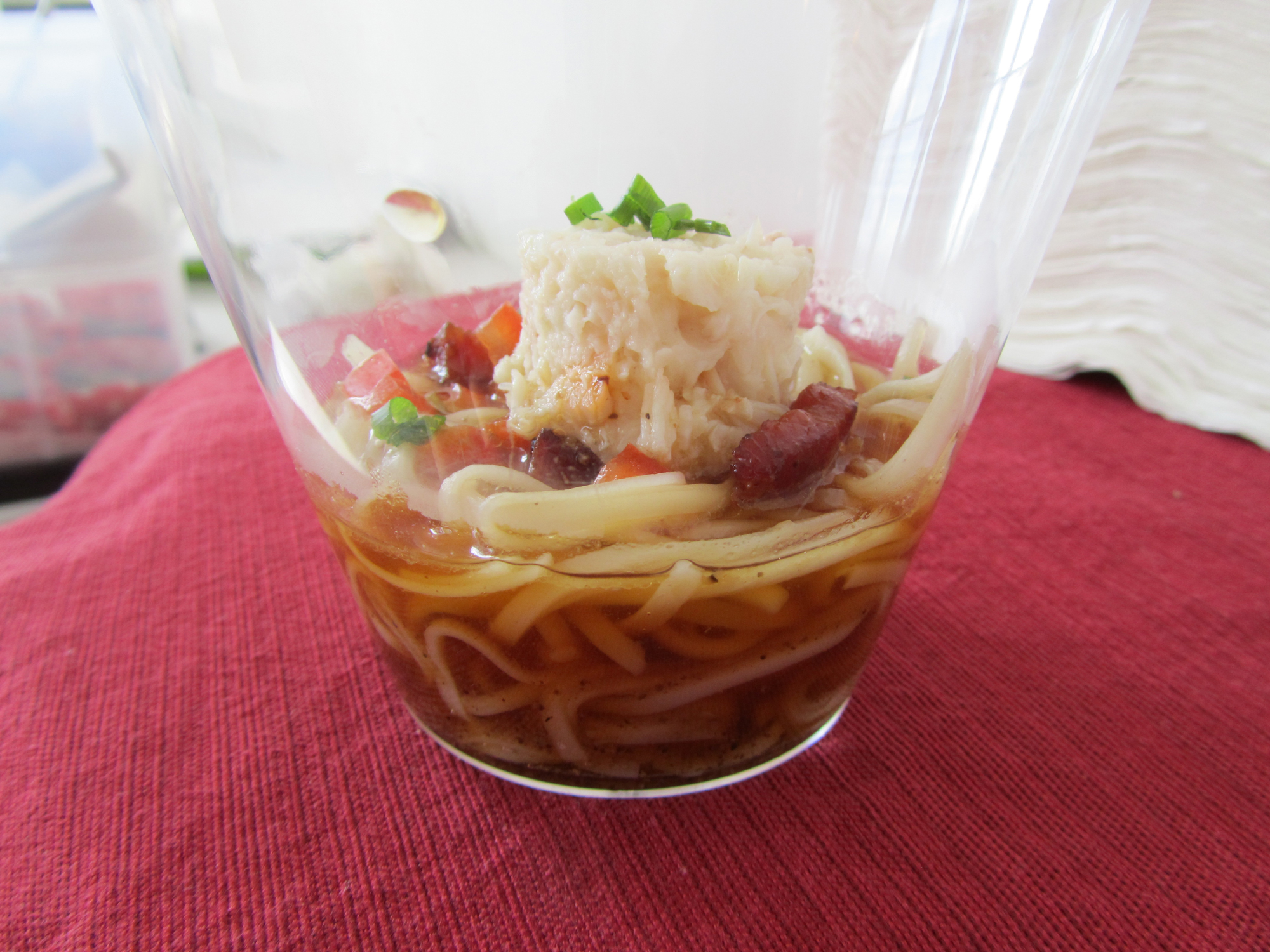
Ramen with Kickass Broth, Fresh Bacon and Mousseline “Scallop”
Don’t be afraid of the long ingredient list. This dish, while not quick, is well worth the extra effort. Makes a great showstopper for company, and the extras can be dressed up in a million different ways.
1.5 lbs. scallops
1.5 lbs. crab (I used 8 ounces claw meat and 16 ounces lump meat)
3 large egg whites
1 1/4 c. heavy cream
5 tsp. kosher salt
2 tsp. white pepper
Juice of half a lemon
2 oz. Wakame seaweed
1 1/4 gallons water (16 cups)
1 1/2 ounces dried shiitake mushrooms, ground into as fine a powder as you can get them
5 pounds chicken wings and necks
1/2 pound chicken wings
1/2 cup sake
1/2 cup mirin
1 cup usukuchi (light) soy
1/3 pound double-smoked bacon
Ramen noodles
Enough house bacon to make a nice garnish, sliced into small batons and fried
Finely diced chives (optional, for garnish)
Finely diced red jalapeños (optional, for garnish)
1.5 lbs. scallops
1.5 lbs. crab (I used 8 ounces claw meat and 16 ounces lump meat)
3 large egg whites
1 1/4 c. heavy cream
5 tsp. kosher salt
2 tsp. white pepper
Juice of half a lemon
About half an hour before you want to start making your mousseline, put the bowl of a large food processor, the blades, and another large bowl in the freezer.
Preheat your oven to 300 degrees F.
In the food processor (out of the freezer), puree the scallops and egg whites until smooth. With the motor running, add the cream, salt, pepper and lemon juice. Blend to combine.
Dump the crab into your chilled bowl, picking through the meat to ensure there are no shells.
Fold your mixture into the crab and set in the fridge to chill while you prepare the terrine.
To make a quick & dirty terrine, take two small disposable aluminum meatloaf pans and line them with enough plastic wrap to completely cover the bottom and sides and fold over the top. Wetting the
pans slightly before placing the plastic wrap will help the plastic wrap stick in the corners.
Gently fill your terrines – this recipe makes enough to just about fill two of the meatloaf pans, or one large bread pan. Fold the ends of the plastic wrap up on the top and cover with tinfoil.
Place in a large roasting pan, and add hot water halfway up the sides of the terrines to make a water bath.
Bake until a thermometer inserted in the center reads 140 degrees F.
While your mousseline is baking, prepare the terrine “lids”. Cut cardboard (I used the container from a 12 pack of pop) so it fits as snugly as you can get it in the meatloaf pans. Make sure the edges of the “lid” aren’t getting hung up on the inner lip of the terrine. Cover with tinfoil and set aside.
When your mousseline has reached 140 degrees, pull from the oven and remove from the water bath. Cool and add your terrine “lids”. Weight both (I used 2 15-ounce cans of beans for each terrine) and chill in the refrigerator overnight.
To make the “scallops”, unmold each terrine and cut into 8 equal pieces widthwise. Use either a very small round cookie cutter or a film canister with the end snipped off (I’ll give you one guess as to which method I used) to carefully punch out your scallops. This quantity makes 40-something small scallops, with enough scraps leftover to completely fill a quart freezer bag.
Kickass Broth Adapted from David Chang’s Ramen Broth 2.0 from Lucky Peach Volume 1
2 oz. Wakame seaweed
1 1/4 gallons water (16 cups)
1 1/2 ounces dried shiitake mushrooms, ground into as fine a powder as you can get them
5 pounds chicken wings and necks
Kickass Broth Seasoning Adapted from David Chang’s Tare 2.0 from Lucky Peach Volume 1
1/2 pound chicken wings
1/2 cup sake
1/2 cup mirin
1 cup usukuchi (light) soy
1/3 pound double-smoked bacon Make The Broth
Heat the water in your largest stock pot to 150 degrees F. Add the seaweed, turn off the heat, and let steep 1 hour.
Fish out the seaweed and discard. Add the chicken and bring to a simmer. Simmer 15 minutes and scrape off any chicken scum that has risen to the top. Add the mushrooms and kick the heat down until the pot is very gently simmering. You’re looking for an occasional lazy bubble to rise to the top. Simmer gently for 5 hours, checking every once in awhile to make sure you’re neither too cold or too hot.
Strain and chill. For a more refined stock, strain, chill and remove the fat that solidifies on the top.
Make The Seasoning
Preheat your oven to 250 degrees F. Place the chicken wings in an oven-safe pot or steep-sided pan that is large enough to hold them without overlapping. Roast 5 minutes just to get the fat to start rendering out.
Crank the heat to 400 degrees. Cook, flipping occasionally, until the chicken is deeply mahogany–you’re not going for burnt, but the more color on the chicken = the better the resulting taste. This process took me around 40 minutes.
Remove the chicken and deglaze with the sake, scraping the browned bits of lovely goodness off the bottom of the pan. Set the pan over medium-high heat, and add the remaining ingredients (including the chicken).
After your mixture comes to a simmer, kick the heat back until you have the barest of simmers going. You’re not looking to reduce the liquid, just infuse it. Keep at a bare simmer for an hour and a half.
Strain and chill. Skim the fat that rises to the top.
If you’re feeling really froggy, you can save that fat to use as a topper for your ramen. Conversely, if you’re feeling really rushed for time, you can skip the skimming step and all will be well.
Finish The Broth
Season the broth with seasoning sauce until it tastes perfect to you. You may need additional salt or some heat, you may not. We added all of the seasoning sauce to the whole batch of broth and the taste came out perfect. And there you have it, a whole big pot of fabulous, rich, flavorful broth.
Cook The Noodles
Cook noodles according to package directions. Rinse in cold water to stop them from clumping and divide into your serving bowls.
Assemble The Dish
Add broth to your noodles until only a small island of noodle is left peeking out. Top the small island with a mousseline scallop, garnish with fresh bacon, chopped chives and jalapeños.
This was our second batch of ice cream made with the Kitchenaid mixer ice cream maker attachment, and like the first attempt, it wasn’t half bad. Where the first attempt was eggy and a little on the brittle side, this version had zero eggs and a a nice creamy mouth feel. It was too sweet by far, but the texture was pretty decent. Not quite like Ben & Jerry’s and I’m not 100% sold on the cornstarch slurry, but not bad.
Not bad. Not bad at all.
Almond Milk & Cream Cheese Ice Cream with Oreos
This recipe is based on Dana Treat’s Cherry Crisp Ice Cream, which was in turn adapted from Jeni’s Splendid Ice Creams at Home
2 c. almond milk
1 1/4 c. heavy cream
1.5 oz. cream cheese, softened (we used reduced fat Neufchâtel)
1 Tbsp. plus 1 tsp. corn starch
1/8 tsp. fine sea salt
a slack 2/3 c. white table sugar
2 Tbsp. agave nectar
2 caps vanilla extract
1 1/2 c. crushed Oreos (we used reduced fat)
Place the bowl of your Kitchenaid mixer ice cream maker in the freezer 24 hours prior to your desired ice cream having.
Make the component parts:
Cornstarch slurry: mix 2 tsp. almond milk with the cornstarch in a small bowl to form a smooth slurry.
Cream cheese: mix cream cheese and salt together in a medium bowl until smooth and well combined.
Cookies: crush Oreos. Resist the temptation to visit the bowl of cookie bits between steps.
Chilling Station: place a large bowl in the sink, fill with ice and water.
Make the ice cream base:
In a medium pot over medium-high heat, combine remaining almond milk, cream, sugar, agave nectar and vanilla. Bring up to a boil and keep it there for 4 minutes. Watch your pot like a hawk, or it is going to boil over. If your pot continues to boil over like mine tried to, pull it halfway off the heat if you can, and if not, knock the heat back a little until the boil is less enthusiastic.
Remove from the heat and whisk in your slurry.
Return to the heat and cook, stirring, about 1 minute or until slightly thickened. Remove from the heat for good this time.
Slowly pour the milk mixture into the cream cheese mixture, whisking until smooth. Pour into a 1 gallon freezer bag and submerge as best you can in the freezing water. Let stand until cold, about 30 minutes.
Ice cream it:
Assemble your frozen ice cream maker attachment right before the 30 minutes is up. You want this sucker to still be near-freezing when you add the ice cream base.
Carefully pour your ice cream base into the frozen ice cream maker bowl and let spin on mix until thick and creamy, about 25 minutes. Add the cookies and let go another 5 minutes.
Spoon out into your container of choice and freeze until your desired serving consistency is reached; for us this was about an hour.
I made this beautiful, rich, luscious mushroom dish recently on a night my DH was out of town. You see, I live it up when he’s gone. 😉
Luscious Mushroom Ragout for 1
6 oz. Crimini mushrooms, cleaned and chopped
6 oz. Shiitake mushrooms, cleaned and chopped
1 tsp. olive oil
2 Tbsp. unsalted butter, divided
1 c. water
1/4 c. white grits
Parmesan cheese
Vinegar
2 eggs
Romano cheese
Heat olive oil in a pan on medium. Add mushrooms and sautée until cooked through, approximately 10 minutes.
Add 1 Tbsp. butter, cook until butter melts and mushrooms start to brown, about 5 minutes.
In a medium pot, bring the water to a boil and add the grits, turn heat down to medium and cook, stirring, 5 minutes or until done. Add a hand full of Parmesan cheese and remaining tablespoon of butter. Stir to combine.
Bring a small pot of water up to a simmer over medium heat and add a cap full of vinegar. While you are waiting for the water to come up to temperature, prepare your eggs. Crack the first egg into a small dish (those little tiny glass bowls TV chefs like Julia Child used to use for prep are perfect here). Check for shells. From here, you can either strain the egg whites to get rid of the wispy bits that will never coalesce into a nice beautiful poached egg (to accomplish, gently tip the cracked egg into your smallest medium-fine hand held strainer and very gently shake to get rid of the wispy bits), or you can tip the egg into the water as-is. Either method is just fine. I let a very small bit of water just peek into the dish while I’m lowering the egg into its bath to help it set a bit while still in the protection of the dish, but that’s just me. Your method will vary.
Gently simmer 2-4 minutes or until your desired egg white set and yolk jiggliness has been achieved.
Assemble your dish and sprinkle with Romano. Serve and enjoy.
Let me start this post by saying that despite all the drama in its creation, we ended up with perfectly wonderful bratwurst in the end.
The Procurement Process
This recipe calls for something called “Soy Protein Concentrate.” Upon reading that ingredient, I thought no problem, Whole Foods will have it or maybe GNC. Publix may even have it. Think of it no more. And then I got to Publix, and Soy Protein Concentrate is not what I thought it was–some kind of fake milk or maybe a supplement. Instead of doing the smart thing then and there and ordering it online, I went to GNC. No luck. And Whole Foods, where after half an hour of increasing frustration and two stock guys help, I Googled what I needed the soy for. Hmmm… well, that’s interesting. Turns out Soy Protein Concentrate may or may not be this stuff called TVP or Textured Vegetable Protein. Or, it may be a powder in a big bottle that looks like the Creatine bottle. Or it could be neither. I left Whole Foods with a dubious bag of Textured Soy Protein that kind of looked like a bag of off-color lava rocks, but no real idea if this is what I was supposed to get, or if I felt good about putting weird rock things in my sausage at all.
The meat, thankfully, was no problem to source. Our butcher at Laurenzo’s Italian Market had the veal, pork shoulder and fat back we needed on hand and also offered to grind the meat for us and had hog casings in stock if we needed them as well. We opted to grind the meat ourselves, but the offer was appreciated. We didn’t happen to need casings this trip, having some left over from last month’s Italian sausage, but we will definitely order casings from them vs. online next time.
I know I’ve said it before, and I’ll say it again: if you are lucky enough to have a butcher in your vicinity, visit them. Visit them often. Butchers not only often have better prices on meat than big supermarket chains, they have better quality. Butchers, by and large, are also a passionate bunch about what they are doing and are more than willing to discuss the merits of a certain cut of meat for a particular preparation and will also make sure you are getting the best product for your money. Our butcher is great, and always more than willing to help with any questions I may have. He also does special orders, and can get most anything I could want in a reasonable amount of time. Special fancy buzzword-laden meat is great and all, but I will pick the meat my local business procures 9 times out of 10 for its freshness, quality, and to support my community.
Mmmmmm…. tubed meat….
The Sausage Making Process
The sausage making process started off great. We decided to forego the weird nubbly protein, and my DH (Darling Husband) chopped the meat smaller than last time (ending up with approximately 3/4 inch cubes), and we chilled the meat to almost frozen before starting. Working in small batches with the balance of the meat in the freezer, we processed the chunks through the die in the initial grind. This went much faster than last time and we were very pleased with the results.
We added the cream & eggs–wait, what? Cream and eggs in a sausage? Were you supposed to do that? It turns out that what makes this sausage emulsify is the addition of heavy cream and eggs. And here I thought it was white because of the veal (and didn’t even know it was an emulsification).
Ok, so the blending went well, as did the resting. And then we hit a snag. A big snag that led to a meltdown at Casa Cochran. Now, so far for us at least, sausage making has not been the most relaxing activity ever. Heavy machinery is used, so that’s a plus, but we have no idea what we are doing outside of the (detailed) instructions provided by Ruhlman in the book. We are sausage novices. When trying to pass the emulsified sausage meat through the Kitchenaid sausage attachment and into the casings, all hell broke loose. Only a few anemic wisps of meat would go through the feed tube into the casing, no matter how many times there was freaking out, yelling and re-assembly of the mechanism. So, after much arguing, a meltdown and one of us being banished from the kitchen, the sausages were hand stuffed. How, I’m not sure, since I was the one banished. But, my DH did manage (somehow) to bring out a big plate of beautiful coiled sausage in the end, so however he did it was perfect.
This go ’round we also tried two different way of making links: the way we thought made sense (while stuffing the sausage) and the way the literature says to do it (after the sausage has been stuffed). Method #2 sucks, though I probably did something wrong to anger the sausage gods, and I think we will stick with method #1, even if it means my nursing back pain self has to stand in the kitchen for an hour. Method #2 resulted in broken casings and meat loss. Not good, especially after the previous maelstrom.
The perfect way to celebrate America Day
And Finally, The Eating
We celebrated the Fourth of July with our fresh brats (simmered in Shiner Redbird Summer Ale), fresh Florida sweet corn on the cob, and a slight variation of Bon Appetit’s Fingerling Potato Salad
Potato and Leek Salad For original recipe, visit Bon Appetit
This recipe isn’t half bad. A bit leaning-towards-greasy, but not too bad for a summer evening. I think I’ll play with the oil amount and addition of even more spices next time. I’m thinking a hybrid frankenstein between this salad and my DH’s favorite potato salad from Bobby Flay.
1 1/2 lb. small creamer potatoes (white or red), cut small
Big pinch Kosher salt
6 Tbsp. extra virgin olive oil
1 Tbsp. brown mustard seeds
2 leeks, white and pale green parts only, halved and cut into 1/4″ half rounds
Cap full white vinegar
2 tsp. dijon mustard
Palm full of red pepper flakes
Black pepper to taste
Place cut potatoes in a large pot and cover with plenty of cold water. Throw in a big pinch of salt and bring to a boil. Reduce heat to medium, and simmer until potatoes are tender, about 8 minutes. Drain and cool on a baking sheet.
Meanwhile, heat 1 Tbsp. oil over medium-high. Add mustard seeds and cook until they start to pop, roughly 2 minutes. Transfer to a large bowl.
In your largest skillet, heat another 2 Tbsp. oil over medium heat. Add the leeks and cooks, stirring occasionally, until tender and beginning to crisp at the edges, approximately 12-15 minutes. Season with salt to taste.
While you’re waiting for your leeks to cook and potatoes to cool, add 2 Tbsp. oil, vinegar, dijon and red pepper flakes to the mustard seed oil. Whisk to combine. When the leeks are done, add them along with the potatoes and toss to coat. Season with salt & pepper to taste.
This made an interesting first stab at ice cream. Eggy, with a strange flavor profile from the Avocado honey. If you haven’t had Avocado honey, it’s hard to describe. It tastes like honey, just with a bit something… extra(?) different(?) added. It’s good, and this ice cream was certainly delicious, but next time I might go a little more traditional in my flavor profile interpretation. The egg content in this recipe is on the heavy side in an attempt to compensate for the almond milk. I mostly followed the recipe from Saucy Kitchen for this first foray because I just wasn’t sure how almond milk would react in an an ice cream. It turns out, it reacted just fine–this ice cream was not as dense and creamy as Ben & Jerry’s, but also gave me no stomach pain from the small amount of dairy I ended up using, either. I’ll take it. I may try slipping some yogurt in next time, and possibly even white sugar. While I normally avoid it like the plague, I think a basic sweet taste might work better in this application. Agave nectar might also prove a nice neutral sweet. Custardy Almond Milk & Cream Ice Cream with Honey and Cookie Dough This recipe was cobbled together from: Honey Ice Cream from Saveur Magazine, Almond Milk Ice Cream from The Saucy Kitchen and the Kitchen aid Ice Cream Maker Manual and Recipe Book
2 1/2 c. Almond milk
1 1/2 c. heavy cream
8 egg yolks
3/4 c. honey, I used a local Florida Avocado variety
1 cap vanilla extract
1 vanilla bean, split and scraped
half a batch of chocolate chip cookie dough, chopped into small pieces
At least 24 hours before you intend on making ice cream, put your Kitchen aid ice cream mixing bowl attachment in the freezer.
Over medium, heat the almond milk and cream until just simmering. Remove from the stove.
In a mixing bowl if you’re too short to reach the mixer and your partner in crime is off for a run (or in the bowl of your mixer if you aren’t similarly vertically challenged), beat egg yolks until they lighten in color. This takes awhile and I wouldn’t advise using a whisk. You’re not looking for really really light, but you want a significant shade change. Add honey and beat some more until the honeyed eggs form a ribbon when the beaters are pulled out of the bowl.
Add the creamy milk slowly(!) so you don’t cook the eggs. Keep stirring and adding until all the creamy milk is incorporated. Return the whole shebang to a pan and heat to 170F (this is the safe way to kill all bacteria that may or may not be hanging out in your eggs). Usually I’d toss caution to the wind and eat my eggs raw, but I’m not entirely sure this doesn’t help with the final product. I need an Alton Brown refresher! Cook down until the mixture coats the back of a spoon nicely and leaves a track when your finger is dragged through it.
Cool. This can be done in a cooler, in pans over ice, or on the counter top if you are very patient. You’re looking for room temperature here.
Once the mixture hits room temperature, mix in the vanilla bean and vanilla extract. I used a combo, which was just fine, but I might advise to either go for broke with the vanilla pods and use 3 or ditch them all together for more extract. I would imagine two teaspoons would suffice. If you want any other flavorings, add them now. Rum? Almond extract? Anything in the liquid family.
Move your getup to the freezer if you’re using pans like I did and cool to at least 40F.
Pour into the ice cream mixing bowl and turn the machine on low. Churn 25 minutes, add cookie dough, and churn an additional 5 minutes. You’re looking for the ice cream mixture to double in size and the cookie bits to be well incorporated.
And viola! You have a completely passable ice cream. Makes 6 moderate servings.




 Gastography