Black Beans Cubano

Mmmmm… Multi-purpose beany goodness…

This is one of those simple go-to staples that takes a little bit of planning, but is well worth the effort. Simmer a simple pound of beans on a lazy Sunday morning, and eat all week. Sure, you could just eat black beans out of the can as desired, but home made beans come alive with the spices (and smoke) you’ve added, lending a touch of homeyness to meals throughout the week (or even beyond — they keep really well).

There is a reason cultures throughout the Caribbean and South America subsist largely on beans… beans are not only inexpensive, they are nutritional powerhouses and can help stretch your food budget dollars a long, long way. Have I mentioned beans are darn tasty, too?

Uses for leftover beans:

  • Stand-alone as a satisfying soup
  • Added to tacos, nachos, quesadillas or burritos to stretch your meat portions
  • Mashed up and made into veggie burgers
  • Tossed with veggies and pretty much anything else you have on hand to make a bean or taco salad
  • Used to bulk up a pasta dish
  • Used as an added protein hit for any grain-based meal
  • Eaten simply with rolls for sopping up the extra juice

Black Beans Cubano

This dish made a light and satisfying summer week night meal, with enough beans left over for mango salsa and bean tacos for lunch the next day, a big bowl of black bean soup the day after that and a big bowl of beans with sopping bread the day after that. Yay, multi-purpose ingredients. I really could have stretched my beans even further, but I was out of almost everything else in the pantry when lunch rolled around.

Basic Beans
These beans can be made a million different ways, with any bean you happen to have on hand. This is that simple and versatile a recipe.

1 lb. dried black beans (or any other bean)
1 onion, roughly chopped
3 cloves garlic, smashed
1 ham hock or other smoked meat (smoked turkey works great here)
1/2 bunch cilantro

The night before you want to cook the beans, put into a vessel of some sort (making sure to pick over for rocks or other undesirable package inclusions) and cover with water. Soak for 8 hours or overnight on the stove or counter top. Do not place the beans in the fridge, or they will get tough.

Drain the beans and add to a medium pot. Add the onion, garlic, ham hock, cilantro and enough water to cover. Bring to a boil, cover, and knock the heat back to a simmer. Simmer for 2 1/2 hours or until tender. After the beans are tender, remove the garlic and cilantro and season to taste.

Coconut Rice
Adapted from Saveur Magazine’s Coconut Brown Rice. This rice is simple, light and tastes of warm nights and island breezes.

1″ knob of fresh ginger, peeled and whacked with the back of a knife until it breaks up a bit and begins to let off some juices
1 cup rice (our favorite is long grain brown rice, though your favorite rice will do, just adjust the cooking time accordingly)
3/4 c. light coconut milk
3/4 c. water
pinch salt

Rinse the rice and add to a medium saucepan over high heat. Add the coconut milk, water, salt and ginger. Stir to combine, making sure the ginger is fully submerged. Bring up to a boil, stirring frequently, cover, and kick the heat back to a simmer. Simmer until the liquid is absorbed and the rice is tender, about 45 minutes.

Remove the pot from the heat and let sit 10 minutes. Remove any large pieces of ginger you run across. Taste for seasoning and add as necessary.

Mango Salsa
This style of salsa is a Miami staple during high mango season, and makes a great addition to any dish you’d like to inject a sunshiny brightness to. Serve the leftovers in tacos, mixed into a cold rice salad, or spooned over your favorite meat. Tastes even better the next day.

1/2 c. chopped cilantro
1 mango, peeled & chopped
1 jalapeño, chopped (de-seeded if you want less spicy, seeded if you like a big spice kick)
1/4 c. diced red onion
1 lime, juiced

Combine all ingredients and season to taste. Use to bring a bright summery finish to any dish.

Luscious Mushroom Ragout for 1

This photo is rubbish, but the dish is great

I made this beautiful, rich, luscious mushroom dish recently on a night my DH was out of town. You see, I live it up when he’s gone. 😉

Luscious Mushroom Ragout for 1

6 oz. Crimini mushrooms, cleaned and chopped
6 oz. Shiitake mushrooms, cleaned and chopped
1 tsp. olive oil
2 Tbsp. unsalted butter, divided
1 c. water
1/4 c. white grits
Parmesan cheese
Vinegar
2 eggs
Romano cheese

Heat olive oil in a pan on medium. Add mushrooms and sautée until cooked through, approximately 10 minutes.
Add 1 Tbsp. butter, cook until butter melts and mushrooms start to brown, about 5 minutes.

In a medium pot, bring the water to a boil and add the grits, turn heat down to medium and cook, stirring, 5 minutes or until done. Add a hand full of Parmesan cheese and remaining tablespoon of butter. Stir to combine.

Bring a small pot of water up to a simmer over medium heat and add a cap full of vinegar. While you are waiting for the water to come up to temperature, prepare your eggs. Crack the first egg into a small dish (those little tiny glass bowls TV chefs like Julia Child used to use for prep are perfect here). Check for shells. From here, you can either strain the egg whites to get rid of the wispy bits that will never coalesce into a nice beautiful poached egg (to accomplish, gently tip the cracked egg into your smallest medium-fine hand held strainer and very gently shake to get rid of the wispy bits), or you can tip the egg into the water as-is. Either method is just fine. I let a very small bit of water just peek into the dish while I’m lowering the egg into its bath to help it set a bit while still in the protection of the dish, but that’s just me. Your method will vary.

Gently simmer 2-4 minutes or until your desired egg white set and yolk jiggliness has been achieved.
Assemble your dish and sprinkle with Romano. Serve and enjoy.

Serves 1

Great Grains: Red Rice

Red Rice

Red rice, aka Himalayan Red Rice, is a short-grain rice native to South Central Asia, but is also grown in parts of France. Similar in shape to brown rice, red rice has all the nuttiness of it’s dun-colored brethren with a pleasing deep rose hue.

Red rice contains a higher fiber content than white rice and more flavor than either brown or red rices. Nutty, earthy and very aromatic, use this as a departure from the same-old same-old.

Since red rice is dark colored and contains more natural bran than white rice–it has a longer cooking time–on par with brown rice.

Simple Savory Red Rice with Fried Artichoke and Wilted Escarole

This recipe makes a hearty but light, satisfying meal. If you don’t happen to have escarole on hand, substitute any green you are trying to unload. Even broccoli would be great. Same goes with the artichoke. I like its golden brown & delicious taste in this recipe, but you can certainly do without. Roasted broccoli or cauliflower would do nicely.

1 c. red rice
2 c. water
pinch salt
1/2 onion, chopped
2 artichokes, chopped and cleaned
2 Tbsp. olive oil
1 head escarole, chopped and cleaned
Hot chili oil
hot paprika
Salt & pepper
Parmesan cheese (optional)

Combine water, salt and rice in a medium pot. Bring to a boil over high heat, cover, reduce heat to simmer and cook approximately 45 minutes or until the rice is done and the water is absorbed.

While your rice is cooking…

Saute onion and artichokes in olive oil on medium heat until browned.

Add escarole. Saute until wilted. Toss with the rice, hot chili oil, hot paprika and salt & pepper to taste. Sprinkle with good-quality Parmesan and serve.

Serves 3

My Husband Is Out Of Town Indulgence

It’s a small indulgence, but makes dinner for one something to look forward to

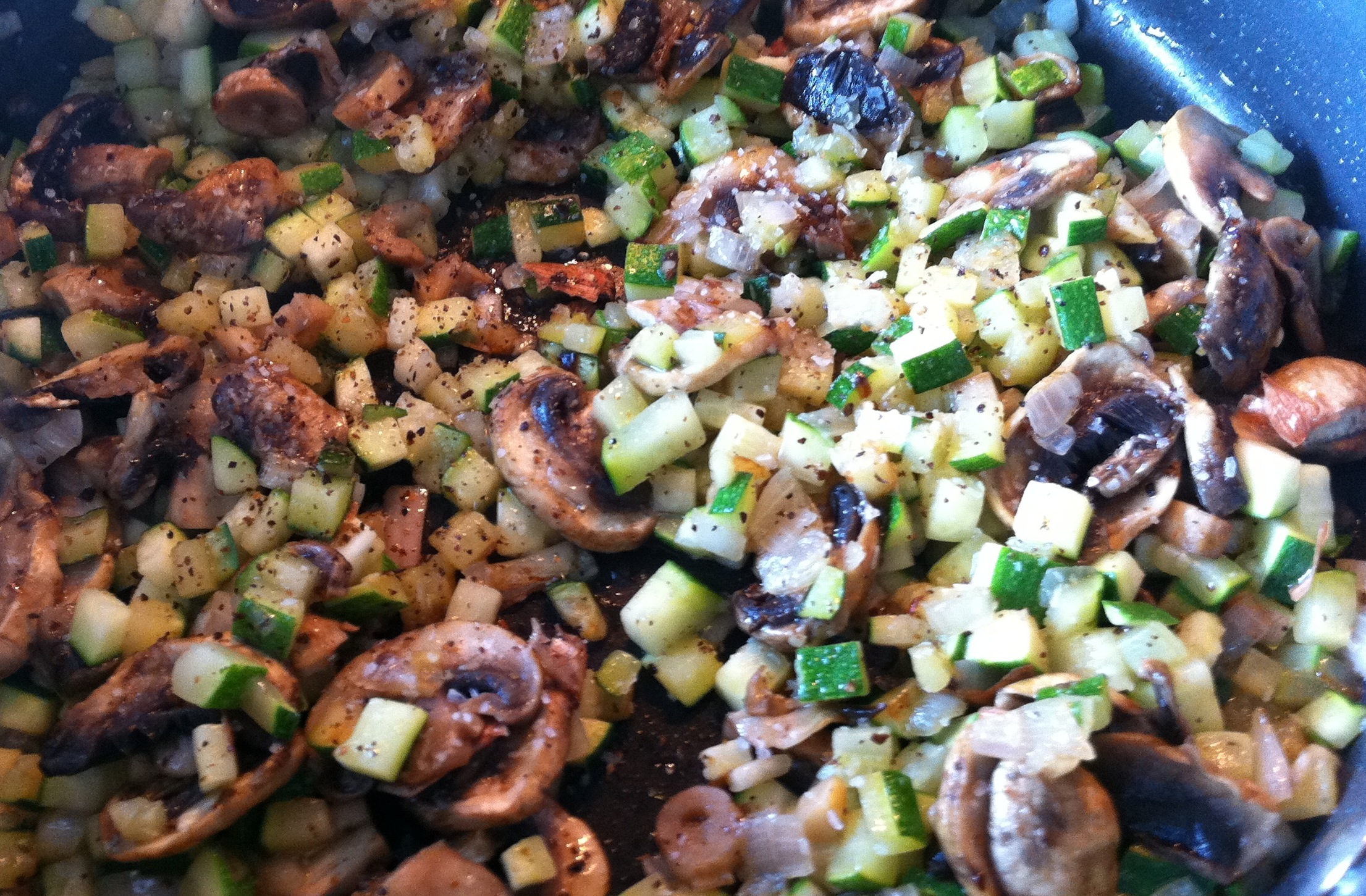
Every time my DH (Darling Husband) is working late and won’t be home for dinner, I try to cook myself a little something I don’t usually get. In years past, this meal consisted of shrimp, asparagus and mushrooms or sushi. Since he now eats shrimp & asparagus and even the occasional spinach, these dinners are now heavy on the mushrooms and/or vegetables he likes less than others (like zucchini. He barely tolerates zucchini, but living in South Florida and belonging to a CSA, we get tons of it all summer long). Tonight’s dinner I whipped up using the mushrooms, some leftover diced zucchini and leftover cooked millet. It’s simple, satisfying, and indulgent (the butter!).

My Husband Is Out Of Town Indulgence

Sautee 3 Tbsp. diced shallots in 1 Tbsp. extra virgin olive oil on medium-high heat until beginning to brown on the edges.

Add 1 1/2 c. sliced button mushrooms, 1 1/2 c. diced zucchini, 1 Tbsp. unsalted butter and salt & pepper to taste. Sautee until mushrooms are browned and cooked through and zucchini is almost disintegrating, approximately 5 minutes if your slices are small.

Add 1/4 c. cooked millet and stir to combine. Season with salt & pepper and finish off with a drizzle of extra virgin olive oil to serve.

Serves 1

Good-for-You Super Green Pilaf with Fresh Breakfast Sausage

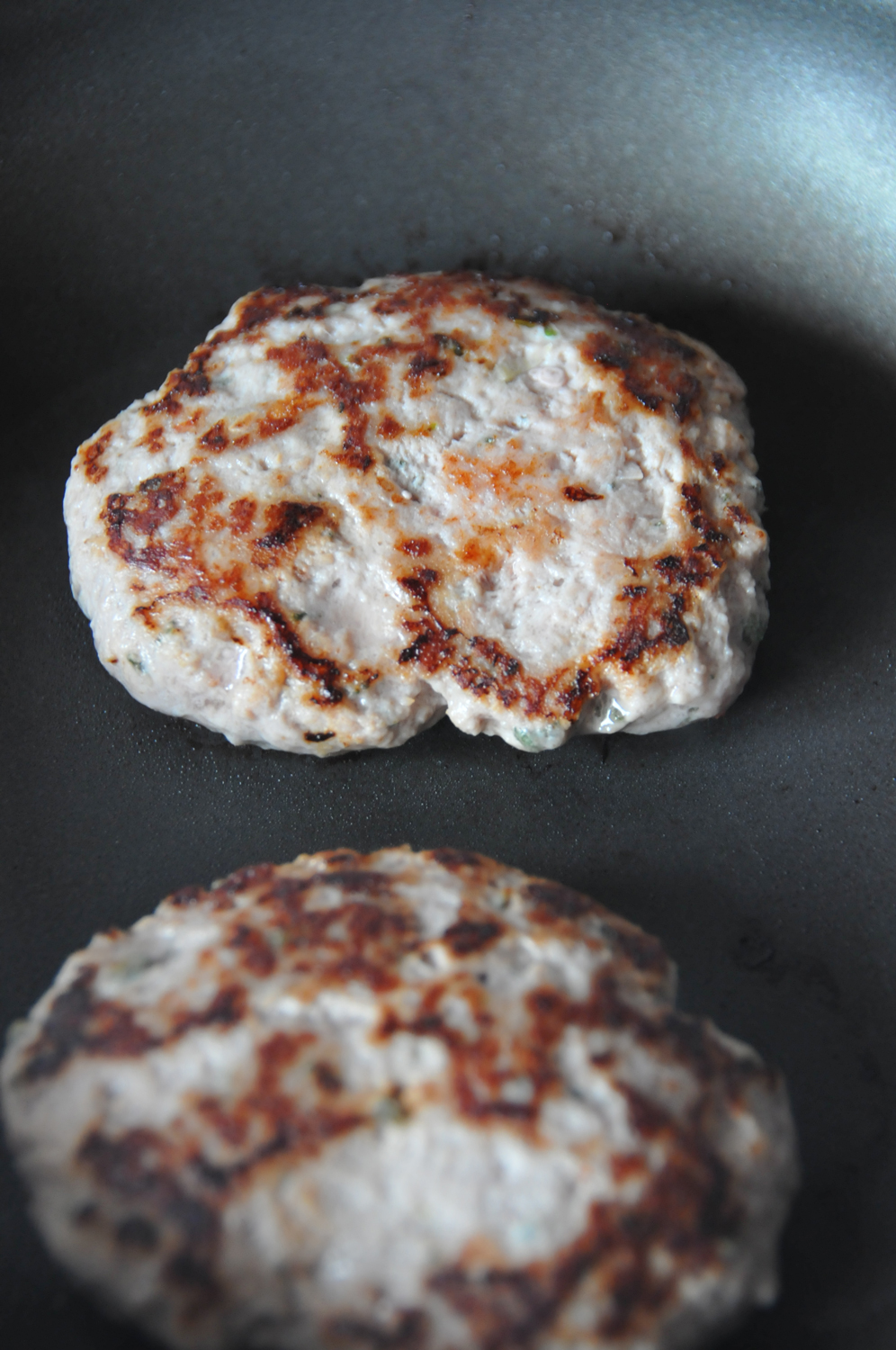
Mmmmm…. fresh sausage…..

Good-for-You Super Green Pilaf with Fresh Breakfast Sausage

Adapted from Food52’s One Pot Kale and Quinoa Pilaf

2 c. salted water

1 c. washed quinoa

8 oz. chopped kale

1 lemon, zested and juiced

1/2 orange, juiced

2 scallions, minced

1 Tbsp. grapeseed oil

3 Tbsp. toasted pine nuts

1/4 c. Feta cheese

Big pinch red pepper flakes

Salt & pepper to taste

2 2 oz. patties fresh breakfast sausage, cooked

Bring the water to boil in a covered steep-sided pan. Add the quinoa, cover, and lower the heat until just simmering. Simmer 10 mins., top with the kale and re-cover. Simmer 5 minutes more, turn off the heat, and stem an additional 5 mins. or until the kale is just tender and the water is absorbed.

While your quinoa is cooking, combine the lemon and orange juices in a large bowl. Add the lemon zest, scallions, oil, pine nuts, red pepper flakes and feta.

Add the pilaf to the bowl and toss to combine. Season with salt & pepper to taste and serve topped with a 2 oz. patty of fresh breakfast sausage.

Serves 2 for dinner with enough left over for lunch.

Grits & Greens

So tasty I almost forgot to take a picture

Grits & Greens

1 onion, halved & sliced thin
1 pint sweet mini peppers, sliced
1 head collards, washed, de-stemmed & sliced
1 tsp. Hungarian hot paprika
1 tsp. ground cumin
1 tsp. ground chipotle
1/4 c. Water
1 c. Good quality tomato sauce
Batons of cooked bacon
1/2 c. Yellow grits
2 c. Mixed water & milk
Splash balsamic vinegar

Sautée onions and peppers over medium until very soft and starting to caramelize. Add 1/2 of the tomato sauce, collards, spices & salt & pepper to taste. Cook, stirring occasionally 2 mins or until well incorporated. Add water and cook, stirring occasionally and adding tomato sauce when the mixture looks too dry, 15 mins. Or until collards are softened and look done. Add remaining sauce and vinegar, taste for seasoning and adjust.

While the greens are cooking, make the grits. Over high heat, combine milk and grits with 1/2 tsp. Salt in a saucepan. Whisk continuously until the mixture comes to a boil. Cover and reduce eat to a simmer. Simmer 5 mins.

Serve immediately.

Canadian? Bacon — Charcutepalooza Challenge #4

I’ve always wondered what made Canadian bacon Canadian. Is it that Canadians don’t know how to make real bacon? Does it have something to do with Virginia and hams? was it originally a marketing ploy by McDonalds? How many degrees away is this from Kevin Bacon?

You don’t know either? Let us then take a culinary detour of sorts to discover the real roots of this bacon.

Canadian, aka back bacon or Irish bacon isn’t Canadian at all. Not really. It’s more of a Canadian-English-American hybrid super bacon.

Canadian bacon comes from the lean pork loin, which is located in the middle of the back. It is then brined and smoked.

According to Kitchen Project, this type of savory pork was most likely dubbed “Canadian” by marketers in the United Kingdom who took to importing pork from Canada to deal with a shortage in the mid 1800s.

This imported bacon was prepared Canadian-style (unsmoked and brined) and rolled in ground yellow split peas (or some other form of fine yellow meal) to aid with preservation. In Canada, this type of cured bacon is still common in parts and is called Peameal bacon.

When the English got their porcine packages, they added smoke and didn’t bother to change the name. Emigrating bacon lovers brought the new concoction to the States and Canadian bacon as we know it was born. Isn’t globalization great?

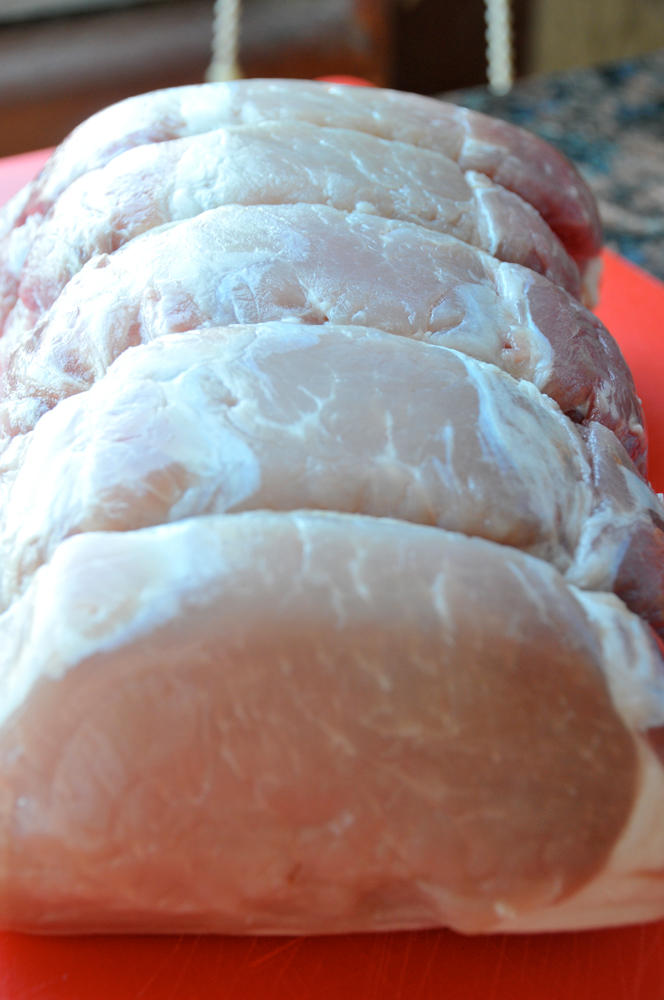
Mmmmm…. pork loin…..

This slab o’ pork wasn’t nearly as hard to find as the pork belly. My friendly neighborhood butcher at Laurenzo’s Italian Market had it on hand and was more than happy to hand me the tastiest looking roughly 3 lb. pork loin in the case.

Since this preparation is all about the smoke, I broke down and purchased a stovetop smoker (Camerons large from Amazon). The smoker is compact, looks easy-to-use and presents as a neat silver self-contained package.

Ok, so I forgot to take a nice beauty shot of the smoker before it got not so nice looking but smoky.

The brine for this preparation was simple; just tons of water, Kosher salt, pink salt, table sugar, garlic, thyme and sage.

Ever feel like a serial meat drowner?

I popped the loin in, waited 2 days, took it out, wiped it off and slapped it on a tray to air cure in the fridge for a few days.

All brined up and nowhere to go
Ok, so it has somewhere to go…

And then my smoker finally came in from Amazon, and we were off!


Alder chips/dust for smoking


The lid didn’t quite sit perfectly over the hump of meat, so I wrapped the smoker in foil

I smoked my pork centered on one burner over medium with Alder chips for a couple of hours. It smoked the house out a bit, but not unbearably so (keep in mind that smoke is sticky and if you don’t want your kitchen and/or house to smell like someone’s been cooking bacon for a week, make sure to clean anywhere the smoke could have gotten thoroughly).

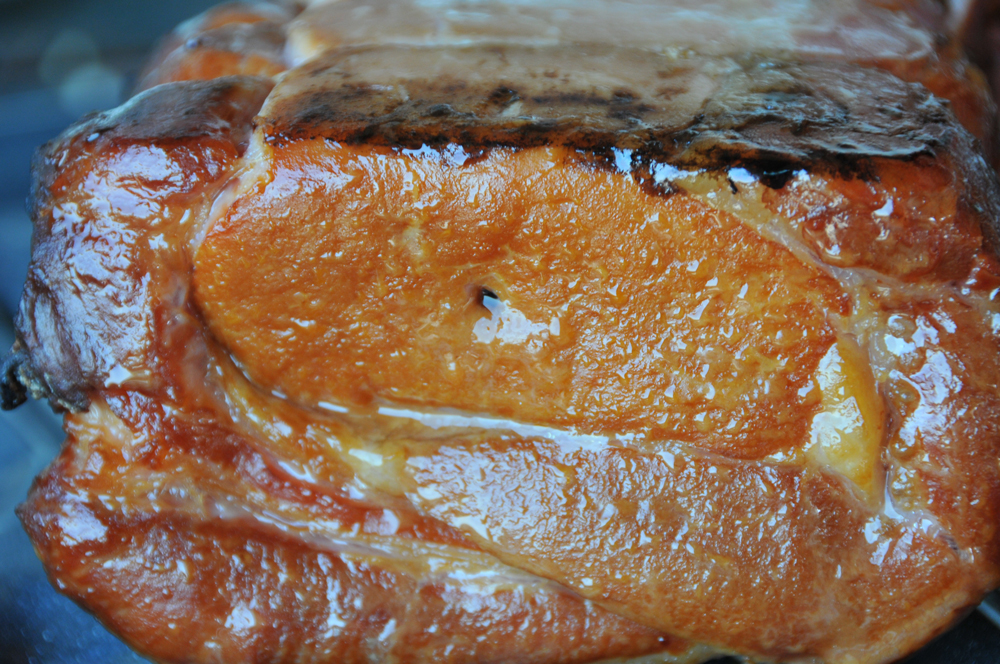
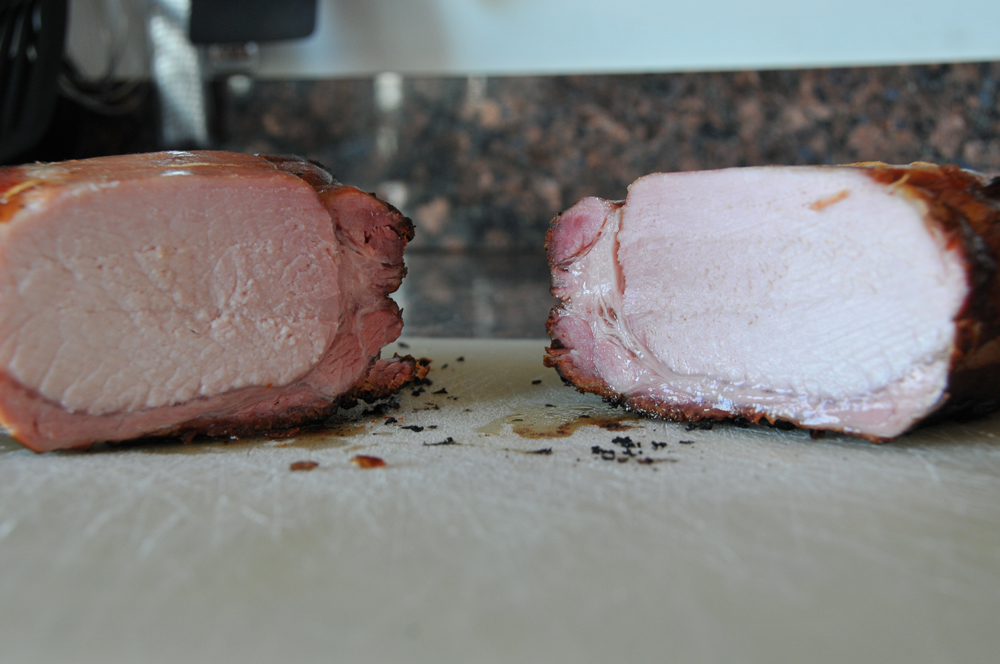
Deeply smoky pork exterior
Smoky but not quite so baconed interior

The final product was meh. Not terrible, not great. The outer portion on the outside of the fat cap looks and tastes like Canadian Bacon, but the inside looks and tastes like a pork roast. A deeply smoky pork roast at that. I think where I went wrong was the nice thick pork loin. Had I used one of the thinner loins, I think it would have turned out just right. Live and learn.

I’ve been racking my brains trying to think of a new vehicle in which to premiere the Canadian Bacon, but to no avail. I tossed a handful in with some greens and a fried egg, and it was not my favorite. Entirely edible, but I liked the dish sans smoke better.

I’m thinking maybe a soup. Maybe even the split pea soup my DH has been begging for for months will do this “bacon” justice.

Split Pea Soup

A Much Better Use of Canadian Bacon–Split Pea Soup
Adapted from Split Pea Soup with Country Ham from one of my favorite food blogs, Orangette

6 oz. fresh Canadian Bacon, cubed
1 large Vidalia onion, chopped
3 carrots, chopped
2 c. dried split peas
8 c. water
Cap full of apple cider vinegar
Salt & white pepper to taste
Olive oil
Crusty bread (optional)

Add1 Tbsp. olive oil to a large heavy-bottomed pot over medium-high heat. After the oil heats up, add the bacon and cook, stirring, until starting to brown.

Add the onion and carrots and cook, stirring to avoid burning, until the vegetables are tender but not browned (roughly 10 minutes).

Add the split peas and water. Bring to a boil, reduce the heat to simmer and cook 90 minutes to 2 hours or until the peas have broken down.

Taste, add the vinegar if the taste needs punch; salt & pepper to taste.

I covered the pot while cooking and the resulting soup was more watery than I like. So, I grabbed my slotted spoon and got to work separating the bacon from the vegetables and excess liquid.

If you want a more refined-looking soup at this point, let the soup cool a bit and blend the vegetables and desired amount of liquid until smooth, add back to the pot along with the reserved bacon and heat through to serve.

Serve with a nice swirl of olive oil to finish and thick slabs of crusty bread for sopping.

Serves 1 hungry deprived husband for dinner with enough left over for you too, if you don’t get too close.

Canadian? Bacon — Charcutepalooza Challenge # on Punk Domestics

Greens with Eggs

Ignore the pork

When James Oseland names a dish his favorite over the past year, I tend to sit up and take notice. I don’t know about being my favorite, but this dish was a pleaser. Ignore the ham in the photo above. This shot was taken with the leftovers, which I foolishly added home-cured Canadian Bacon to. I shouldn’t have. This dish was absolutely great without it, and the smokiness ruined it the second time around. The original version also didn’t call for heirloom tomatoes, but I had a bunch on hand with no plans so I threw them in. I happen to love tomatoes cooked like this, so I liked them. If you do not, or if you don’t have any on hand, feel free to omit.

Greens with Eggs
Adapted from Wild Greens with Fried Eggs (Horta me Avga Tiganita) from Saveur

Extra virgin olive oil
5 scallions, minced
8 oz. cut n clean seasonal cooking greens
1/2 c. flat leaf parsley, chopped
1/2 c. mint leaves, chopped
1/4 c. fennel fronds, chopped
3 cloves garlic, minced
2 eggs per person
Double handful heirloom cherry tomatoes
Crusty bread, sliced on a bias and toasted (optional)

Heat 1-2 Tbsp. olive oil in a large pot over medium-high heat. Add the scallions and cook for 4 minutes, until soft. add the greens, parsley, mint, fennel, garlic, tomatoes and 1/2 c. water; salt & pepper to taste. Cook, stirring as needed, until the greens are tender and tomatoes have softened and split, 10-15 mins.

In a medium pan, heat a turn and a half around the pan of olive oil over medium-high heat until shimmering. Crack your eggs (1 person’s at a time) into the skillet and fry by constantly spooning hot oil over the yolks until the yolks are just set, about 2 minutes. Transfer to a paper towel to de-grease and then onto your greens to serve. Serve with crusty bread.

My first batch of eggs I cooked a little longer than the second, and I actually enjoyed that more. The eggs were still a little runny, and the whites were nice and fried. Cook as you like.

Serves 2

Thrown Together Simple Tomato Pasta

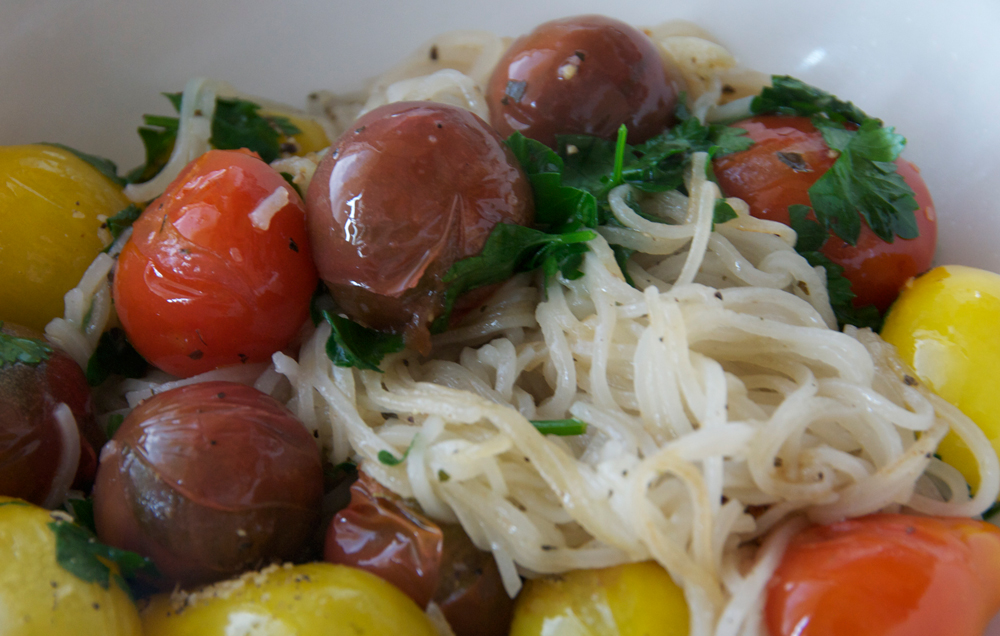
After capturing the tomatoes for posterity, I threw together this quick and simple lunch

After stopping to photograph the heirloom tomatoes for posterity, I threw this quick pasta together for lunch in under 10 minutes.

1 Serving rice noodles

Olive Oil

Double handful tomatoes

1 clove garlic

1 handful parsley

Big pinch red pepper flakes

Salt & pepper to taste

Take 1 serving thin angel hair-style rice noodles, place in a medium pot. Add cold water until half full, place on burner on High. Cook according to package directions (approx. 3 mins.) drain.

While you’re waiting for the pasta to cook, slice 1 clove garlic super thin and chop 1 handful parsley. Rinse a double handful tomatoes.

Over medium-high heat, bring 1 Tbsp. olive oil up to just shimmering; add garlic and stir. Add tomatoes and cook, stirring frequently to avoid burning, until tomato skins begin to split and garlic is deeply golden (but not burnt!)

When pasta is done, add it to the pan, salt & pepper to taste and add a shot of olive oil if the mixture looks dry. Add parsley and a pinch red pepper flakes. Toss to combine and serve.

Serves 1 for lunch.

Black Sesame Walnut Noodles

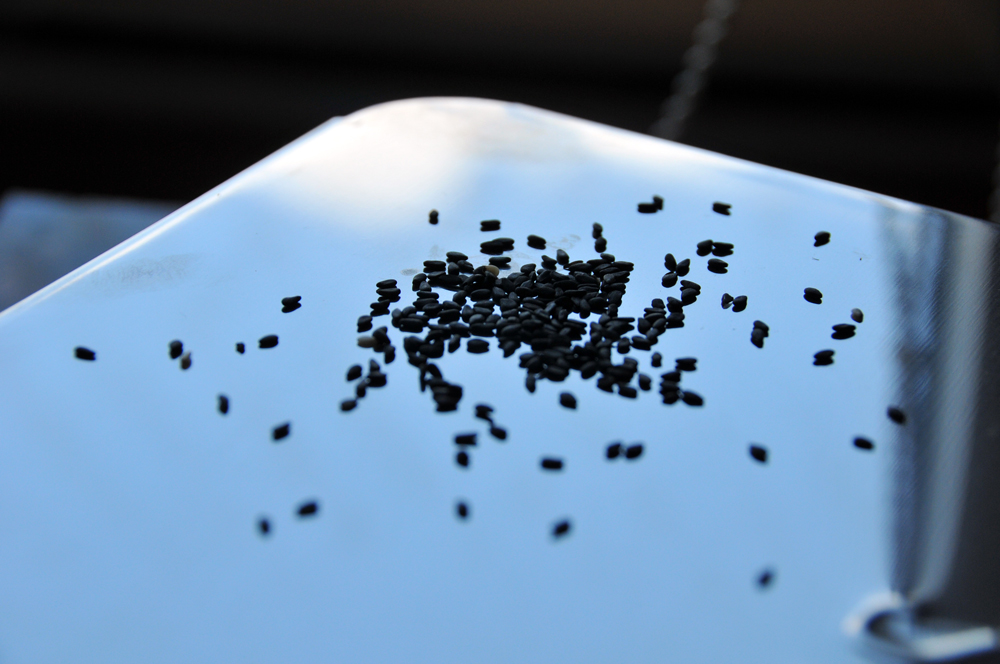
Rabbit poo? Nope. Black sesame seeds, which play a starring role in today’s recipe.

This dish is adapted from Heidi Swanson’s recipe for Black Sesame Otsu from her upcoming book, Super Natural Everyday. If you haven’t visited her food blog (101 Cookbooks) before, go. She is one of my favorite healthy food recipe authors and I can’t wait to get my hands on her new book.

This dish is everything you want in a Spring dinner–nice and light-tasting, not too heavy and packed with green leafy goodness. The only change I would make next time would be adding more cayenne. 2 big pinches just wasn’t enough for us.

Now on to the goodness that is a bowl of Japanese noodles.

Black Sesame Walnut Noodles

1/2 c. walnuts, shelled
1/2 c. black sesame seeds (note: these will end up looking like coffee grounds. If that bothers you, use white sesame seeds)
1 1/2 Tbsp. brown sugar
1 1/2 Tbsp. shoyu
1 1/2 tsp. mirin
1 Tbsp. sesame oil
2 Tbsp. rice (sushi) vinegar
2 big pinches cayenne pepper
12 oz. soba noodles
1 bunch Swiss chard
1 bunch green onions, white and light green parts only, thinly sliced
Handful Chinese chives, chopped (optional)

Put a large pot of salted water on to boil.

Toast the walnuts in a dry pan over medium-high heat until they begin to release their aroma and are lightly toasted. Don’t forget to shake the pan regularly to avoid burnt spots. Add the sesame seeds and toast for only a minute or so, until they smell toasted. Be careful not to over-toast!

Transfer the nuts to a mortar & pestle or bowl of a food processor. Crush until the mixture looks like black sand. Add the sugar, shoe, miring, sesame oil, vinegar and cayenne. Stir to combine and taste for seasoning.

Wash and slice your chard into thin ribbons.

When the water is boiling, add the soba and cook according to package directions until tender (about 3 minutes). In the last minute or so of cooking, add the chard and stir.

When your noodles are tender and the chard is nicely cooked, drain, reserving about a cup of the cooking liquid. Rinse under cold water to stop the cooking.

Reserve some of the sesame paste and the chives for a garnish. Scoop the rest into a large mixing bowl and thin with 1/3 c. of the reserved cooking liquid to form a sauce.

Add everything else to the bowl and toss until combined. Serve topped with the reserved sesame paste and chives.

Serves 2 for dinner, with enough left over for a nice lunch.