Belter Style Red Kibble

Have I told you guys about my obsession with the food from the Expanse/Leviathan Wakes universe? I love this book series (the show is great too), and it’s rife with enough description of common dishes to get this nerdy brain whirling.

I’m fascinated with how these dishes might taste – whose flavors would have influenced them – what technologies are possible in this universe – and what materials and ingredients would be available.

In the Expanse universe, there are three main societies: Earthers, Martians and Belters (humans who live exclusively in space; not on a planet). I could go on about the sociology, political landscape and happenings of the books – suffice it to say that these are the three main factions of import, and what I’m captivated by is the food available on ships or space stations.

So, the first question is what’s available to cook with? Humans have made farming colonies, so it’s safe to say that things like rice (maybe), peas or pea protein, soy, maybe something like kelp, mushrooms, tomatoes, probably things like bean sprouts, peppers, zucchini – other things you can grow in limited space would be available. I think most common would be soy products in all forms, mushrooms and something to make noodles with – rice or kontjac come to mind. Meat would be very scarce; same with dairy. Coffee is available, though most is terrible and I’m not sure if any is exactly what we mean by good coffee in this world. We know cheese is hella expensive and rare. Some analogues are available – mention is made to the lime and peanuts in Pad Thai, with mention that the speaker has never actually tasted the real version of either.

Now, the flavors: who likely had enough people to launch into space to populate the skies? China/Asia, India, ships are involved so Greece, mention is made of some Arabic peoples, I believe someone looking Irish is mentioned (though it could just be a character in the television show I’m thinking of), some generic Anglo Saxon people are seen – I think on the show at least I saw a blonde or two, an Islander of some description, African people of some descent (American or otherwise). The odd Russian. Pretty much everyone, but I’m thinking the majority at least at first were Asian and Indian.

What I’ve seen as the predominant food influences are a mix of those two cultures with some other comfort (lasagna for instance) thrown in for good measure, and I’m imagining the dishes including mushrooms & noodles lean vaguely Italian (at least in my mind).

There is a strong noodle culture in this universe, and hawker stalls which I’m imagining use woks. Microwaves and/or toaster ovens seem to be available on ships. Reconstituted food is also popular, though doesn’t seem at least to be preferred – especially not on space stations, where bars and restaurants are also available.

I could go on and on, but I’ll leave it at that. Suffice it to say, I’ve do men a lot of pondering on the subject 😁

A warning here for my texture issues people. Textured Vegetable Protein (TVP) is bouncy, chewy and a bit rubbery. If that bothers you as much as it does my DH, this dish is not for you. Though, from what I’ve heard, finer bits of the stuff make a nice substitution for beef when making a vegetarian version of Taco Bell’s meat.

This recipe is based off the one from the Fan site The Slow Zone. I upped the spice quantity quite a bit from their original suggestion. I may also go back and rework the TVP some day, substituting in red bean paste if I can figure out how to get that to fry up how I need it to (this dish is supposed to look like dog food – kibble is a derogatory term). I went with TVP because it was used in this recipe and I believe it would be available in the universe.

gluten-free (if you use gf flour), vegetarian, vegan

Kibble:

8 ounces textured vegetable protein or soya chunks (TVP)

1 Tablespoon flour (gf or all purpose)

1 Tablespoon oat milk (the original recipe called for yogurt, but I didn’t have a good nondairy substitute available – you could probably omit)

1 Tablespoon curry powder

1 Tablespoon cumin powder

2 teaspoons salt

3 Tablespoons neutral oil

Sauce:

14 ounce can crushed tomatoes

1 Tablespoon granulated garlic

1 Tablespoon paprika

2 teaspoons cayenne pepper

2 teaspoons red pepper flakes

1 teaspoon apple cider vinegar

2 teaspoons curry powder

2 teaspoons cumin powder

Put a medium saucepan of water on to boil. Once it’s boiling, cut the heat and add the TVP and salt and let soak 30 minutes to rehydrate. Once plump, drain well and press as much water out as possible.

Toss in a large bowl with the rest of the Kibble ingredients but the oil.

Put the clean saucepan back over medium heat. Add the sauce ingredients, bring up to a boil, reduce heat and let simmer 15 – 20 minutes, adding salt and pepper as needed. More heat if you want that, too.

In your largest frying pan, heat the oil over medium-high heat. Add the drained and squeezed TVP and fry, moving frequently so it doesn’t stick, until browned.

Toss the fried kibble with the sauce and serve – I prefer mine with some super al dente rice pasta.

Makes enough for 4

Chili Tuna Fried Rice

This pantry-friendly fried rice is quick enough for a weeknight meal (for when the world gets back to working outside the home), and makes a great lunch the next day if there are leftovers.

Gluten-free, pescatarian

Chili Tuna Fried Rice

1.5 cups leftover cooked rice (I used sushi rice)

1/3 cup frozen shelled edamame

1/3 cup frozen cut green beans

2 Tbsp. neutral oil

2 eggs

1/4 cup coconut aminos

1 Tbsp. fish sauce

1 Tbsp. sambal olek

1 green onion, sliced

1/2 can chili tuna in oil, drained

Add your neutral oil to a large pan over high heat. When it shimmers, add the frozen veggies and green onion. Stir fry until no longer frozen and starting to look cooked.

Add the rice and tuna. Continue to stir fry until the veggies begin to brown.

Make a well in the center of the rice mixture and crack the eggs in. Let sit until the bottom is firm, then scrape up, folding into the rice mix.

Add the coconut aminos, fish sauce and sambal. Stir quickly to combine.

As written, serves 2 for dinner

Chapaguri/Ramdon (aka that ramen noodle dish from the movie Parasite)

Sorry I’ve been AWOL from recipe posting lately – I’ve put my pantry cleanse on hold (or actually have restocked it even fuller in recent weeks), and have been making nothing terribly new or inspiring. Tasty things from staples, but not exactly balanced Internet-friendly dishes.

When it was in theaters, DH and I saw Parasite – which was fantastic – and were just as curious as to what the mixed ramen noodle dish with steak was. We heard it was delicious, and were having friends over for game night – so we decided to make a whole Korean-themed meal.

For sides, we had 4 banchan (vegetable side dishes): spicy cucumbers, sauteed spinach, lightly blanched and seasoned bean sprouts and kimchi. This dish was our main, and the recipe is only slightly augmented from the official recipe(s) listed here. When I made this a second time for just the two of us, I couldn’t help but add a little seasoning to the steak and some green veg.

Chapaghetti (green), Neoguri (red)
Mmmmmm …

Ram-don (Chapaguri)

1 package Chapaghetti

1 package Neoguri (combo pack for the two on Amazon)

200g good steak

2 tsp. neutral oil

2 tsp. butter

1/2c. frozen spinach

2 green onions

Salt, pepper, garlic powder

Boil a large pot of water.

While the water is working, add the neutral oil to a pan over medium-high heat. Add the steak bits, hit with salt, pepper & garlic powder and sautee until your desired doneness is reached.

While the steak and water are working, thinly slice your green onions.

About halfway through cooking, add the sliced green onions and hit a second time with seasoning.

Add the butter and toss until melted. Set aside.

Add the noodles and dehydrated veggies from both packages to the boiling water.

Boil 4:30, adding the frozen spinach in the last minute or so.

Strain, keeping enough water so the mixture is nice and wet still – not swimming, but not dry. The directions say to keep 150ml, but my American non-metric self had no idea what this looked like with noodles so I guessed.

Turn off the heat and add the strained noodles back to the pot. Add the seasoning packet from the green package (the green packet that looks like beef bouillon). Add the oil from the green package and half the spicy looking seasoning (all if you like spicy) from the red package. Stir to combine.

Divide between 2 bowls (can easily stretch to 3 or even 4 if you serve with banchan), and top with steak.

Serves 2 – 3

Pantry Clear: Chili Tuna Rice

As you can see from my last post (see pantry clearing post #1), my pantry is all over the map – but the bulk of the ingredients center on Southeast Asia, specifically Japan.

Japanese is a cuisine my DH and I both love and both crave when we either need a little comfort (among other cuisines, tbh) but feel like we need to be a little nice to our bodies and digestive systems.

This dinner is quick, easy, and feels like a healthy hug. If raw egg yolk freaks you out, omit.

Gluten-free

Chili Tuna Rice

1 cup premade sushi rice (1/2 cup short grain rice cooked in 2 cups water + 1 Tbsp. rice vinegar, 1 Tbsp. sesame oil, and a few grinds salt)

1/2 can chili spiced tuna, drained

2 Tbsp. dried wakame

1 tsp. powder-style chicken bouillon

1/2 cup hot water

1 egg

1/2 tsp. ginger garlic paste

1 Tbsp. coconut aminos

1 tsp. butter

Generous sprinkle toasted sesame seeds

1 green onion, thinly sliced

Set the sushi rice on to cook however you cook rice. While the rice is cooking, boil the 1/2 cup water.

Add the wakame and chicken bouillon to a small bowl and add the boiling water over top. Stir to combine and let sit until the seaweed is reconstituted. Drain loosely when you’re ready to serve and add back into the bowl.

Add the butter, rice, coconut aminos, ginger garlic paste, tuna, and egg yolk. Stir well to combine.

Top with the sesame seeds and green onions and serve.

Serves 1 for dinner

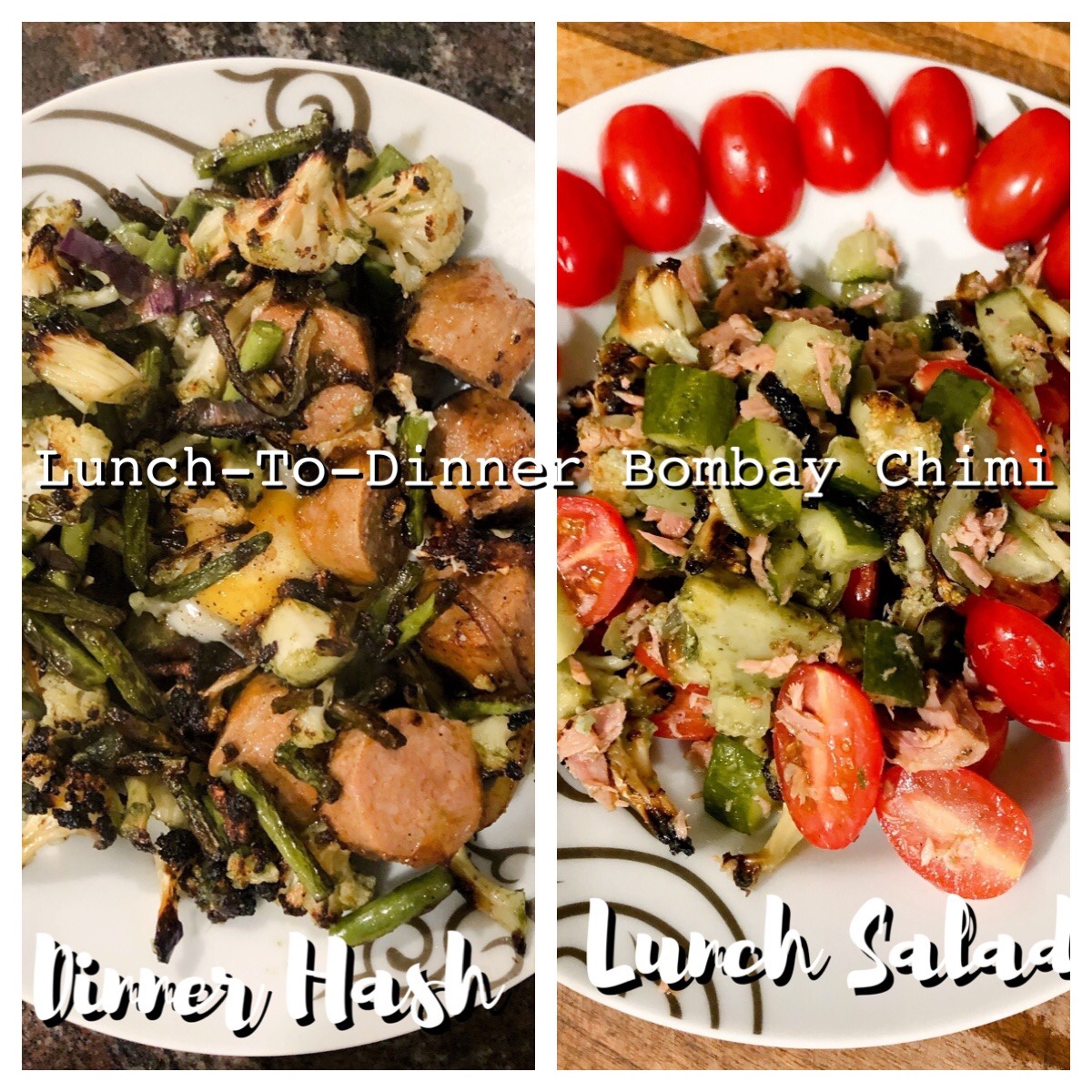
Lunch – To – Dinner Bombay Chimi

I set out to make a chimichurri-based salad, and ended up taking a trip to India instead when at the last minute I discovered my herbs had betrayed me. And it works.

Bombay chutney is a condiment used in a popular Indian street food sandwich and is kiiiiinda akin to the green mint chutney sauce served alongside a number of dishes alongside tamarind sauce. My version is a beautiful shade of emerald and has a nice spicy kick. It’s addictive, and I can’t wait to try making something akin to the actual sandwich, because I can only imagine how Bomb it would be with potato.

Like mashed potatoes. In a patty …. 🤤 But I digress.

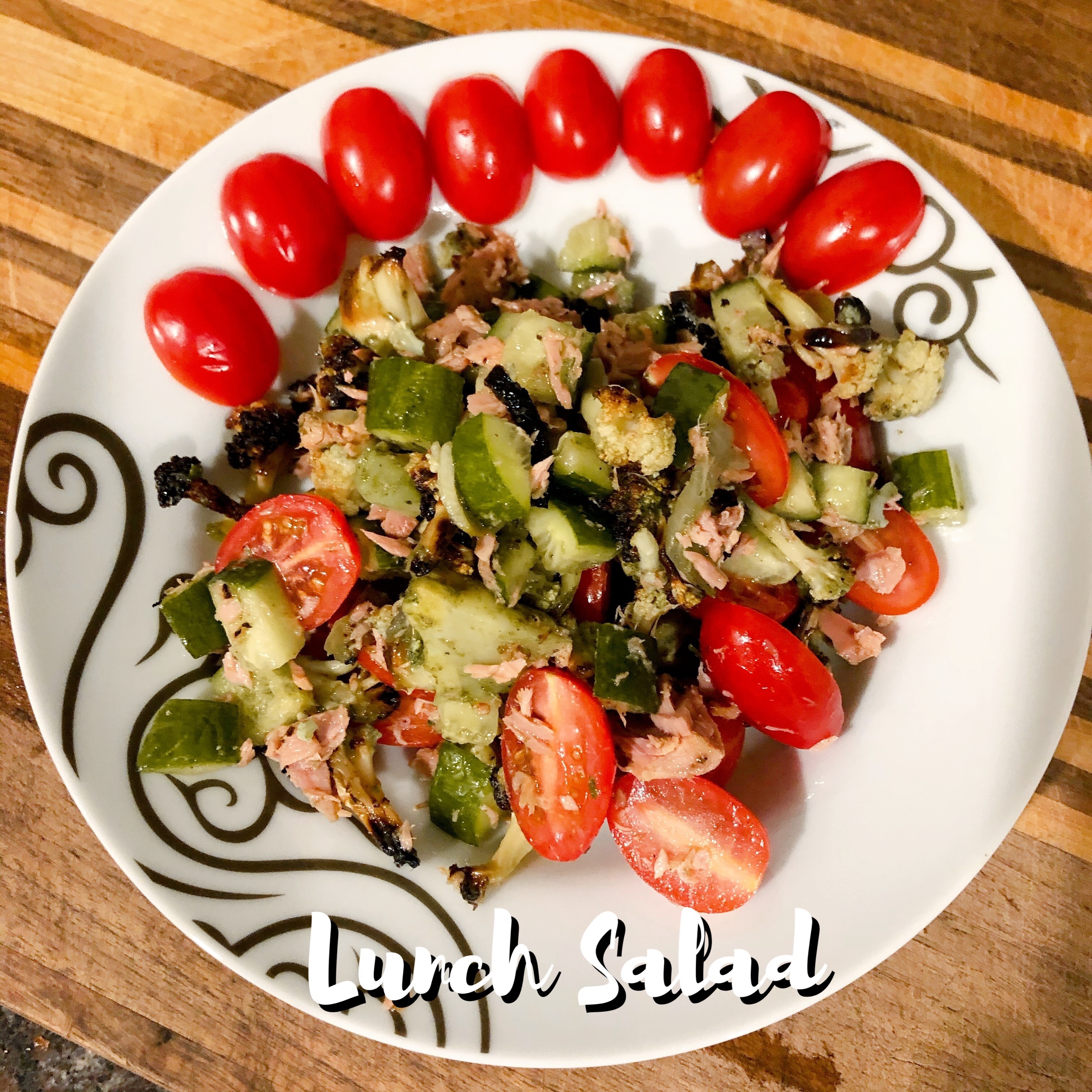
This base recipe is great for lunch or dinner – I served it hash-style when fresh with some leftover Beyond Meat bratwurst & egg and again the next day for lunch with my favorite tuna and some bright crunch. Both ways were fantastic, but I think day 3’s lunch was actually my favorite.

gluten-free, vegetarian base, vegan base, paleo base

Lunch-To-Dinner Bombay Chimi

Base

1 head cauliflower
1 small red onion
4 cloves garlic
1/4 cup Bombay Chutney
1/4 cup neutral oil

Preheat the oven to 200C/375F and prep a baking sheet.

Break the cauliflower up into bite-sized pieces and spread out over the prepped pan. Halve and thinly slice the onion; add. Thinly slice the garlic; add.

Sprinkle liberally with salt & pepper.

In a small bowl, combine the chutney and oil. Pour over the veggies on the pan and toss well to combine, making sure to hit each piece.

Roast 25 minutes or until deeply browned.

Dinner Hash

1 leftover and cooked Beyond Meat bratwurst per person, sliced into rounds
1 – 2 eggs per person (optional)
1 handful chopped green beans
2 tsp. neutral oil
1 tsp. butter (vegan or otherwise)

In a large skillet over medium high heat, stir-fry the green beans in the oil until browned. Season with salt & pepper and add the bratwurst. Stir-fry until warmed through. Push to the side, add the butter and an egg per person to the pan. Fry until your desired doneness is reached. Serve with about 1/4 of the cauliflower per person.

Lunch Salad

1 medium cucumber, chopped
250g cherry tomatoes, halved
1 can chili (red pepper) tuna, drained (optional)

To your leftover cauliflower, add the rest of the ingredients and toss. Warm to room temp if desired by zapping for :30/:45 or so and tossing.

Serves 2 if you’ve got half the cauliflower left; 3 if you only fed 1 the night before.

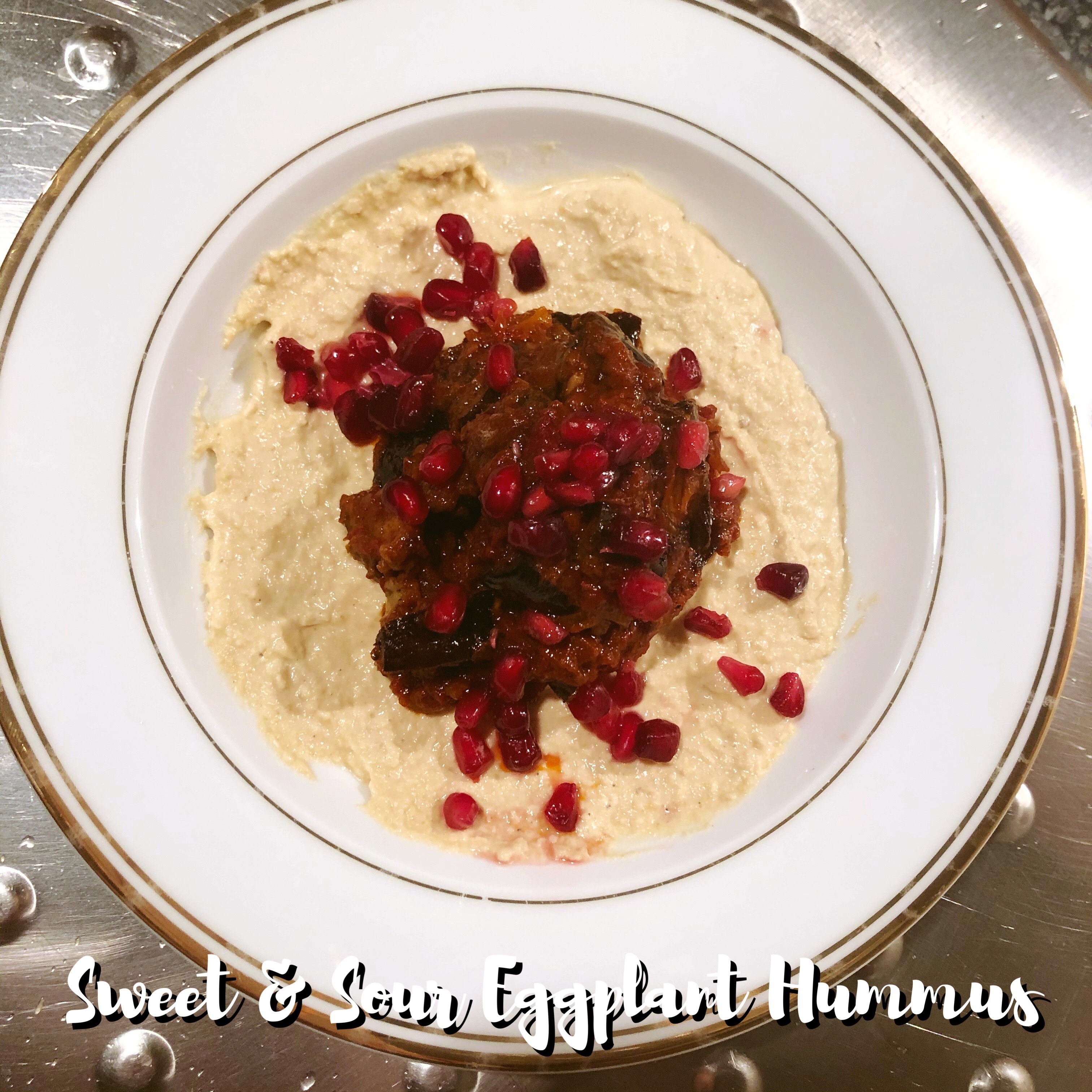
Sweet & Sour Eggplant Hummus

This sounds like a weird one, but is addictive. This dish is based on a crazy good hummus a girlfriend and I (hello, Val @hellotinywonder) had at the staple ‘bring your out-of-town guests’ place Damasca One, a stunning mostly-Syrian restaurant in Souq Waqif.

The dish we had tasted like vegan sloppy joes in the best possible way – sweet and tangy eggplant nestled in luscious kibbeh on a bed of silky hummus. It was a stunner, and the stand-out of the night (at least for me – there was also a fantastic lentil dish I couldn’t eat enough of to parse).

My recreation is solid (as attested by another girlfriend, who I had the chance to make it for – Annmarie of last weeks’ Za’atar Eggplant fame). No kibbeh in mine, and longer cooking is definitely better – but it’s super freaking good and probably a touch healthier.

I’m super pumped that I have leftovers!

Gluten-free, paleo, vegetarian, vegan

Sweet & Sour Eggplant Hummus

Sauce:

1 large purple eggplant
1 red pepper
1 onion
4 cloves garlic
3 Tbsp. tomato paste
2 Tbsp. pomegranate molasses
Neutral oil
Salt & pepper
Ground cumin
1/2 tsp. oregano

Hummus:

1 can chickpeas
Juice of 1 lemon
1/4 c. tahini
1/2 tsp. cumin
3-4 cloves garlic
Salt & pepper

Toppers:

Pomegranate arils
Toasted pine nuts

First, roast the veg. Preheat your oven to 200C/375F. Prep a baking sheet.

Chop the pepper into big chunks and put to 1 side of the tray.

Chop the eggplant into 1/2 inch pieces and put to the other side of the tray.

Sprinkle both with neutral oil, salt, pepper & ground cumin.

Bake for 30-ish minutes or until soft and blackened lightly in spots. Set aside to cool.

While that’s going, slice the onion as thinly as possible. Mince the garlic. Add to a saucepan with 3 Tbsp. neutral oil over low heat. Add some salt & pepper.

Let gently cook, stirring occasionally, 30 – 45 minutes or until the onions are deeply caramelized.

While those are both working, whiz all hummus ingredients together. Taste for seasoning and add more salt or acid if necessary. Set aside.

When the veggies are baked, whiz the peppers a bit to break them up some.

Add the whizzed pepper, tomato paste, pomegranate molasses, 1/2 tsp. cumin, 1/2 tsp. oregano, and 3 Tablespoons water into the onion mixture. Let cook a few minutes to combine.

Whiz to combine a bit better, dump back into the pan, fold in the eggplant, and cook an additional 10 minutes to reduce back down a bit and let the flavors mature.

To serve, lay the hummus down, top with the eggplant mixture and sprinkle with the toppers.

Serves a few

Za’atar Eggplant

This is a dead simple way to explore a sometimes under-utilized and misunderstood vegetable: the simple Italian style eggplant.

I can’t take credit for this recipe – I was treated to it at a good friend’s house after she raved about it. She wasn’t wrong.

Gluten-free, paleo, Whole30, low carb, vegetarian, vegan

Za’atar Eggplant

1 purple eggplant
Za’atar
Your favorite cooking oil
Salt & pepper

Line a baking sheet with paper or silicone. Preheat your oven to 200C/375F.

Slice your eggplant into thick “steaks” however you like – width or lengthwise.

Lightly score each slice with a knife in a crosshatch pattern, taking care not to slice through the pieces.

Sprinkle lightly with salt & pepper.

Top very generously with za’atar (enough time form a crust).

Sprinkle lightly with your oil of choice to kind of stick the spice down. Alternately, you can mix the spice and oil together in a bowl, then smooth over the eggplant slices – depends on how much oil you want to use.

Bake 25 – 35 mins or until softened and browned – a bit crisp if they’re thin slices.

Serves 2

Crispy Miso Tofu Bowl

This is a great little choose-your-own-adventure dinner that’s perfect for batch cooking – or a party.

Gluten-free, vegetarian, vegan

Crispy Miso Tofu Bowl

1 block extra firm tofu
1/2 tsp. black pepper
1 Tbsp. cornstarch or arrowroot powder
2 tsp. honey or agave
2 tsp. date molasses
2 Tbsp. sriracha
3 Tbsp. coconut aminos or soy sauce
2 tsp. white miso
3-4 cloves garlic, minced
1 inch fresh ginger, minced
3-4 big handfuls baby spinach
2 c. sautéed green beans, chopped
1 green onion, sliced into thin rounds
1 Tbsp. pickled ginger, minced
Nori, snipped into small strips
Furikake
Toasted sesame seeds
Togarishi spice or red pepper flakes
Sushi rice (short grain rice cooked with 1 Tbsp. rice vinegar, 1 Tbsp. sesame oil and salt)

First, place paper towels or a tea towel over your tofu and press with a plate or something heavy about 30 minutes to remove all the water.

Prepare your oven to 200C/375F. Line a baking sheet with paper or a silicone pad.

Make a sauce by whisking the sweetener, molasses, soy, sriracha and miso.

Slice the tofu into small squares, and fold 2 Tbsp. sauce into the tofu carefully – making sure not to break the squares up. Dust with pepper & cornstarch and toss.

Dump out into the prepared baking sheet in a single layer.

Bake 10 mins, flip, and bake an additional 10 to crisp.

Sautée the spinach with the garlic and ginger and add the green beans to warm through. Add the rest of the sauce and toss to coat.

To assemble, place rice in a bowl, add the tofu and veggie mix. Top with furikake, nori, sesame seeds, togarishi, pickled ginger and green onion.

Serves 4

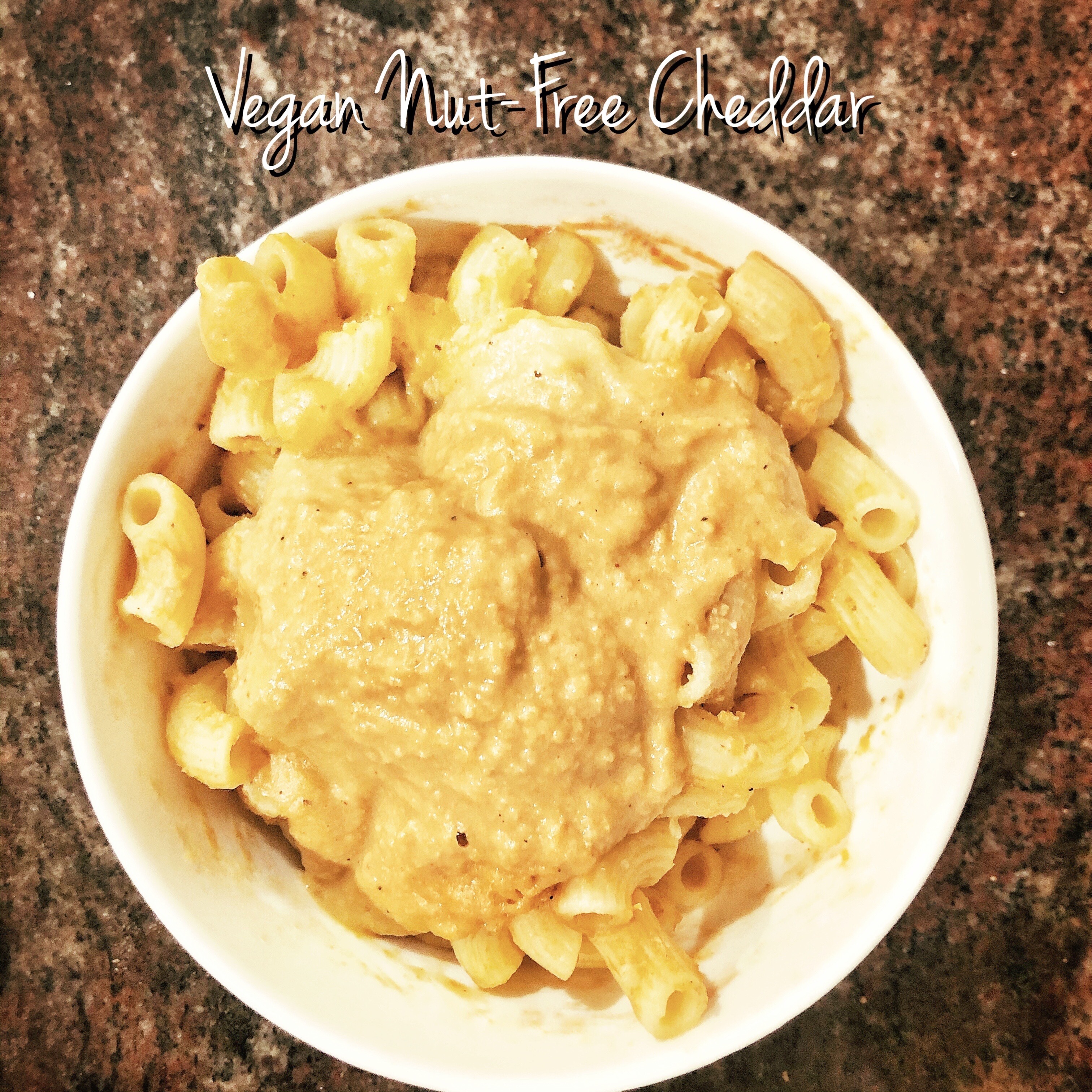
Vegan Nut-Free Cheddar

This is a solid non-dairy cheddar-like cheese that doesn’t use nuts. Cashew cheese is great, but can be really expensive – and really calorie-dense. Not exactly a weeknight food.

This version tastes pretty cheesy, makes a decent Mac & cheese (better, strangely, with sauerkraut mixed in), and would make a good dip base.

Gluten-free, paleo, vegetarian, vegan

Vegan Nut-Free Cheddar

1 medium russet potato
1 medium carrot
2 cups non-dairy milk
1/2 cup nutritional yeast flakes
3 Tbsp. olive oil
Juice 1 lemon
1 tsp. salt
2 Tbsp. onion powder
2 Tbsp. garlic powder
3 Tbsp. mustard powder
1 tsp. sweet paprika
1/2 tsp. ground cumin
1 Tbsp. cornstarch or arrowroot powder

Roughly chop the potatoes and carrot and boil until soft, approximately 10 minutes. Drain and let cool a bit. Add to the bowl of a blender or food processor.

Add the rest of the ingredients and blend until smooth. Taste and add a little more lemon juice, spices or salt. I find if I’m missing some punch, extra mustard powder works well.

If you need an even thicker cheese sauce, heat in a pan slowly, stirring often, until desired thickness is reached.

Serves quite a few

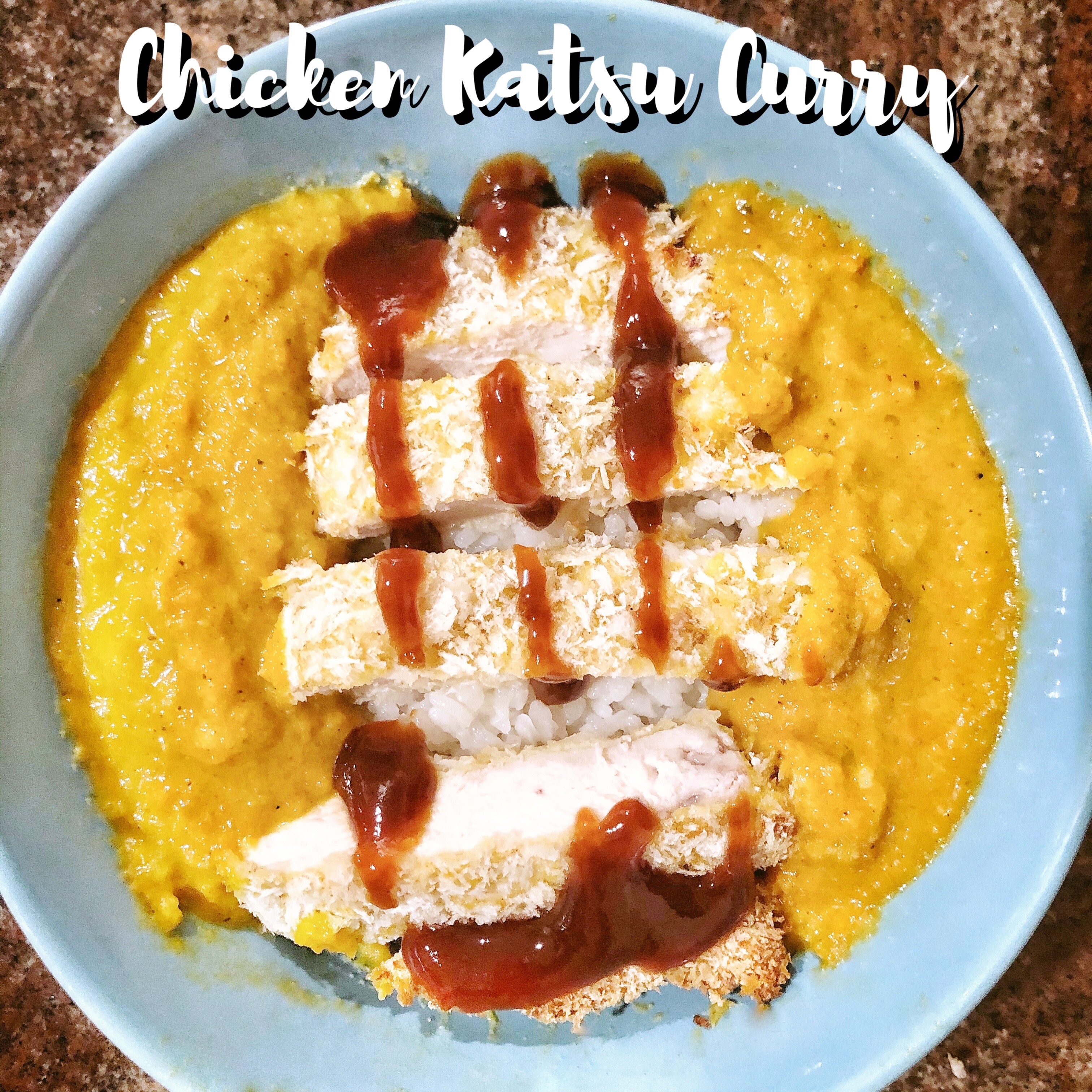
Chicken Katsu Curry

Ooh, this is a good one. Not *quite* like the katsu from my regular takeout spot, but not far off. Add a dash of pumpkin purée and some white pepper, and it’s there. Delicious.

Chicken Katsu Curry

Chicken Katsu

1 lb. boneless, skinless chicken breasts

40 grinds salt

Generous amount black pepper

1/4 cup flour

2 eggs

2 cups panko

Curry

1/4 cup neutral oil

1 yellow onion

1 medium carrot

1 inch ginger

4 cloves garlic

1 Tbsp. flour

2 Tbsp. curry powder

1 cup chicken broth

2 Tbsp. coconut aminos or soy sauce

1 Tbsp. honey

Katsu Sauce

1/4 cup ketchup

2 Tbsp. oyster sauce

2 Tbsp. Worcestershire sauce

1 Tbsp. honey

Preheat your oven to 375F/200C. Add a silicone liner or tinfoil to a baking tray and set aside.

Lay your chicken breasts in a single layer between 2 sheets of baking paper and pound to 1/2 inch thick.

Set up a breading station by placing shallow bowls or plates of flour seasoned with salt & pepper, beaten egg, and panko in a row. Coat the chicken with the flour mix, then dunk in the egg, and dredge in panko. Put on the prepared baking sheet and let stand 10 mins to rest.

Bake 10 mins, flip and bake an additional 10 mins.

While the chicken is cooking, chop the onion and carrot. Add the oil to a large pan and set over medium-high. When the oil comes up to temperature, add the onion and carrot and sautée, stirring frequently, until softened.

While that is working, chop the ginger and garlic. Add to the pan and sautée another few minutes.

Whisk in the flour and curry powder to combine.

Whisk in the chicken stock, soy sauce and honey.

Simmer, stirring frequently, 15 – 20 minutes or until reduced by about half.

Let cool and blend.

For the Katsu sauce, whisk together the ketchup, oyster sauce, Worcestershire sauce, and 1 Tbsp. honey.

Serve with a bowl of sushi rice. Makes enough for 4.