Pantry Clear: Chili Tuna Rice

As you can see from my last post (see pantry clearing post #1), my pantry is all over the map – but the bulk of the ingredients center on Southeast Asia, specifically Japan.

Japanese is a cuisine my DH and I both love and both crave when we either need a little comfort (among other cuisines, tbh) but feel like we need to be a little nice to our bodies and digestive systems.

This dinner is quick, easy, and feels like a healthy hug. If raw egg yolk freaks you out, omit.

Gluten-free

Chili Tuna Rice

1 cup premade sushi rice (1/2 cup short grain rice cooked in 2 cups water + 1 Tbsp. rice vinegar, 1 Tbsp. sesame oil, and a few grinds salt)

1/2 can chili spiced tuna, drained

2 Tbsp. dried wakame

1 tsp. powder-style chicken bouillon

1/2 cup hot water

1 egg

1/2 tsp. ginger garlic paste

1 Tbsp. coconut aminos

1 tsp. butter

Generous sprinkle toasted sesame seeds

1 green onion, thinly sliced

Set the sushi rice on to cook however you cook rice. While the rice is cooking, boil the 1/2 cup water.

Add the wakame and chicken bouillon to a small bowl and add the boiling water over top. Stir to combine and let sit until the seaweed is reconstituted. Drain loosely when you’re ready to serve and add back into the bowl.

Add the butter, rice, coconut aminos, ginger garlic paste, tuna, and egg yolk. Stir well to combine.

Top with the sesame seeds and green onions and serve.

Serves 1 for dinner

Nasi Goreng: Version 1

I just got back from a fantastic vacation spent exploring a new place – and a new food culture – and wanted to come home and continue that goodness.

Random tidbit of information: tempeh is actually from Indonesia, it’s not just an OG hippie food.

That has little to do with this recipe (though most of the dishes of Nasi Goreng I had in Bali came with sides, including some ridiculously delicious tempeh).

Nasi Goreng is one of the dishes typically associated with Indonesia (some say it’s the national dish), although it’s popular in other Southeast Asian countries as well as the Netherlands. This dish is basically just fried rice – with no singular recipe, instead typically consisting of leftovers from the previous day.

This version of the dish doesn’t taste exactly like what I had on vacation, but it’s delicious nonetheless. I feel the sauces I had in Indonesia were richer, and in subsequent versions I’ll be working toward that – but this is a great starting place.

Can be made gluten free (just sweeten some coconut aminos), paleo (swap out the rice for Cauli rice and the ketjap), pescatarian (omit the chicken), or lacto-ovo vegetarian (omit the shrimp, shrimp paste & chicken)

Nasi Goreng: Version 1

3 cups leftover cooked rice (I used short grain sushi rice)

1 shallot

4 cloves garlic

1/4 cup frozen peas

1/4 cup frozen carrots

1 bok choy

2 eggs + 1 per person

250g chicken breast

200g tiny shrimp, chopped

4 Tbsp. prepared ketchup

4 Tbsp. ketjap manis

2 Tbsp. sambal olek

2 tsp. shrimp paste

Neutral oil

Salt & pepper

Chop the chicken into small bite-sized pieces, liberally season with salt and pepper, and sautée in 1 – 2 Tbsp. neutral oil until cooked through. Remove.

While the chicken is working, mince the shallot and garlic. Chop the bok choy and separate the stems from the leaves. Defrost the frozen veggies. Assemble the rest of the ingredients. Mix the ketchup, ketjap and sambal to form a sauce. Crack 2 eggs and lightly scramble.

Fry the shallot & garlic in 1 Tbsp. neutral oil over medium-high heat in the chicken pan, making sure to scrape up any browned bits and incorporating them.

When the shallots go translucent, add the shrimp paste. Stir to combine.

Add the bok choy stems and stir-fry until beginning to soften. Add the peas, carrots and bok choy leaves. Stir fry a minute or so until combined.

Add the rice, chicken & shrimp. Stir fry a minute or so to combine.

Add the sauce, stir to combine, and push the rice to the sides of the pan to make a well in the center. Add the scrambled eggs, let sit a minute to firm up on the bottom, and stir through the rice mixture until cooked.

Serve topped with an egg that’s been fried on medium-high heat until the edges are really crispy and the yolk is just set.

Serves 4 – 6 depending upon whether you are serving with sides (popular sides include: tempeh, fried tofu, hard boiled and then deep fried eggs, green bean and cabbage salads, and shrimp chips – plus I’m sure more – this is just what I was served as sides; I’m sure every household has its own version)

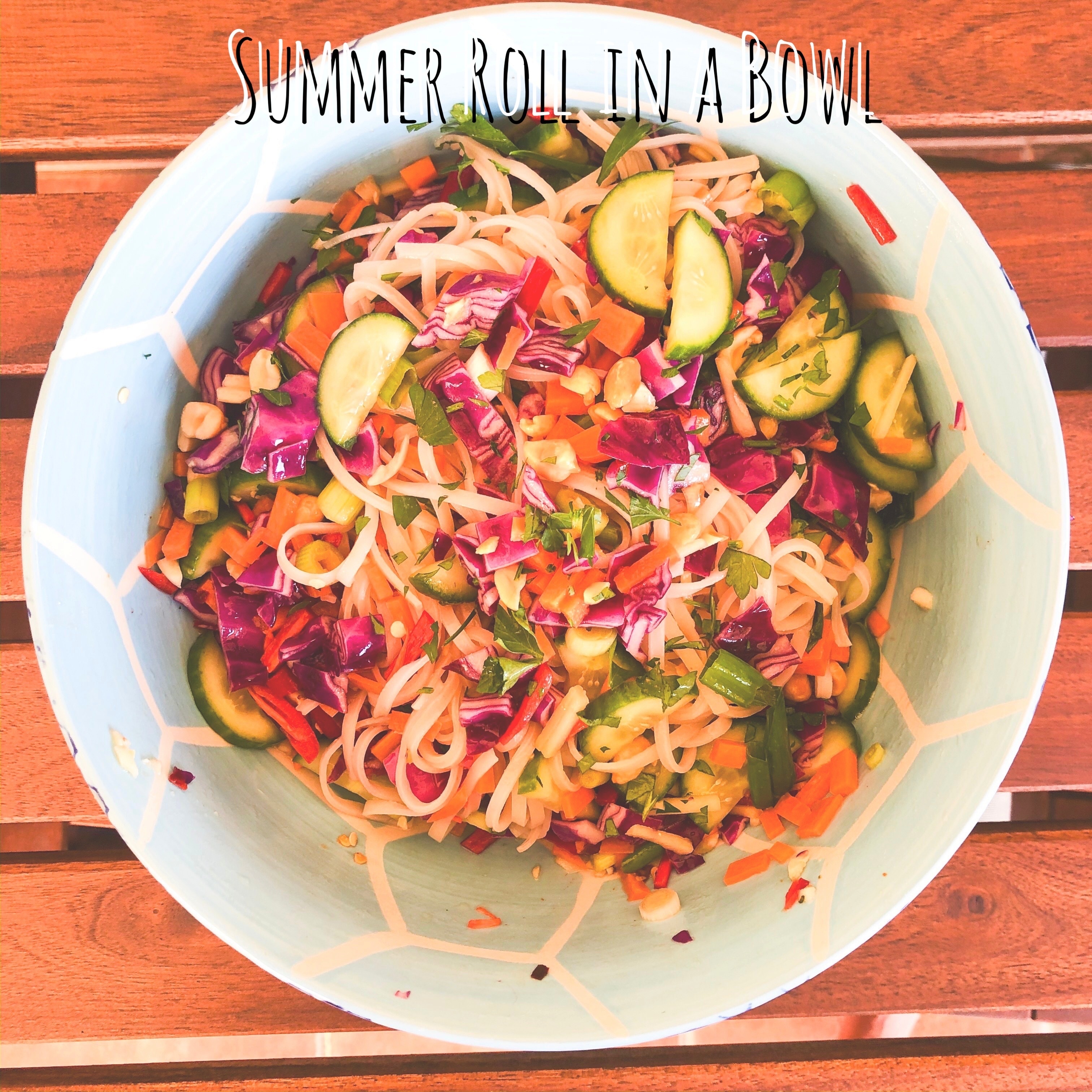
Summer Roll in a Bowl

This recipe came out of a craving for veggies and color + yet another scroll through Instagram for inspiration.

Summer rolls can be made a million different ways, but this version incorporates most of my favorite elements – some sort of crunchy brassica, sweetness from carrots, the fresh crispness of cucumber, and a little kick of heat from pretty red chilis.

I also tried to recreate a slightly less suspect in color version of the sweet chili sauce often served with rolled appetizers – and then went a little heavier on the savory components because I really like to doctor my own sauces tableside.

Gluten-free, vegetarian

Summer Roll in a Bowl

The Salad

1 inch fresh ginger, sliced into thin matchsticks
1 medium carrot, shredded or cut into matchsticks
1 cucumber, sliced into half moons
1 clove garlic, minced
1 red chili, sliced into matchsticks
2 green onions, sliced into thin rounds
1.5 cups red cabbage, finely chopped
2 cups rice noodles, soaked in hot water 10 minutes to soften and drained

The Dressing

2 Tbsp. honey
Juice of 2 limes
1 Tbsp. sriracha
3 Tbsp. neutral oil (I used canola)
1 Tbsp. rice vinegar
1 Tbsp. soy sauce
1 Tbsp. fish sauce
2 tsp. red pepper flakes

Toppers

Big hand full chopped nuts for crunch and fat (I had roasted peanuts)
Big hand full chopped cilantro
Protein of choice (Simple poached chicken or shrimp would be great)

Boil water, add the rice noodles to a big bowl, and pour the boiling water over the noodles, making sure they are fully submerged. Let sit while you prep the rest o fly the salad.

Prep the salad veggies and add to a large bowl.

Whisk the dressing ingredients together and pour over the salad.

Drain the noodles and add to the salad + dressing, tossing to combine.

Let sit at least half an hour to combine flavors.

Add toppers, toss again and serve.

Serves 3 – 4

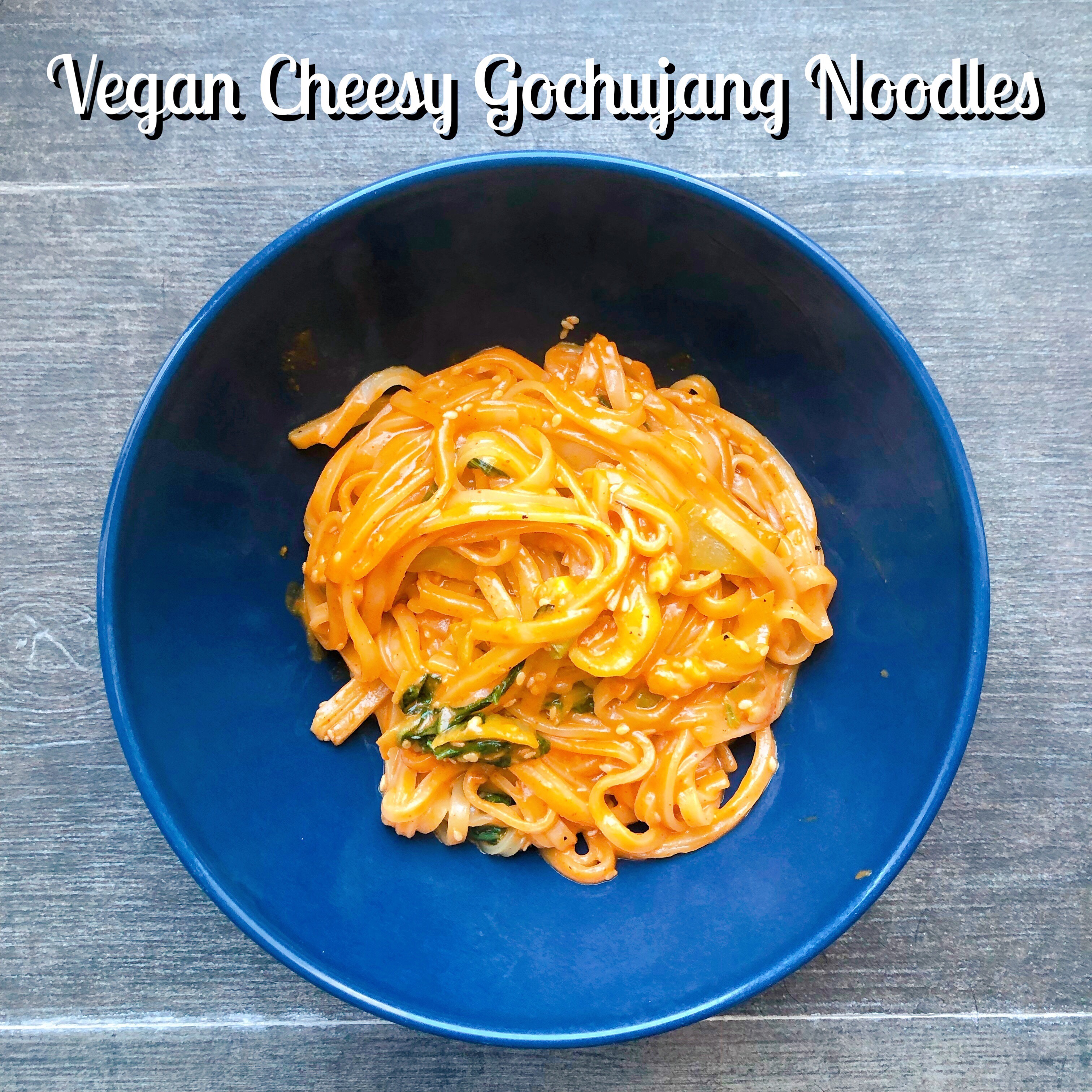
Vegan Cheesy Gochujang Noodles

Some days I don’t know why I get into my head the taste combinations I do. This is not one of those days. For some reason, something a couple I love on YouTube had said in a video I watched who knows how long ago popped into my head and I just couldn’t shake the desire to find out what cheese + Gochujang tasted like.

(Side note: if you like food, are interested in either Asian cuisines or finding out what it’s like to live in either Korea or Japan as a North American expat, check out Simon and Martina’s channel and blog: Eat Your Kimchi. It’s well worth the binge watch. Find them, and the recipe whose vague memory inspired this one here. Now, back to your regularly scheduled blah-blah!)

Now, I can’t do animal cheese, and I’m not even trying to pretend that this version tastes like cheese cheese (I think if I added garlic powder and mustard powder it might – but I’m still reintroducing foods, and Gochujang was my challenge food today), but it has a hint of cheesiness and a nice richness from the coconut milk.

If you’re batch cooking this recipe, maybe add a bit more coconut milk to the mix – mine turned out a bit clumped-together for subsequent meals; it loosened up on heating and stirring, but it could have been a skosh freer in the storage container.

Gluten-free, vegetarian, vegan

Vegan Cheesy Gochujang Noodles

3 Tbsp. gochujang
1/4 c. sesame oil
1/4 c. soy sauce or coconut aminos
1/4 c. nutritional yeast
1.5 in. grated ginger
1/4 c. coconut milk
Garlic oil
Bok choy, chopped
Rice noodles
Green onions
Sesame seeds
Ketjap manis

First, boil some water and set your rice noodles to soak – I do 1/2 – 1 cup per serving.

While the noodles are soaking, chop the bok choy and sautée in a large skillet over medium-high in a few squirts garlic oil. Season with a little sprinkle soy sauce/coconut aminos to season.

While those are both going, whiz together the ingredients from coconut milk up to make a sauce.

Slice the green onions and set aside for garnish. If you’re not vegan, prep your protein too (egg, little shrimps and rotisserie chicken all go great here). Grab your sesame seeds.

When the bok choy is cooked to your liking, drain the noodles and add to the pan. Stir with tongs to break them apart gently and fully incorporate the veggies. Add the sauce and stir again. Cook everything together a few minutes.

Top with the green onions, a generous sprinkle of sesame seeds, optional protein, and a swirl of ketjap manis.

The sauce makes enough to support 2.5 big servings

Dutch-Style Shrimp Deviled Eggs

This simple appetizer is quick to put together, serves a crowd, and gives a bit different flavor to an old favorite (at least for my American readers).

A note for those American readers: If you’re a fan of American-style deviled eggs, you’re going to think that these yolks will never hold together with this amount of mayonnaise. Resist the urge to add more – it *does* work. Don’t go into auto-pilot. Be strong: the difference in taste is worth it.

Gluten-free, Paleo, pescatarian

Dutch-Style Shrimp Deviled Eggs

12 large eggs
8 ounces tiny sized shrimp (canned is fine)
3 Tbsp. mayonnaise or aioli (I used Kewpie mayo)
3 tsp. ketchup (I used American-style)
3 tsp. whiskey
Salt & pepper
Chives for garnish

First, hard boil and peel the eggs. Halve lengthwise and add the yolks to a bowl.

Add the mayo, ketchup & whiskey. Chop the shrimp into small bits, reserving 1 per egg half for garnish. Add the chopped shrimp to the bowl.

Mix to combine, taste, and add salt and pepper to taste.

Spoon the mixture into each egg half, top with a whole shrimp, and snip chives to garnish.

Serves a party

Salmon Fried Rice

This FODMAP-friendly recipe is full of flavor, simple to prepare, and makes enough servings for a batch cook.

gluten-free, pescatarian, FODMAP

Salmon Fried Rice

1 medium red pepper, chopped
1 large carrot, chopped
1/2 cup green onion, sliced (tops only if FODMAP)
3/4 cup frozen chopped green beans
2 tsp. or a few squirts (if spray) garlic oil
1 Tbsp. sesame oil
2 tsp. fresh ginger, crushed
195g. canned salmon
65g. canned tuna
2 large eggs
1 Tbsp. fish sauce
2 Tbsp. soy sauce or tamari
2 cups leftover white rice

In your largest skillet, heat the garlic oil over medium-high heat. Add the carrots and stir-fry until just browning. Add the peppers and green beans and stir-fry until carrots are softened and the rest are just starting to brown.

Add the rice, fish, sauces, sesame oil & ginger. Stir to combine and push to the sides to create a well in the center.

Crack the eggs into the well, stir, and let sit a couple minutes to create some curds.

Stir all together to combine.

When the eggs are solid, split into fourths and serve.

Serves 4

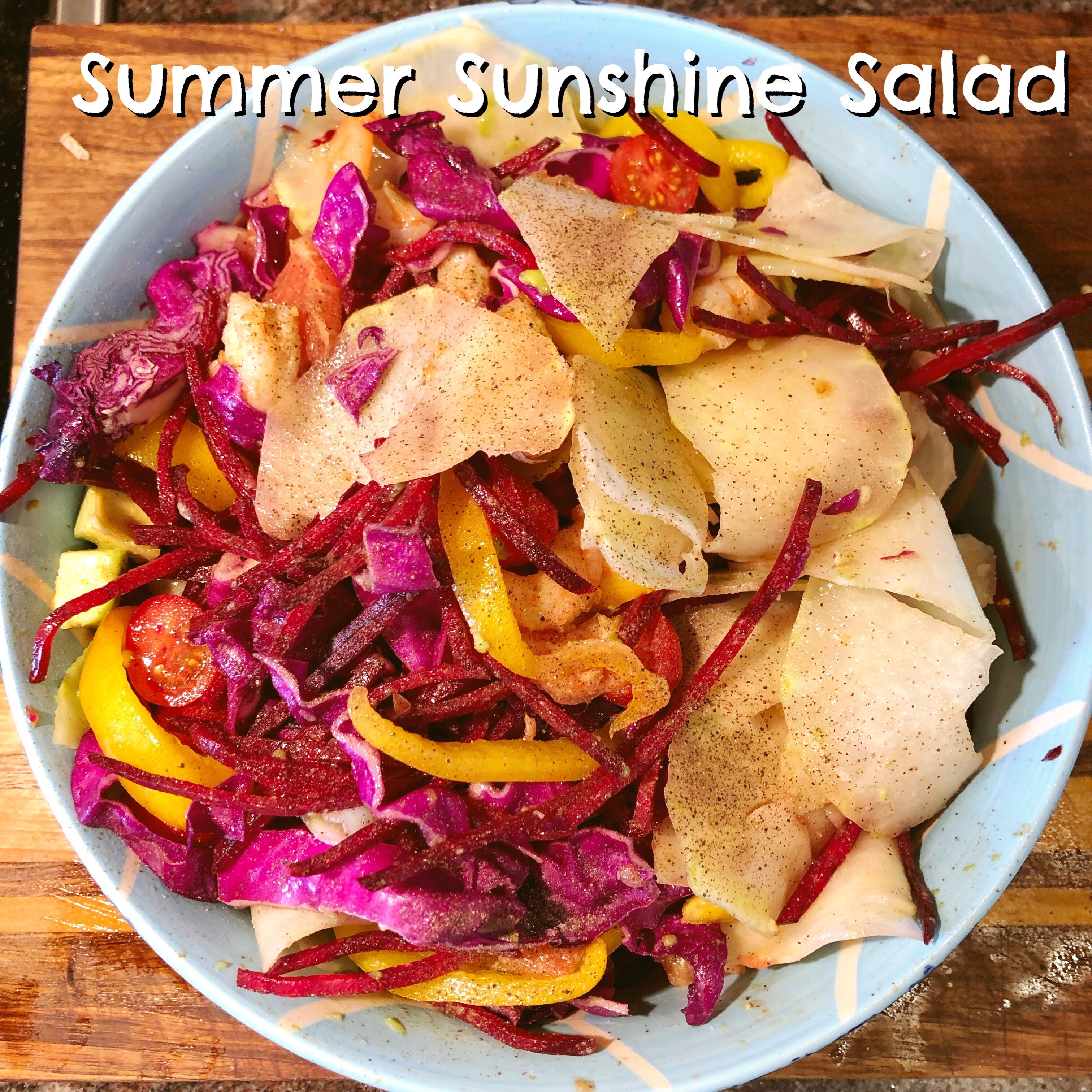
Summer Sunshine Salad

Another potluck, another veg (pescatarian)-friendly salad. The tastes are great here, but I would caution to know your audience – I saw a couple plates of beetroot floating around after all was said and done. I loved it, though, and so did my veggie-heavy friends!

If you can find them, add toasted unsweetened coconut shavings – I think they’d add a nice subtly sweet crunch here, but couldn’t find them anywhere. If you’re in the States, Trader Joes & Whole Foods usually carry them.

gluten-free, pescatarian, paleo

Summer Sunshine Salad

2 grapefruits, cut into supremes – reserve 2 Tbsp. of the juice for the dressing
1 kohlrabi, shredded (I ribboned, but this would have been better julienned like the beets)
400g prawns, sauteed and chopped in half
250g cherry tomatoes, halved
2 avocados, chopped
1 yellow bell pepper, julienned
2 scallions, sliced
1 c. beetroot, julienned
2 c. red cabbage, ribboned
Hand full of mint, chopped
1 Tbsp. tamarind paste
1 Tbsp. lime juice
3 Tbsp. olive oil
Salt & pepper

Chuck all the non-wet ingredients in a large bowl. Whisk all the wet ingredients and pour over top. Toss again. Taste, hit with salt + pepper if needed.

If you have toasted coconut, top with that – pepitas would also be nice.

Serves a party 

Quick Korean-Style Bowl

This bowl has it all: sweet, spicy, umami, crunch, shrimp – what more could you ask for? And it’s quick! Like 15 minutes, 1 mug & a bowl!

Gluten-free, pescatarian

Quick Korean-Style Bowl

Shrimp (I used half a pound or so small cooked shrimp, but uncooked would have been even better)
2 Tbsp. arrowroot powder or cornstarch
2 Tbsp. neutral oil
Two big hand fulls snap or snow peas
2 cups finely shredded carrots
2 green onions, sliced

For the sauce:

1 Tbsp. gochujang
2 Tbsp. hoisin sauce (or honey soy – something salty & sweet)
1 Tbsp. soy sauce (or coconut aminos)
1/2 inch fresh ginger, minced.
2 cloves garlic, minced
1 tsp. arrowroot powder or cornstarch
2 Tbsp. water

Heat your largest skillet over high. Add the oil to heat up.

While the oil is heating, toss the shrimp in the cornstarch.

Add to the pan, stir-frying until just beginning to brown.

Add the snap peas, stir-frying until warmed through.

Add the carrots, stir-frying until well distributed.

Add the sauce, stir-frying until the mixture looks homogeneous as possible and the sauce begins to thicken.

Add the green onions, give it a couple stirs, and serve.

Serves 2 for dinner, with or without 1 for lunch depending on whether this is all you eat

One-Pan Honey Mustard Salmon

Is there anything more satisfying than only dirtying one cooking implement for dinner while spending minimal time actually cooking?

Yes, but this is pretty dang rewarding too.

Especially if you’re a dork 🙂

This meal serves 2 with a little left over, comes together in under an hour, and can be dressed a bunch of different ways depending on what you have on hand.

For instance, you may notice some decidedly non-broccolini green stuff on my plate that isn’t in the recipe. That’s because I had a literal hand full of snow peas that needed using up, so I threw them in. Feel free to do the same, just note that if you have something like a carrot that takes forever to cook, you might want to add that in with the potatoes rather than the greens.

Also good to note: the sauce on this dish isn’t the overly sweet, sticky sauce I generally think of when I think ‘honey mustard’ (you know, like the radioactive yellow dressing from a ton of US restaurants that comes straight from Sysco central processing. Which I love in memory theory). This sauce is light and delicate with just a hint of sweet.

gluten-free, paleo, pescatarian

One-Pan Honey Mustard Salmon

Baby potatoes
Salmon
Broccolini
Oil, salt & pepper
2 large cloves garlic
2 tsp. grainy mustard
2 tsp. honey
1 Tbsp. butter

Preheat your oven to 200c (400f) and prep a baking sheet with foil.

Arrange your baby potatoes in a single layer in one third of the pan. Sprinkle with 2 tsp. of your favorite oil, salt & pepper and toss.

Bake 20 mins.

Add your broccolini to the other third of the pan, toss with 2 tsp. oil & salt and pepper.

Bake 10 minutes.

While that is baking, mince the garlic and add with the honey, mustard & butter to a heat-proof vessel. Zap until the butter is melted and stir.

Add the salmon meat side down to the middle, sprinkle with 1 tsp. oil + salt & pepper, slather in sauce, flip and repeat.

Sprinkle any remaining sauce over everything else.

Bake 5 mins, flip, and broil if you have the ability an additional 2-3 minutes to crisp that skin up a bit.

Viola.

Serves 2 for dinner with a little left over.

Low Carb Gochujang Shrimp Bowl

What to do with leftover shrimp, and the massive tub of gochujang I’ve acquired? Make a yummy, yummy “noodle” bowl to kill that ramen craving I was also having.

If you’re nervous about gochujang and Korean food in general, don’t be – the paste I have may look spicy, but it’s not. It’s delicious, and is useful in a bunch of different ways.

gluten-free, low carb

Low Carb Gochujang Shrimp Bowl

14-16 shrimp
1-2 scallions
A bunch of shredded cabbage (I had about 1.5/2 cups per serving)
1-2 eggs per serving
Sesame oil
Soy sauce
Sesame seeds
Salt & pepper

for the marinade

2 tsp. olive oil
2 cloves garlic, minced
1 tsp. lemon juice
2 tsp. Gochujang (I could have done with a full Tablespoon here happily)
1/2 tsp. honey
1 Tbsp. water

First, whisk together all marinade ingredients in a small bowl. Add the shrimp, toss, and let marinate :30 to a couple hours in the fridge.

While that’s working, shred your cabbage and prep all other ingredients.

Cook in batches for each serving.

First, fry the cabbage in 1 Tbsp. oil over medium-high heat until beginning to brown and soften. Season with salt & pepper.

Push to the outside of the pan and add the shrimp + a hand full of scallion to the middle and cook until 3/4 done.

Stir all together and push to the outside of the pan. Add 1 tsp. sesame oil in the center and crack the 2 eggs in. Season with a sprinkle of soy sauce.

When the egg whites have turned white, poke the yolks and stir into ribbons.

When 3/4 of the way cooked through, stir into the rest.

Transfer to a bowl and top with a sprinkle of raw scallion + sesame seeds.

Repeat with subsequent batches.

Serves 1-2 for dinner, depending on whether you have other banchan