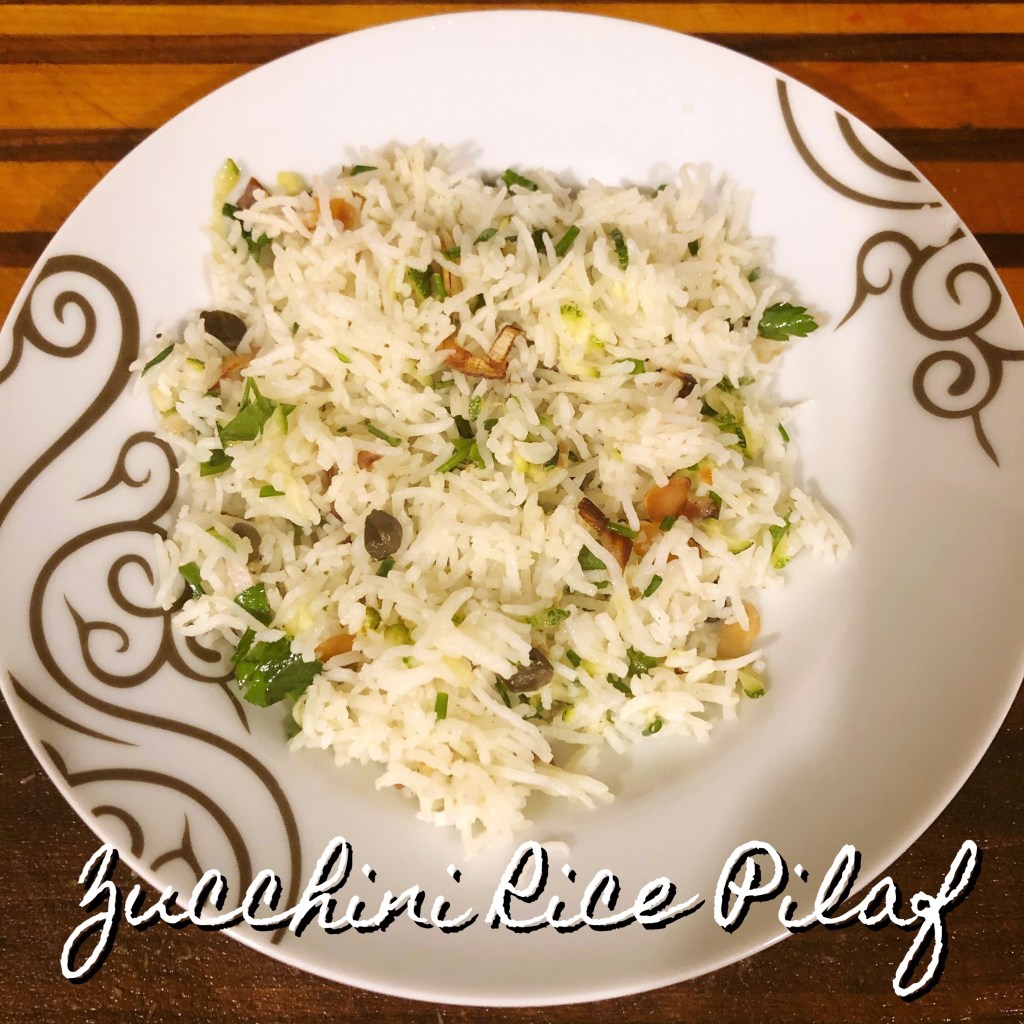
Zucchini Rice Pilaf

Sneaky veg FTW in this one. I snuck half a huge zucchini in this rice and it went unnoticed (or at least un commented on). Win.

I served this the first night with seared salmon, and the second with some pepper steak Quorn and a sprinkle of mushroom powder. Both were delicious, and I could see a swirl of pomegranate molasses or some chopped apricot or golden raisins working well here. Smoked almonds instead of plain slivered would also be fantastic.

I also *almost* added the juice and zest of 1 lemon, but am glad I pulled back from that at the last minute. Lemon would be good, but I apparently missed buttery rice in my life.

gluten-free, vegetarian, vegan
Zucchini Rice Pilaf

1c. basmati rice

2c. water

1Tbsp. butter (dairy or non; whichever you prefer)

1/2tsp. salt

1/2 a big zucchini (you could actually add the whole thing, but I erred on the side of caution)

1 large shallot

2Tbsp. slivered almonds

2Tbsp. capers

1Tbsp. snipped chives

2Tbsp. chopped parsley

Neutral oil of choice

Make your rice however you make rice, using the water as the liquid and the butter as the fat. Don’t forget to add salt.

While the rice is working, grate the zucchini, snip the chives and chop the parsley. Add to a large bowl.

Finely slice the shallot and fry in a little oil over medium-low heat until browned. When nicely browned (I had wanted caramelized, but this small a quantity of shallot in only the bare minimum of oil browns rather than caramelizes. Would also be amaze with caramelized onion), push the shallot to the side of your pan and add the capers and a bare drizzle of fat.

Push that to 1/3 of the pan until the capers look like they’ll start jumping any minute.

Add the slivered almonds to the last 1/3 of the pan. Toast. Pull the individual items as they are ready and add to the big bowl.

When the rice is done but still warm, add to the big bowl and stir all vigorously to combine.

Serves 4 as a side
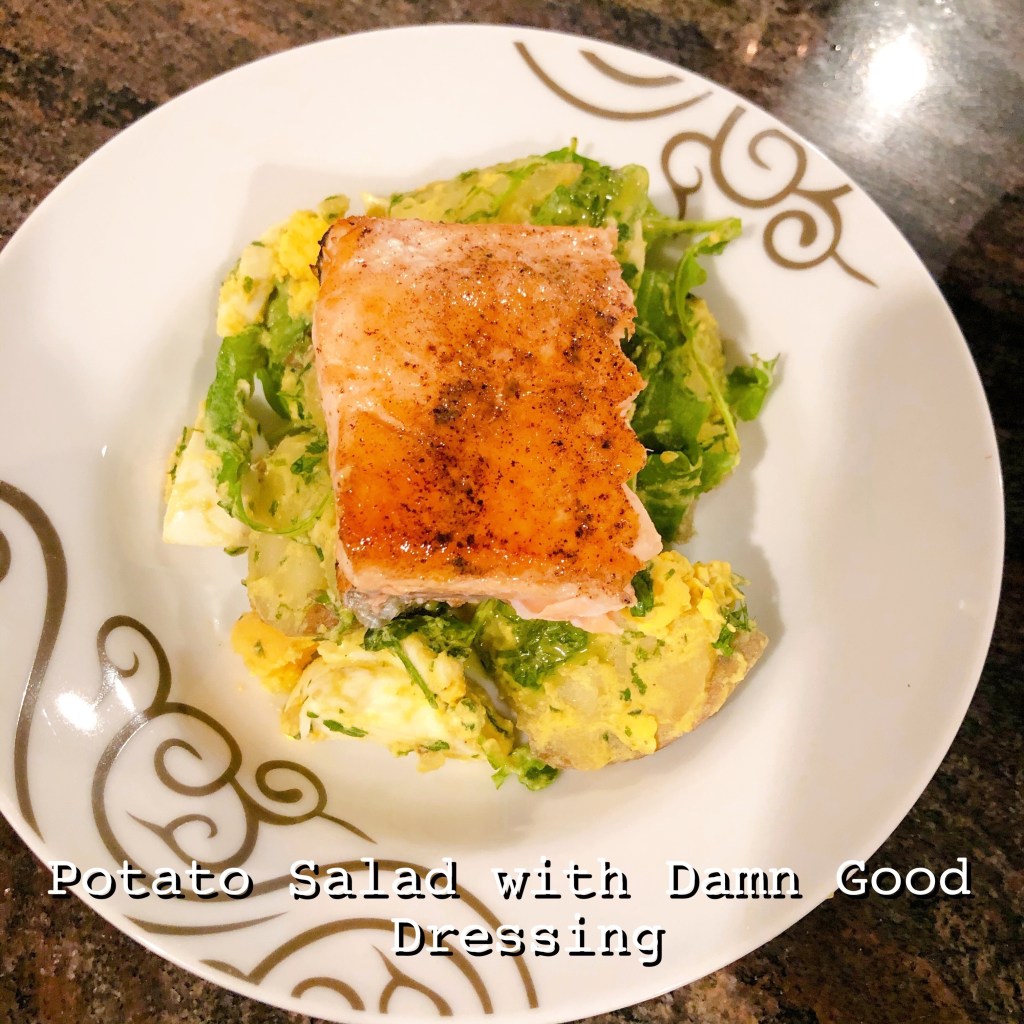
Potato Salad with Damn Good Dressing

This dressing, which was based on an everything dressing posted by one of the blogs I’ve been following long enough to be on its mailing list but whose name escapes me as I’m sitting down to type this up (maybe First Mess?) is fantastic and I could see it being equally as good on vegetarian as meat dishes (I served my salad with some simple seared salmon and it was delicious), and even great on salads. I would also stir this into some nice rice or orzo for a little quick saucy flavor boost. Yum.

gluten-free, paleo, pescatarian, vegetarian, could be made vegan, FODMAP friendly

Potato Salad with Damn Good Dressing

Salad

1/2 kg new potatoes (or other small variety that doesn’t turn to mush when boiled)

4 – 6 hard boiled eggs

2 big hands arugula

Dressing

1/4 cup rice vinegar

1/4 cup water

2 Tbsp. nutritional yeast

2 Tbsp. soy sauce or coconut aminos

1/5 tsp. flax seeds

1 tsp. sturdy brown mustard

2 tsp. lemon juice

3/4 cup neutral oil

1 big hand parsley

1/2 bunch chives

1.5 tsp. anchovy paste (you could swap for miso – what you’re after is umami)

Boil your potatoes 10 minutes or until fork-tender. Drain and quarter. Add to a large bowl.

Hard boil your eggs. Peel, quarter and add to the bowl.

Add the arugula.

In your blender or food processor, combine all dressing ingredients. Hit with some salt and pepper. Whiz until the herbs are chopped and the dressing is combined. Taste. Add more salt/pepper/lemon juice as necessary.

Pour about a cup over the still-warm potatoes. Toss to combine and let sit until you’re ready to serve.

I served my first round of this salad room temperature with nicely seared salmon. Subsequent servings have been heated in the microwave with a little dressing added and they’ve also been great. It’s even decent cold and I’m not a fan of cold cold potato salad.

Serves 4? 5? Depends what you’re doing with it. I got 2 dinners + 2 lunches out of it. And I have about 3/4 of a cup of dressing leftover for the rest of the week.

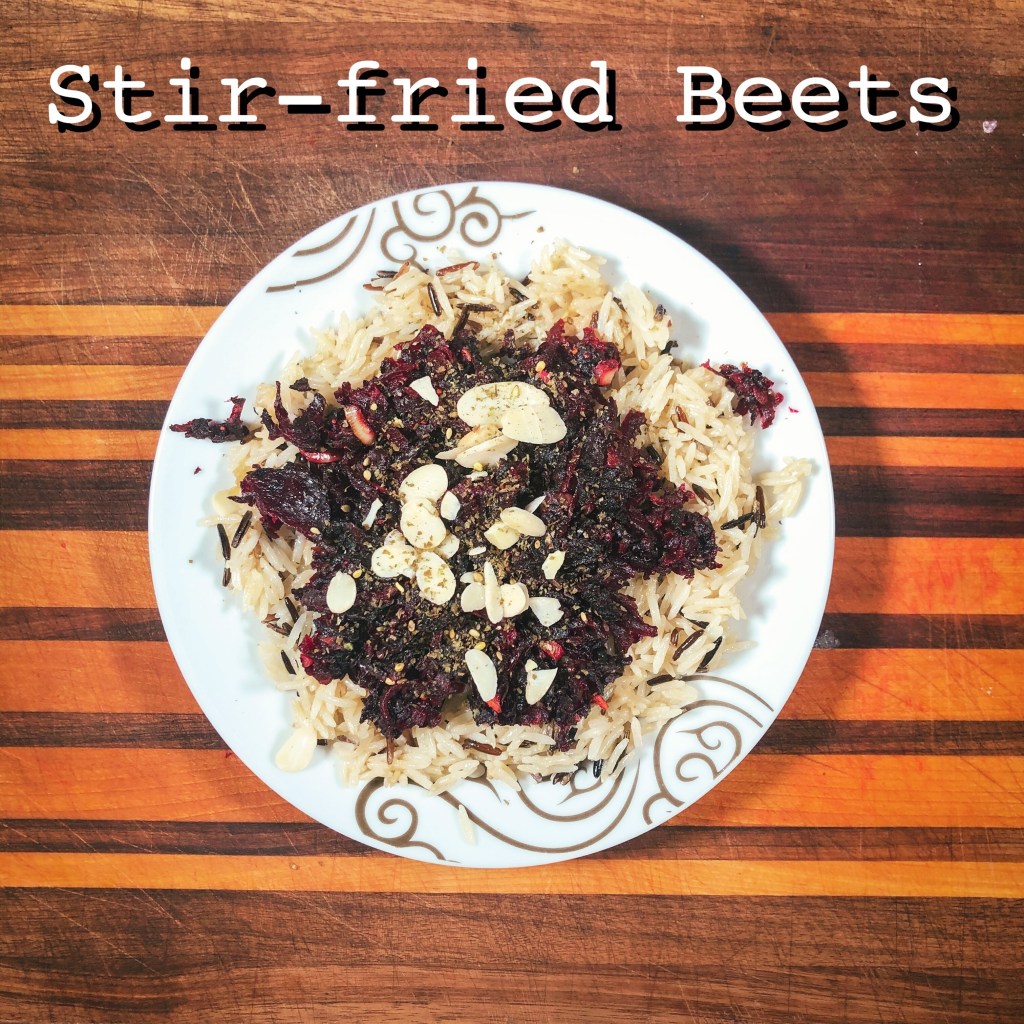
Stir-fried Beets

This recipe is based on a loose description posted on Instagram about a month ago. No idea which ‘grammer I caged the idea from, but I suspect it was someone either Indian or Middle Eastern, given the direction this dish took. Or, I could have just had Zaatar and mustard oil on hand 🙂

Either way, this is a good little side – would be nice with some tangy goat cheese if you do dairy, and also goes nicely with the Vaguely Persian Crispy Rice I posted awhile back.

gluten-free, vegetarian, vegan, paleo

Stir-Fried Beets

1 – 2 roasted and peeled beets, grated (about 1 cup)

2 Tbsp. roughly chopped garlic

1 tsp. yellow mustard seeds

1 tsp. black mustard seeds

1/2 tsp. dried oregano

1 Tbsp. ghee or your favorite fat

Zaatar for dusting

1 Tbsp. mustard oil

1/2 tsp. cayenne or red pepper flakes

Heat the oil and ghee over medium-high heat. Add the mustard seeds & oregano and cook, stirring, until fragrant and just beginning to pop. Add the garlic and stir to combine.

Add the beets and flatten to cover the bottom of the pan. Hit with salt and pepper. Let crisp up a bit before stirring – or, let form a cake on the bottom of the pan and flip in wedges (or altogether if you’ve got that kind of skill).

Let brown on the other side, too.

Dust with Zaatar before serving.

Serves 2 – 3 as a light side

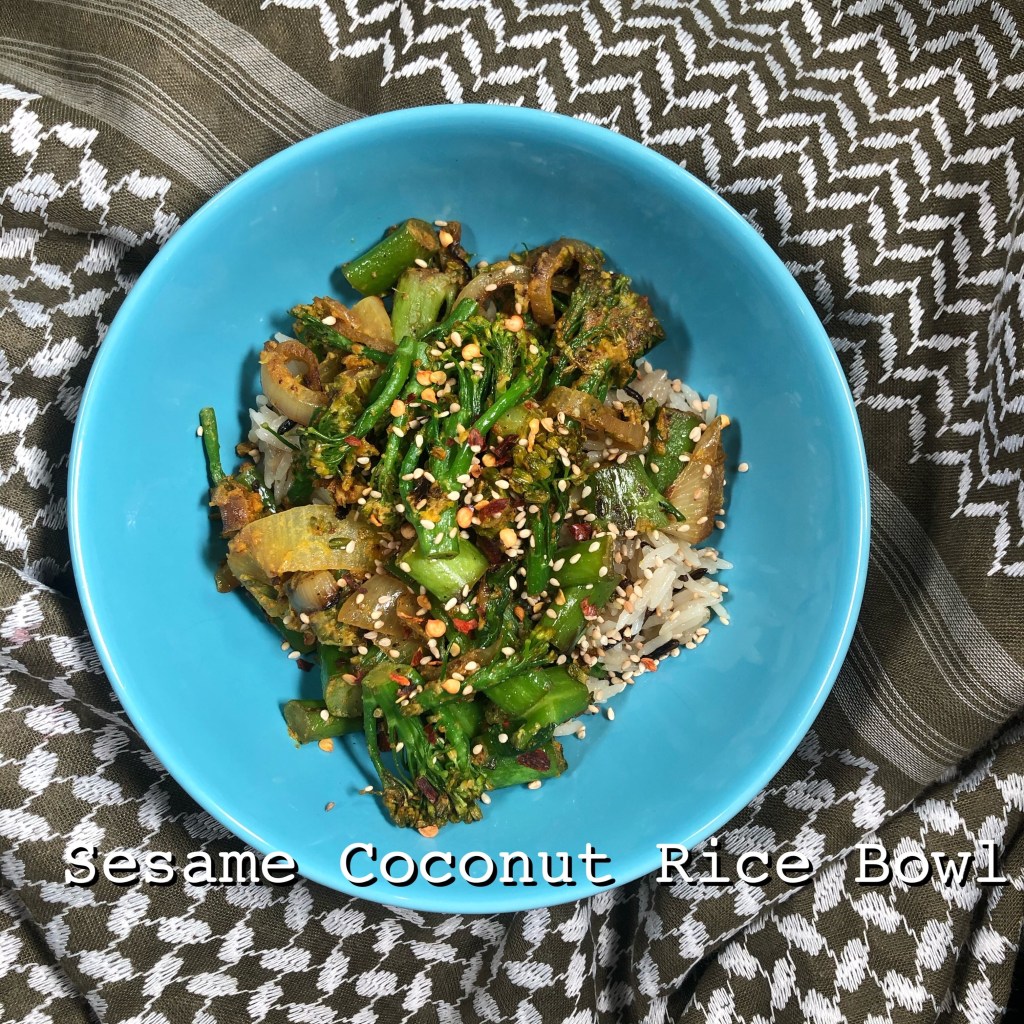
Sesame Coconut Rice Bowl

This dish turned out miles better than I feared it would. I was hella worried that by using coconut milk as the sole liquid to cook my rice I was going to blow up my rice cooker.

I’m glad those fears were unjustified, because this rice is bomb. So bomb, I made more just so I could serve it with another ‘stepping out on a limb’ dish I’m hoping will be good enough to share with you guys in a few days (spoiler: it involves beets and stir-frying).

This rice makes a great base for simple broccolini like I’ve served here, a nice light green curry, some simple salmon, or even – strangely – some soft-scrambled eggs (or as soft as I can get them, which is not Julia Child level soft).

gluten-free, vegetarian, vegan

Sesame Coconut Rice Bowl

1 cup rice (I used a Basmati/wild combination)

1 14 ounce can coconut milk

1 Tbsp. sesame oil (+more)

2 tsp. your favorite chicken bouillon (mine happens to be vegan and it’s fantastic – Ida’s is the brand and I believe it’s out of South Africa)

Zest of 1 lemon

1 Tbsp. tahini

Red chili flakes

Toasted sesame seeds

1/2 yellow onion, chopped

1 bunch broccolini, chopped

2 tsp. neutral oil

2 tsp. ground turmeric

Set your rice, coconut milk, sesame oil and chicken bouillon in your rice cooker. Add a generous sprinkle salt and cook however you cook rice.

While the rice is going, stir-fry the broccolini and onion in the oil until browned (if you add the stalks in first and get those going until just starting to look cooked you’ll have less chance of burning the flowery bits). Whack with salt and pepper. Add the turmeric and toss. Throw in a few Tablespoons water and let cook until the water evaporates and the broccolini is done to your liking. We like browned in spots but still crisp-tender.

Stir in the tahini and lemon zest.

To serve, add 1/3 of the rice to a bowl and top with 1/3 of the broccolini. Add a drizzle of sesame oil, sprinkle of red pepper flakes, and sprinkle of sesame seeds.

Serves 3 as a light meal or side

Dilled Curry Potatoes

This sounds like a weird combination, but it works really well. Bonus: this side dish makes a great little flavor punch for pretty much any main component. I served mine with next week’s Indian Spiced Burgers the first night and leftovers with plain chicken in the next day’s lunch and both were flavorful and delicious.

gluten-free, paleo, vegetarian, vegan

Dilled Curry Potatoes

500g baby potatoes

Neutral oil

1 Tbsp. curry powder (your favorite mix will do, and some fresh curry leaves would also be great here)

1 small green chili pepper

1 Tbsp. ground turmeric

1 tsp. red chili powder (I used cayenne)

4 – 5 cloves fresh garlic (3 Tbsp. when minced)

2 Tbsp. fresh dill (or more if you have more – I would have actually liked a little extra)

Salt & pepper

Fill your largest high-sided sauté pan with water to 3/4 of the way up the sides, nestle the potatoes in, add a bunch of salt and bring to a shallow boil for 10 minutes or until soft. Drain carefully and cut into halves.

While the potatoes are cooking: mince the garlic, chop the chili pepper, assemble the dried spices, and chop the dill. Set the dill aside.

Add enough oil to your pan to cover the bottom, and heat over high/medium-high until the oil starts to shimmer. Add the potatoes, liberally salt and pepper, and give a good stir for a couple minutes until they start to color.

Add the spices and garlic and stir-fry until the potatoes are as browned as you want them to be and the garlic goes nice and crispy.

Transfer to a large bowl and toss with the dill to complete.

Serves 3 – 4

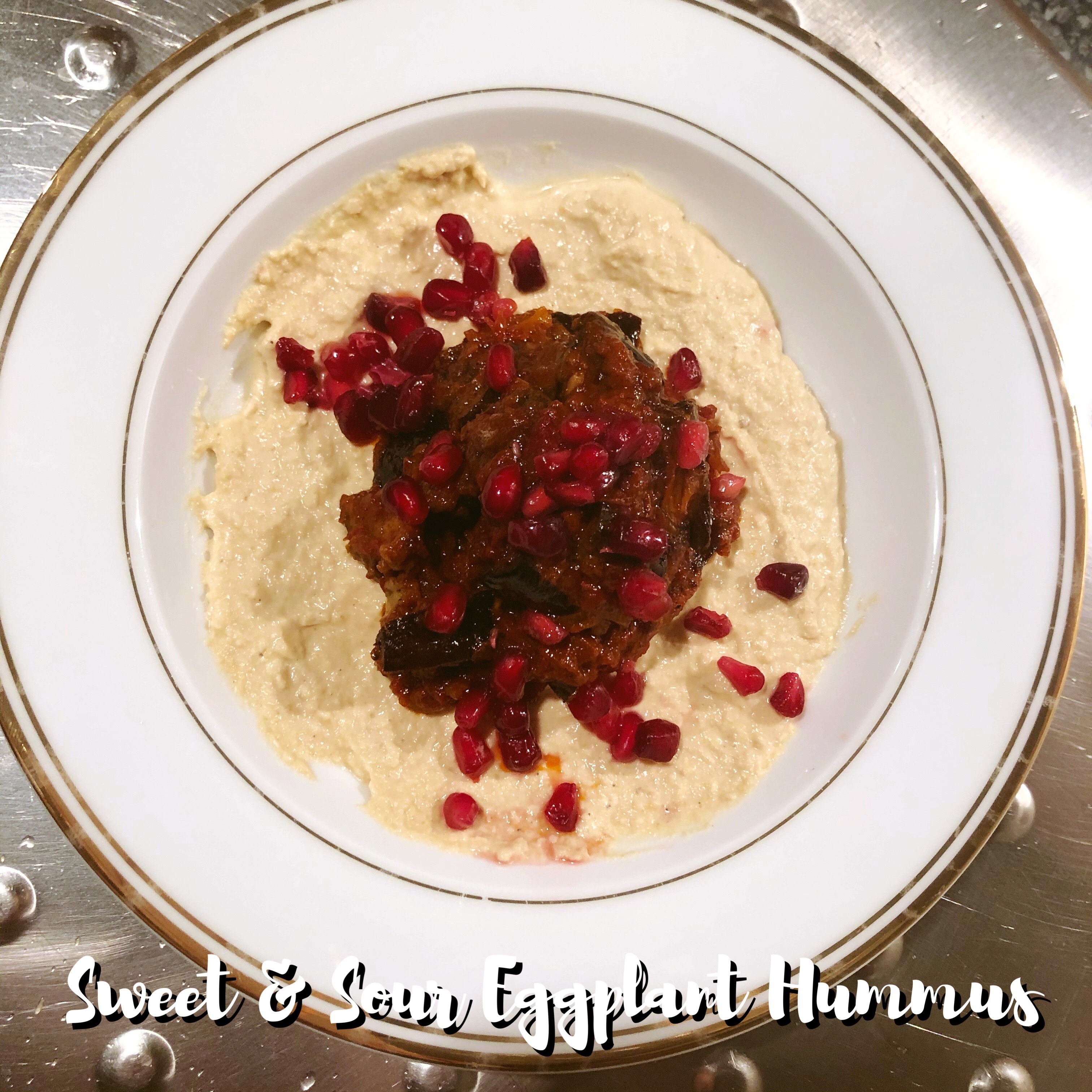
Sweet & Sour Eggplant Hummus

This sounds like a weird one, but is addictive. This dish is based on a crazy good hummus a girlfriend and I (hello, Val @hellotinywonder) had at the staple ‘bring your out-of-town guests’ place Damasca One, a stunning mostly-Syrian restaurant in Souq Waqif.

The dish we had tasted like vegan sloppy joes in the best possible way – sweet and tangy eggplant nestled in luscious kibbeh on a bed of silky hummus. It was a stunner, and the stand-out of the night (at least for me – there was also a fantastic lentil dish I couldn’t eat enough of to parse).

My recreation is solid (as attested by another girlfriend, who I had the chance to make it for – Annmarie of last weeks’ Za’atar Eggplant fame). No kibbeh in mine, and longer cooking is definitely better – but it’s super freaking good and probably a touch healthier.

I’m super pumped that I have leftovers!

Gluten-free, paleo, vegetarian, vegan

Sweet & Sour Eggplant Hummus

Sauce:

1 large purple eggplant
1 red pepper
1 onion
4 cloves garlic
3 Tbsp. tomato paste
2 Tbsp. pomegranate molasses
Neutral oil
Salt & pepper
Ground cumin
1/2 tsp. oregano

Hummus:

1 can chickpeas
Juice of 1 lemon
1/4 c. tahini
1/2 tsp. cumin
3-4 cloves garlic
Salt & pepper

Toppers:

Pomegranate arils
Toasted pine nuts

First, roast the veg. Preheat your oven to 200C/375F. Prep a baking sheet.

Chop the pepper into big chunks and put to 1 side of the tray.

Chop the eggplant into 1/2 inch pieces and put to the other side of the tray.

Sprinkle both with neutral oil, salt, pepper & ground cumin.

Bake for 30-ish minutes or until soft and blackened lightly in spots. Set aside to cool.

While that’s going, slice the onion as thinly as possible. Mince the garlic. Add to a saucepan with 3 Tbsp. neutral oil over low heat. Add some salt & pepper.

Let gently cook, stirring occasionally, 30 – 45 minutes or until the onions are deeply caramelized.

While those are both working, whiz all hummus ingredients together. Taste for seasoning and add more salt or acid if necessary. Set aside.

When the veggies are baked, whiz the peppers a bit to break them up some.

Add the whizzed pepper, tomato paste, pomegranate molasses, 1/2 tsp. cumin, 1/2 tsp. oregano, and 3 Tablespoons water into the onion mixture. Let cook a few minutes to combine.

Whiz to combine a bit better, dump back into the pan, fold in the eggplant, and cook an additional 10 minutes to reduce back down a bit and let the flavors mature.

To serve, lay the hummus down, top with the eggplant mixture and sprinkle with the toppers.

Serves a few

Za’atar Eggplant

This is a dead simple way to explore a sometimes under-utilized and misunderstood vegetable: the simple Italian style eggplant.

I can’t take credit for this recipe – I was treated to it at a good friend’s house after she raved about it. She wasn’t wrong.

Gluten-free, paleo, Whole30, low carb, vegetarian, vegan

Za’atar Eggplant

1 purple eggplant
Za’atar
Your favorite cooking oil
Salt & pepper

Line a baking sheet with paper or silicone. Preheat your oven to 200C/375F.

Slice your eggplant into thick “steaks” however you like – width or lengthwise.

Lightly score each slice with a knife in a crosshatch pattern, taking care not to slice through the pieces.

Sprinkle lightly with salt & pepper.

Top very generously with za’atar (enough time form a crust).

Sprinkle lightly with your oil of choice to kind of stick the spice down. Alternately, you can mix the spice and oil together in a bowl, then smooth over the eggplant slices – depends on how much oil you want to use.

Bake 25 – 35 mins or until softened and browned – a bit crisp if they’re thin slices.

Serves 2

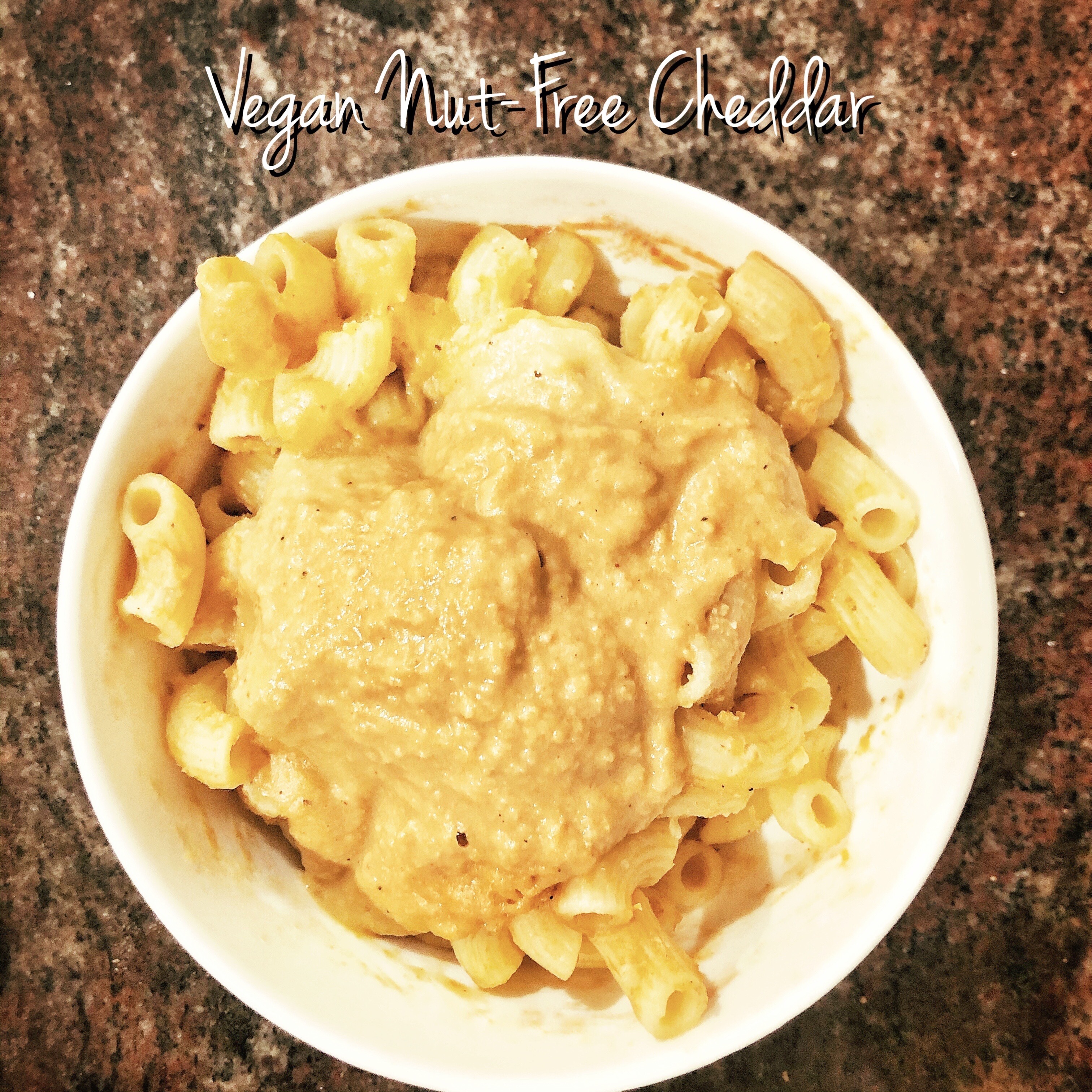
Vegan Nut-Free Cheddar

This is a solid non-dairy cheddar-like cheese that doesn’t use nuts. Cashew cheese is great, but can be really expensive – and really calorie-dense. Not exactly a weeknight food.

This version tastes pretty cheesy, makes a decent Mac & cheese (better, strangely, with sauerkraut mixed in), and would make a good dip base.

Gluten-free, paleo, vegetarian, vegan

Vegan Nut-Free Cheddar

1 medium russet potato
1 medium carrot
2 cups non-dairy milk
1/2 cup nutritional yeast flakes
3 Tbsp. olive oil
Juice 1 lemon
1 tsp. salt
2 Tbsp. onion powder
2 Tbsp. garlic powder
3 Tbsp. mustard powder
1 tsp. sweet paprika
1/2 tsp. ground cumin
1 Tbsp. cornstarch or arrowroot powder

Roughly chop the potatoes and carrot and boil until soft, approximately 10 minutes. Drain and let cool a bit. Add to the bowl of a blender or food processor.

Add the rest of the ingredients and blend until smooth. Taste and add a little more lemon juice, spices or salt. I find if I’m missing some punch, extra mustard powder works well.

If you need an even thicker cheese sauce, heat in a pan slowly, stirring often, until desired thickness is reached.

Serves quite a few

Nasi Goreng: Version 1

I just got back from a fantastic vacation spent exploring a new place – and a new food culture – and wanted to come home and continue that goodness.

Random tidbit of information: tempeh is actually from Indonesia, it’s not just an OG hippie food.

That has little to do with this recipe (though most of the dishes of Nasi Goreng I had in Bali came with sides, including some ridiculously delicious tempeh).

Nasi Goreng is one of the dishes typically associated with Indonesia (some say it’s the national dish), although it’s popular in other Southeast Asian countries as well as the Netherlands. This dish is basically just fried rice – with no singular recipe, instead typically consisting of leftovers from the previous day.

This version of the dish doesn’t taste exactly like what I had on vacation, but it’s delicious nonetheless. I feel the sauces I had in Indonesia were richer, and in subsequent versions I’ll be working toward that – but this is a great starting place.

Can be made gluten free (just sweeten some coconut aminos), paleo (swap out the rice for Cauli rice and the ketjap), pescatarian (omit the chicken), or lacto-ovo vegetarian (omit the shrimp, shrimp paste & chicken)

Nasi Goreng: Version 1

3 cups leftover cooked rice (I used short grain sushi rice)

1 shallot

4 cloves garlic

1/4 cup frozen peas

1/4 cup frozen carrots

1 bok choy

2 eggs + 1 per person

250g chicken breast

200g tiny shrimp, chopped

4 Tbsp. prepared ketchup

4 Tbsp. ketjap manis

2 Tbsp. sambal olek

2 tsp. shrimp paste

Neutral oil

Salt & pepper

Chop the chicken into small bite-sized pieces, liberally season with salt and pepper, and sautée in 1 – 2 Tbsp. neutral oil until cooked through. Remove.

While the chicken is working, mince the shallot and garlic. Chop the bok choy and separate the stems from the leaves. Defrost the frozen veggies. Assemble the rest of the ingredients. Mix the ketchup, ketjap and sambal to form a sauce. Crack 2 eggs and lightly scramble.

Fry the shallot & garlic in 1 Tbsp. neutral oil over medium-high heat in the chicken pan, making sure to scrape up any browned bits and incorporating them.

When the shallots go translucent, add the shrimp paste. Stir to combine.

Add the bok choy stems and stir-fry until beginning to soften. Add the peas, carrots and bok choy leaves. Stir fry a minute or so until combined.

Add the rice, chicken & shrimp. Stir fry a minute or so to combine.

Add the sauce, stir to combine, and push the rice to the sides of the pan to make a well in the center. Add the scrambled eggs, let sit a minute to firm up on the bottom, and stir through the rice mixture until cooked.

Serve topped with an egg that’s been fried on medium-high heat until the edges are really crispy and the yolk is just set.

Serves 4 – 6 depending upon whether you are serving with sides (popular sides include: tempeh, fried tofu, hard boiled and then deep fried eggs, green bean and cabbage salads, and shrimp chips – plus I’m sure more – this is just what I was served as sides; I’m sure every household has its own version)

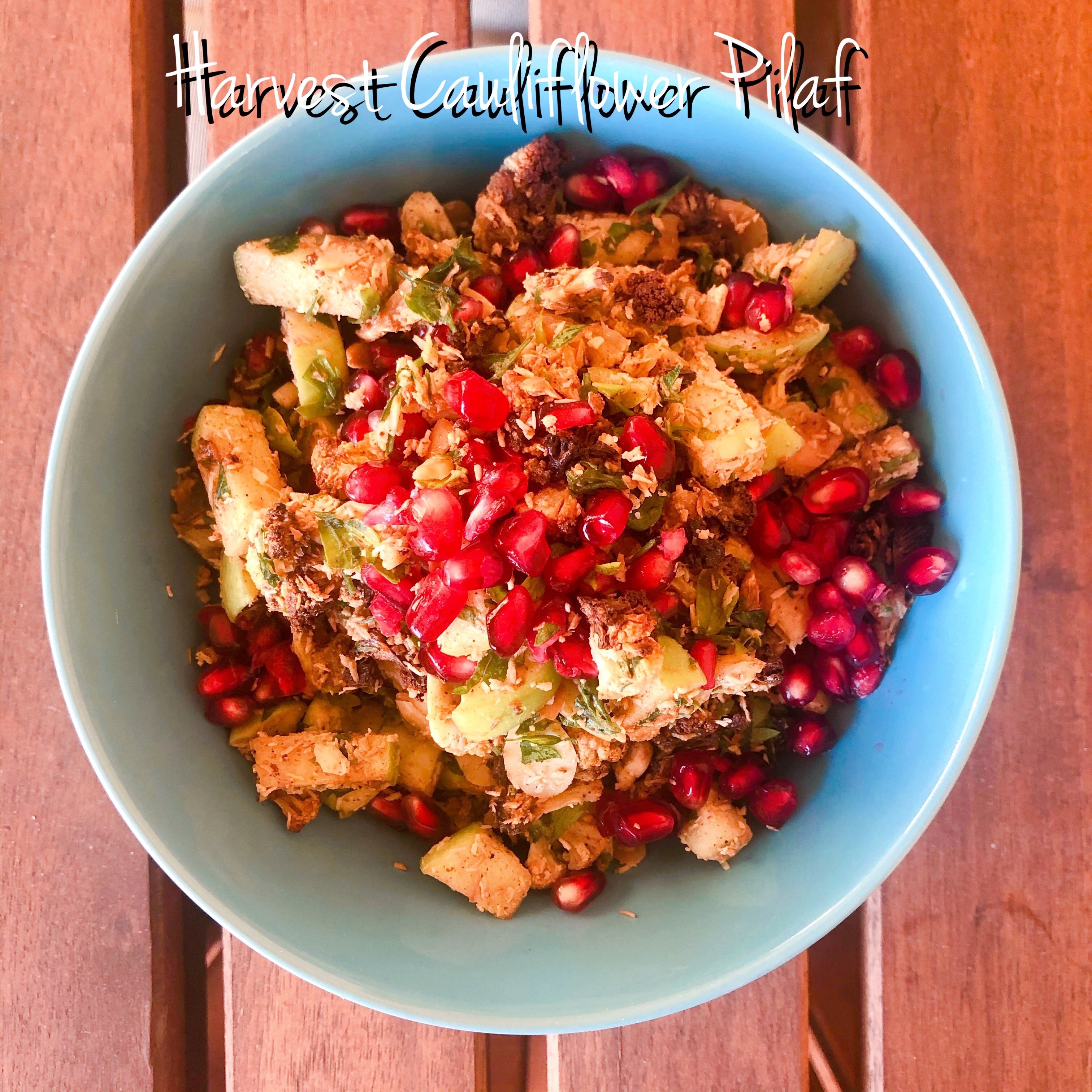
Harvest Cauliflower Pilaf

Ok, so I’m on a harvest-theme here lately, and all the dishes that have been making me happy speak of (North American) Fall.

This dish is lighter-than-expected, makes a lovely salad for surprise company, and can be bulked up easily to feed a crowd.

It’s also fantastic topped with leftover turkey pancetta and pepitas from last week’s Fall Harvest Soup recipe.

Quick note: if your coconut flakes look like mine (shreds) and you toast your cauliflower as deeply as me (I like some burnt pieces), this dish may look like it has croutons in it. Which was giving my brain a weird disconnect that was less than pleasant. The coconut in here is actually really pleasant and gives a nice little subtly sweet nuttiness with a bit of texture.

Gluten-free, paleo, vegetarian, vegan, Whole30

Harvest Cauliflower Pilaf

1 smallish head cauliflower, cut into small bits or riced (I did small bits because with my current kitchen setup I just can’t be bothered to fully rice cauliflower)

1 apple (Granny Smith or Fuji – you want something with a bit of tartness or crispness)

2 cloves garlic, minced

Double hand full flat leaf parsley, chopped

Pomegranate seeds (I’m lazy and buy mine prepared – I used a good amount and keep adding more fresh every time I go for leftovers because they’re delightful and so very pretty. Use however much your eye wants to bring nice color to this otherwise very green dish)

3 Tbsp. coconut milk (optional)

Juice of 1 lemon

2 Tbsp. pomegranate molasses

Few generous sprays oil (I love a grape seed oil pump I’ve been using lately – it’s really cutting down on the amount of oil I feel I have to use)

Generous sprinkle black pepper

Liberal amount of salt

Generous sprinkle cayenne pepper

Generous sprinkle curry powder

Generous sprinkle cumin powder

1/2 cup slivered almonds

1/4 cup unsweet shredded or flaked coconut

Preheat your oven to 200C (400F). Prep a baking sheet with a liner, process your cauliflower into tiny bits, and spread in a single layer.

Hit with the oil, salt, pepper, cayenne, cumin, and curry). Toss and roast for 35-40 minutes or until your desired toastiness is achieved.

In the last 5 minutes (or if you forget, stir the cauliflower, flip the pan around and put back in the oven), chuck the almonds & coconut on the pan. Roast to toast 3-5 minutes, being careful to watch and make sure these delicate additions don’t burn.

When done, add to a large bowl.

Chop and toss in the apple, garlic and parsley. Add the coconut milk, lemon juice and pomegranate molasses. Toss to combine. Add enough pomegranate arils to make yourself happy.

Serve room temp or cold – either way is fantastic.

Serves 4 as a meal or a party as part of a larger spread